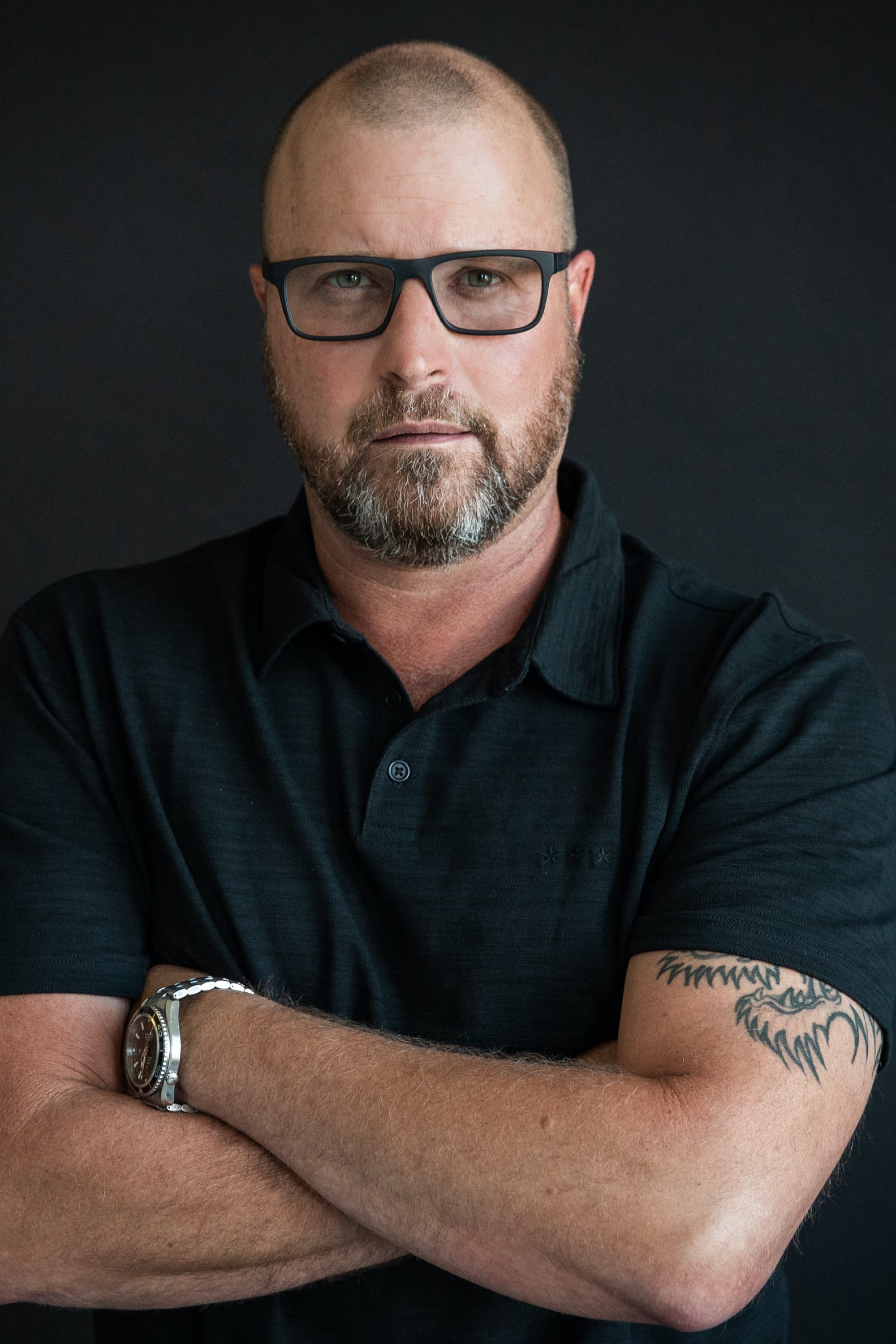
There will be times in your career as a project manager when your team or stakeholders want to forego a plan in favor of “just getting work done.” It happens all the time. Some times it works, but let's face it: most times it doesn’t. That's why you always need a plan. In this episode of Time Limit, founder and CEO of project management consultancy 120VC and author of The Irreverent Guide to Project Management, J. Scott, joins the show to talk about planning and estimating, and following a solid method presented in the book for delivering projects on time and under budget every time. If you ever find yourself defending the need for a plan, this episode is for you. If you think you don’t need a plan, this episode is also for you. The conversation covers:
Resources mentioned in this episode:
From the start of his career spent jumping out of helicopters as a rescue swimmer in the United States Navy, J. Scott has a long history of leadership, servanthood, and bearing witness to the transformative power of getting shit done. Since starting 120VC he's personally overseen the global transformational efforts within organizations such as DirecTV, Trader Joe's, Blizzard Entertainment, Sony Pictures, Mattel, and others. His team's unique, irreverent approach to change has generated breakthrough results and created meaningful jobs. In addition to being a successful entrepreneur, J. Scott is a devoted husband and father and author of "It's Never Just Business: It's About People," and "The Irreverent Guide to Project Management," both available on Amazon.com.
Brett Harned: Hey, welcome to Time Limit. I'm Brett
Harned, the Director of Education at TeamGantt. Happy that
you're here. The topic of today's episode is estimating
and planning, and if there's anything you'll learn from
this conversation is that you always need a plan. I'm not going
to spoil it now, but my guest, project management consultant and
author J. Scott, shares his point of view on how all methods require
plans. He also shares a lot of tips on process that come straight
from his book, The Irreverent Guide to Project Management, so check
it out.
Brett Harned: J., Thanks so much for taking
the time to join me on Time Limit today. I'm really looking
forward to talking to you about the importance of planning and
estimating and kind of getting your unique perspective on those
topics. I found you through your book, The Irreverent Guide to
Project Management, which I think offers a pretty fresh or different
take on topics specifically around estimating and planning. But I
have to say the bold, irreverent take on project management is
really appealing to me and I have to guess it's appealing to a
lot of people, especially in the digital space. But that goes from
the take of the book to your company's website and the way that
you kind of talk about your stuff. It's really good stuff, so
thank you for that.
J. Scott: Thanks Brett.
Brett
Harned: Yeah, of course. Thank you for joining me. So I know
that you're the founder of 120VC, which is a project management
services company. Can you tell us a little bit about what the
company is and what you do?
J. Scott: Oh sure.
Thanks for asking. I'd love to. We're a transformational
services firm, which is essentially a fancy way of saying we help
organizations change things. We started with a focus on project
management 20 years ago and I quickly figured out that CEOs and CIOs
are less interested in project management, which is about one
project, than they are in program and portfolio management. Ideally
they're interested in ensuring that they can complete as many
projects each year for the amount of money set aside, and so we
looked at how we were providing project management and we basically
designed our approach in a way that would enable the program and the
portfolio layers. Then Agile came on the scene and immediately I
recognized the 73 word manifesto and the 12 principles as really
human based principles that fit into a paradigm that I call servant
leadership.
J. Scott: And so we got pretty
excited about that and we looked at Scrum and we looked at DevOps
and realized that there was a really good use case for those types
of things. We kind of stuck our nose up at looking at those things
as them being a panacea, because anybody over the age of 23 should
know that one solution does not solve all problems. But where it
works, it really works. So we adopted that and started working with
our customers to help them optimize their product pipelines in
addition to their large global enterprise projects. With all this
optimization on the enterprise side, which some people call a
Waterfall, it's kind of ... Nobody's doing Waterfall,
right? It's interesting, any time you employ the Critical Path
method, people are like, "Oh, it looks like a waterfall."
But if you put did you put Agile on a timeline, it looks like a
waterfall too.
J. Scott: Anyway, change
management came on the scene and we were like, "Wow, this is
really going to help organizations adopt all of this change
that's being delivered quickly." And so we got into change
management and then we realized that there was a missing component
of project management called demand management, where essentially
you've got all these projects running in an organization and
all these matrix functional teams that are contributing and
they've got more work than they can even keep track of, right?
They're screaming, We're overwhelmed." And executives
are screaming, "Just be creative." And we realized that
they needed some tools to sort of manage that, so we got into demand
management. And then somewhere along the way we realized that
leadership is a change discipline. You've heard that leaders
are born and not made, and there may be some validity to that. But
the simple fact is if you understand people and you understand human
nature and you understand what makes us tick, you can improve your
leadership ability, so we started focusing on that.
J.
Scott: Those seven disciplines are what we call the change
disciplines, and those all fit under the umbrella that we call
transformational change services. So the idea is that we work with
organizations to provide services, to deliver their projects,
optimize their product pipeline, stick change initiatives, but also
to develop those disciplines, to become more little a agile or more
change-ready. Because we really believe if you look at an Amazon,
their zeigeist of agility, they're going to have mastery around
all seven of those disciplines. You can't just be great at
project management and have great product outputs. You can't
just be great at project management and get near a hundred percent
adoption on day one. So that's kind of 120VC in a nutshell.
Brett
Harned: Cool. So it sounds like you're really kind of
blending methods, right? You're pulling from Waterfall,
Critical Path, but also pulling in some Agile principles, maybe some
methods from Scrum. Is that accurate?
J. Scott:
Yeah, definitely. Our Enterprise approach or our Waterfall approach
to large complex projects, we've literally integrated all of
the Agile principles into that and a vast majority of their best
practices. Our belief is that if you look at those seven disciplines
distinctly, the idea is to help them work in concert. And more
importantly, if you look at the basic concept of agility,
that's where an organization can look at a problem and pivot if
necessary, meaning apply the appropriate approach to solving that
problem. So if an Enterprise approach is the most appropriate
approach, use that. If an Agile approach is the most appropriate,
use that. If a hybrid is the most appropriate, use that. At the end
of the day, it's all about ensuring that organizations get the
outcomes that they need to take advantage of the market, to
infatuate their customers, et cetera.
Brett Harned:
Absolutely. I love it. One of the things that I think that the
project management world is kind of missing these days is kind of
like the value and need for a plan. People kind of abandoning this
idea of a plan because they think Agile will solve their problems.
And I don't know, I don't think that's right. I
think, like you said, it's about pivoting and applying the
approach that's appropriate to your project, to your team, to
your stakeholders, all of those factors, but not just throwing away
the idea that a plan can help you.
J. Scott:
Well, here's the thing that just burns me a little bit. Agile,
when it comes to an actual Agile approach, so take a Scrum or a
DevOps, rigor, defining a vision and a roadmap, which is basically
planning, is a huge part of it actually achieving the results that
it's intended to achieve. And then moreover, whether it's
in ... You guys at TeamGantt obviously have more of a traditional
tool where you're logging tasks, but, I mean, they really log
tasks in a backlog or you're logging tasks in your tool. In
Agile you log tasks and we call them stories, right? And then we do
sprint planning, so we look at our backlog, which is a whole list of
tasks or stories that would create business functionality or
business value and they groom that backlog to figure out what's
going to create the greatest amount of value. I mean, there's a
lot of planning and rigor around Agile. So those people that use
Agile as an excuse to wing it or like cowboy up are missing the
whole point.
Brett Harned: I absolutely agree with
you. Yeah, it's interesting because obviously there are merits
to all processes or methods, right? There are reasons why people
have formalized these things, a lot of what you've even laid
out in The Irreverent Guide to Project Management. It's all
kind of there for the taking, right? It's for you to adapt and
make the best process or the best experience for your projects to
make sure that you're meeting budgets and that you're not
exceeding deadlines. I kind of want to pull it back a little bit. I
want to talk about your book. Can you talk to us about what inspired
you to write The Irreverent Guide to Project Management?
J.
Scott: Well, they say necessity is the mother of all
invention, right? I founded the company 20 years ago and I was our
first consultant, and after a couple of years of just being an
independent consultant under a corporate banner or the banner of a
corporation, I was getting a lot of requests to take on projects
that I couldn't. I was fully loaded. And no being the single
most difficult word in human nature, I was looking for a way to say
yes. And so I started telling my clients that I could bring on
somebody else and they would deliver just like me, so finally
someone took me up on that and I realized very quickly that I had
accidentally lied to them, trying to bring someone on and have them
deliver as consistently or similarly as I did without any training
material or a training manual.
J. Scott: I
literally hired somebody and then took a tribal approach to telling
the tales and telling the stories and sharing the approach. And it
didn't go badly, I mean, my customer ultimately was satisfied.
But it became very apparent in that that little experiment that if I
was going to grow a brand and make promises to my clients, that we
needed a guidebook. I needed a system for training. I needed to
bring people in and train them and have them deliver a product,
because really without a product you've just got, again, people
out there winging it and you really can't promise any level of
consistency in what you're delivering to clients. And project
leadership being what it is, I mean, that's kind of all about a
consistent approach, getting consistent results, optimizing cost and
time outcomes, getting as close to a hundred percent user adoption
or mass market adoption on day one. So that's where the first
version of the Guidebook came from.
Brett Harned:
That's awesome. That was one of the questions in my mind
because what I like about the way you approach the book is how it is
that detailed, and I do think that a lot of people, specifically
people who are just getting into project management, they're
looking for that kind of step-by-step instruction from start to
finish. And I think your book does a really great job of that, so I
was wondering if it was almost like a playbook for how you work with
clients or on other projects that you work on within the company
even.
J. Scott: It is exactly how we deliver
our global transformational projects. We started out with the intent
to use it internally to train individuals, and then my clients, as
we're working within their organizations, they also had project
managers and they started asking us to share and to provide training
to their team members. And then we just were like, "Hey, we
should actually publish this and make it available to the
masses." And so that's exactly the intention, is that
we're sharing the exact plays that we use to deliver large
global transformational projects for Sony Pictures, Trader
Joe's, DIRECTV, T-Mobile.
Brett Harned:
Awesome. Yeah, it's great. It's so informative. the only
thing that I thought as a PM who's worked in a lot of different
kind of environments or with different types of clients, thinking,
"Wow, this is great. It's detailed. There's basically
step-by-step instruction." But I kind of think there's no
right or wrong way of doing things. I could go buy this and might
think, "Oh, I could adapt that or there might be a different
way for me to do that." Which is project management, right?
That's what we do, and we've already talked about how we
have to kind of adapt and flex to make things work. But I'm
curious, just in terms of the way that you work, how much would you
expect a PM to stick to the formulas in the book versus taking it as
a foundational direction for how you operate as a project manager or
program manager and then adapting it as they see fit?
J.
Scott: I want to validate your point that there could be
better, faster, stronger ways to deliver projects. That's
absolutely true, so from our point of view, the purpose of a
standard is first training. Once people have a certain level of
knowledge they can adapt more effectively, and so the first is
training. Two is quality assurance. If everyone in an organization
is planning a project differently, assessing health differently,
assessing impediments or blockers differently, and communicating
differently, it becomes very difficult for a program or a portfolio
manager to quality assure their work, to be ahead of it. So in
organizations where you've got a whole bunch of project
managers doing things differently, one, you figure their reporting,
all that reporting goes into a system like yours, and then when the
executives pull reports, what's red, what's green,
what's yellow from one project manager to another project
manager requires analysis. Executives cannot make decisions from a
report if the criteria that project managers are using to report or
assess risk or rate health is different.
J. Scott:
And so what we've done over the years, we're in
version five, is that we're constantly evaluating and adding
what we think works better, throwing out what doesn't work
anymore. But our basic rule is, once you've got a process you
can quality assure, you also can measure, and if you're not
measuring, you don't know whether you need to improve anything
or not. The other thing also is we have a brand promise. We over the
last 20 years have delivered 98% of our projects on time and on
budget with near 100% user and mass market adoption. If you look at
the industry average, on average large IT projects come in 45% over
budget, 7% late, and deliver 56% less value than anticipated.
J.
Scott: So we're doing, at least from a budget
perspective, 100% better. And so in order to be able to promise and
deliver consistently, again, we have to have a standard, we have to
be able to measure our results. But we also follow one basic rule,
if the process ever gets in the way of creating the value intended,
break the process, break the rules.
Brett Harned:
Got it. Okay.
J. Scott: The other thing also is
to your point, one, projects are not all the same size. They're
not all of the same complexity. So one of the first things that we
do in on a project is look at, "Okay, we've got to get
this planned. How long is it going to take us to plan?" And
once we've interviewed the project owner and the executive
stakeholders, we have some sort of sense of which of the tools would
be necessary and which is the tools aren't necessary. And
again, if we're trying to be efficient with time and money,
we're not going to follow a process. We're not going to
apply a tool that isn't necessary to get this particular
project done.
J. Scott: Barely sufficient is
the approach to applying tools, techniques, documentation, so we
literally identify for each project which of the standard meetings
we're going to need to hold, which of the tools or techniques
we're going to follow. And now we have a recipe that we've
created, and this only takes like 10 minutes, we have a recipe that
we've created from our playbooks for a particular project. And
it's not like anyone's deviating, it's more like
we've selected what we're going to use and that still
enables that quality assurance piece. That still enables other
project managers, let's say this PM that happened to be
assigned to a particular project wins the lottery and decides to buy
an island and go away. We then can take another project manager from
our bench and have them take it over.
J. Scott:
And because, even though they didn't use all the tools,
techniques, or meetings, but the ones that they did facilitate are
similar, the documentation that they put together is familiar, this
other project manager can take it over and carry it forward. So
there's a lot of benefits to following a standard, but again,
you have to be smart about it. Look at, "Hey, we've got
this project, should we be Agile? Should we be Waterfall? Okay. If
we're going to be Enterprise, cool. Which of the tools and
techniques should we apply? All of them? Not all of them?" And
then once you've got that all figured out, and again this
doesn't take very long, especially when you're pulling
from a set toolkit, then you just carry it forward.
Brett
Harned: Yep. I love that approach. I think it's so
important to have a framework and even better if it's a little
bit of a flexible framework where you kind of adapt to the project
based on the needs or the team or whatever it might be. But also the
plug and play aspect is really important, knowing even just as a
manager that you can step in and look over all the projects that are
happening within a program and making sure that things are being
handled the way that they should, to the standard that you expect
them to be, is really, really important. So I really like the
approach to the book. I've been in organizations who would
benefit from even using your book as an example for how a framework
or guidelines for project management should be written. I think if
anyone out there is looking for that kind of guidance, I think this
book is really valuable for that, on top of just all of the tactical
information you share.
J. Scott: Thanks, Brett.
One more important thing on that note, we even adapt to clients.
Sometimes we look at a project and we think, "Hey, you know
what? It would really benefit from this particular approach from our
playbook." And the client's like, "No, I don't
see it." So we will attempt to educate them to what we are
seeing. We'll say, "In our experience, this is why this
would create value for you." And if the client still
doesn't see it, we're not going to try to force something
on someone else that doesn't see value in it. We just
acknowledge and move on and do the best that we can. So the other
adjustment also is, if your client or your organization doesn't
see benefit, you're not going to win trying to force them to
see it.
J. Scott: Just keep it in your back
pocket. And when the project ... if and when, because this
doesn't always happen, sometimes we'll say, "Hey,
this is the problem that we're trying to avoid." They
don't get it. They tell us not to do it and then it
doesn't manifest. Well what good would we have done if we had
pushed it, right? And so then if it does manifest, we're never
like, "Hey, see, I told you so." We just bring it back up
again like, "Hey, maybe we do this." And at that point,
usually they're like, "Yeah, we should probably do
that." And we introduce it that way.
Brett Harned:
Totally makes sense. So you said something that I think is
important here and I kind of want to shift the conversation over to
planning. And I think that there are instances where someone sees
the value and the need of a plan, but maybe a team member or
stakeholder doesn't want to take the time to get through that
plan. So I'm curious if you could talk our listeners through
your thoughts and maybe even a little process for planning. I think,
to give it a little bit of context, what I hear a lot from project
managers is that a project gets dumped on them along with a team who
will be assigned to the project. Maybe some information on what the
scope is. Maybe there is a full SOW, maybe there isn't.
Brett
Harned: But basically that person has to scramble to get the
details of the project together and essentially get started as soon
as possible because the clock is already ticking. So in that
context, obviously that breaks some preliminary process right away,
but I'm curious what your tips are on when should you create a
plan and what do you do in that situation where things are feeling
rushed but you've got to pull some semblance of a plan
together.
J. Scott: Okay. So the answer to
"When should you create a plan" is always. However, I get
what you're saying in respect to, some people see the value of
rigorous planning, others don't see the value of planning at
all. One of the things that I think is pretty interesting about the
way that the PMI frames projects for us, they tell us, "First
you define it and then you plan it." So a definition is where
you get all the stakeholders together, the executive stakeholders,
and maybe even the people that are going to do the work, and you
work with them to facilitate a clear, crisp scope if you can. And
then from there you create a plan, like in TeamGantt, where
you're identifying all of the tasks, their duration, who's
going to be assigned to completing them, et cetera.
J.
Scott: I've taken on projects where the client's
happy to have us define the project and create a charter. We've
also taken on projects where the statement of work was already
created and they wanted us to take that statement of work that was
super vague, not very clear, and from there create a work plan where
we identify all the tasks, their durations, their
predecessor-successor relationships. And so what's kind of cool
is that one's a deeper dive than the other, so even on projects
where we have the time to work and create a clear definition, we
take that clear definition as input into planning where we're
identifying the tasks. And the process of identifying tasks actually
continues to refine the scope. We're finding out things that we
didn't know when we created the definition because we're
digging deeper.
J. Scott: This goes back to the
Agile principle of you know the least amount about a project at the
beginning, and as you dive into a project, every day you're
learning more and more and more. So again, whether it's
Enterprise project management or Agile project management, the truth
of the matter is you always know the least amount about a project in
the beginning. So even if I'm handed a vague scope document and
told to begin planning, we're not going to fight it. We are
going to take what we have and we'll start planning, working
with the subject matter experts to identify the tasks.
J.
Scott: So pause there, there's also the pressure,
human nature being what it is, especially in the United States of
America. People really just want to start the work, so in
organizations where they really just want to start the work, if I
were to push back and say, "No, no, no, no, we have to plan
first," now I sound like that old Waterfall guy that should be
retired. That's how Agile won, that's how people fell into
believing that Agile was a panacea, because Agile was like,
"Go, go, go."
J. Scott: So if you
kind of combine those two concepts together, what I tell the client
is, "Hey, you know what? If you guys want to start the work,
cool, as long as you're also making time to work with me to
plan the project." And at some point what happens is
they're working, I'm working with them to plan, the plan
gets done, I then update the plan, and we move forward. So if
I'm working with a client that's like, "No, no, no,
let's plan first. I don't want to make a move. I want to
be really efficient until we know exactly what we're going to
do.", that's great. If I'm working with a client that
wants to start the work, I'm cool with that, as long as they
also give me the opportunity in parallel to that to plan.
J.
Scott: And the other thing we're not going to do is
take ownership of the work in progress. I'll take ownership of
the work once it's planned. So one of the problems with a lot
of project managers have in that scenario where they want a plan,
the organization wants to go, is they get absorbed in all of these
problems or these blockers. Well, here's the truth, if you
don't have a plan, you don't have a blocker.
Brett
Harned: It's so true. Yeah.
J. Scott:
If you don't have a plan, this thing that everybody's
freaking out about may or may not impact your ability to finish on
time and budget, but you don't even know what on time and
budget is yet because you don't have a plan. The tool or the
technique that we use in that scenario is, "Be cool, honey
bunny." We're like, "Hey guys, be cool. I get
you're perceiving this thing as a challenge. Come up with a
couple of options to overcoming it and keep moving. We're going
to keep planning and at some point then we'll have a plan to
where we can then measure the impact of progress, lack of progress,
and those blockers, and start making real time decisions to control
a future outcome." So that's kind of how we handle the
urgent need to move forward in parallel to planning.
J.
Scott: And that's also why I said in the beginning,
when do you need a plan? You always need a plan or you don't
know where you're going. You've heard the old adage,
"Take time to plan or plan to fail." If you don't
have a plan that says how long what you're going to do is going
to take or how much it's going to cost, you're just
chasing your tail. And again, in a fully operational environment
where there is no beginning or end and you just have a team
that's funded, the use case there is Agile. "Hey,
we're just going to, once every two weeks, identify the most
important value-creating things for the business and we're
going to work on those and everyday we're going to talk about
where we're at and we're going to go forward."
J.
Scott: If you have a project that where you've got to
get something done, you've got to fix duration or you have a
fixed budget, well you have to take time to plan that out or you
don't know whether you can get it done in the amount of time
that you have set aside or for the amount of money that you have set
aside. In that scenario, the best time to plan is at the
beginning.
Brett Harned: Yeah. So it's almost
like, "Obviously, always create a plan." If you're
not creating a plan right away, plan for the plan. Do the background
research and digging to get yourself to a point where you can create
a plan that's as realistic as possible. And what resonated with
me out of a lot of the things that you said there is, working with
subject matter experts to make sure that what you're planning
is actually valuable work to be done to deliver whatever it is that
you're creating, so not building a plan in a vacuum. I guess,
is what I'm saying.
J. Scott: I have to be
honest, it still surprises me that project managers are still doing
that. There's two problems with that. One, they're never
going to be the subject matter expert of everything, and two, when
it comes to accountability, you've heard the term, "Hold
people accountable." Well, you can't. It's not a real
concept. That's not reality. Too, it sounds like you're
physically accosting somebody, like you've tackled them and
you're holding down on the ground and you're in their
face. First of all, if you do that to somebody they're going to
fight you. When you bring a fight, expect to meet resistance. So
really accountability is about a staff putting people in a position
where they can be accountable to their own commitments.
J.
Scott: If you want people to be accountable, which we do
as project managers, we need them to be accountable, they have to
define the approach to meet the shared goal. So in the end,
cultivating good commitments is what you're doing when
you're working with the subject matter experts to define the
tasks. And there's a formula to doing that. Good commitments
are public, meaning that somebody says, "I will do this"
in front of a whole bunch of other people. They're active,
meaning that when they say, "I will do this", I as the
leader am going to say, "Why would we do that? How does it tie
to you?" And literally when somebody has finished committing to
an activity, I'm super clear on what it is that they're
going to do.
J. Scott: And they know I'm
super clear on what it is they're going to do because I've
explored it. Have you ever been in a meeting where the leader says,
"Somebody needs to order lunch for next Thursday." Nobody
says anything. And then next Thursday comes and the lunch
didn't show up because everybody thought somebody else was
going to do it. Or have you ever been in a meeting where the manager
looks at somebody and says, "I need you to take care of
planning the retreat. Do you understand?" and then that
individual says back, "I do understand." And then comes
retreat time and the manager's like, "This isn't what
I expected." Well, because you didn't explore what
"Yes, I understand" means.
J. Scott:
So the active is, "Hey, this is what we need to do. Can you
share with me how you see this ties to what we're trying to do
and what your immediate next steps would be?" And as they then
start to describe, I become clear on what they're seeing in
their head and if what they're sharing with me doesn't
match what I thought I'd asked for, meaning the steps that
they're outlining aren't going to get us to the
destination that I was perceiving. We're not on the same page,
so I'm going to continue to actively negotiate that. So public,
active.
J. Scott: Voluntary, if no isn't
an option, you can't count on yes. Period. If people don't
feel like they can say no, they'll say yes to everything and
you'll never get reliable results. So voluntary. Explicit, what
by when, and then mission-based. How does this benefit the
organization? You always want to cover the why. So again, a project
manager can sit in a room and they can think that they have all the
answers and they can outline all of the tasks and then they can show
up like a boss and tell all these subject matter experts how
they're going to do their jobs, and what will inevitably happen
is at some point something won't get done. And when that
project manager says, "Why not?", the subject matter
expert is going to say, "Because I didn't think we should
do it that way." And it will be a totally valid excuse.
Brett
Harned: Yep, I totally agree. I'm a big fan of maybe
having a rough sketch of a plan or just sitting down and thinking
through, what are the things I think the team needs to do and then
maybe jumping into a planning meeting or just a general meeting with
that team to say, "Here's what I'm thinking. This is
a rough outline of how I think the project could work", just so
that I'm creating a way or a frame of reference for how the
project could work and then opening it up so that those subject
matter experts can shape and shift that plan and we come to a point
together and we're not just starting at ground zero. It's
not like we're getting into a room and saying, "Okay, we
have to build X" and then it's like, "How do we do
it?" and then you have a bunch of blank faces staring back at
you. Do you have any kind of tactics like that that you like to do
when it comes to that level of collaboration when it comes to
pulling a plan together?
J. Scott: We do that
in a way. So we look at the charter as the beginnings of the work
plan. When you think of the things that might be in a charter's
table of contents, it's common for there to be objectives.
It's also common for there to be scope. And so for us the
objectives have scope items and the scope items are larger than
tasks, so ultimately when we're working with the executives to
identify the objectives and then we take those objectives as input
to the meetings that we're going to have with the functional
managers and the subject matter experts and we say, "Okay,
here's the purpose, what we're trying to achieve. Here are
the objectives. Here are the benefits that the executives want to
achieve." Because that's what we define with them, the
first half of the charter.
J. Scott: Then we
take that information as input to the functional managers and the
subject matter experts and we say, "Okay, here's what they
mean to achieve. Work with us to define the approach, what's in
scope, what's out of scope, the assumptions, the risks, the
constraints." We then work with the subject matter experts to
define the scope, which ties to objectives. They define that, so
when it comes time to develop the work plan, the objectives are
outline level two and the scope items are outline level three in the
work plan and from there the subject matter experts define the
tasks. So they've literally had a role in creating this outline
that you're talking about. And then we use that as input to
planning to say, "Okay, we've got these scope items. What
are all the things that we need to do to complete each of these
scope items?"
J. Scott: And what that
enables us to do is, as we're rolling up status, meaning
we're completing tasks, marking them 100% complete, that rolls
up to a scope item that then rolls up to an objective. And so when
we're reporting percentage complete to executives, instead of
reporting on tasks, we're reporting on scope items that they
had an opportunity to define. We're reporting on objectives
that are meaningful to them as opposed to rolling up status to
phases across projects which are meaningless to executives.
Brett
Harned: So in that same conversation, is that when you're
alsoconsulting with the subject matter experts or the team on
estimates for tasks and thinking about level of effort?
J.
Scott: When we're talking about the tasks, right?
Brett
Harned: Okay.
J. Scott: Once we've
got the charter defined, we've got the objectives and the scope
items, those are then input into the definition of the work plan,
where we're identifying the tasks. And so when we're
actually planning a project, we do that in three steps. The first
step is what we call, work plan step one. And what we're doing
is we're working with the subject matter experts to identify
only the tasks, the level of effort. We won't talk days, so
it's the tasks, the level of effort, predecessor-successor
relationship, and then who's going to do the work? The reason
we focus on hours is because we have a rule where we break up our
tasks, we break them down into no more than three days and 12 hours
of work effort.
J. Scott: And that's
because if somebody tells you something going to take 10 days,
it's a bad estimate. It's totally made up. If somebody
tells you something's going to take six hours, you're
like, "Okay, explain it to me." And as they start
explaining it to you, if you're like, "Well, that seems
like it will only take three hours", assume you're not
clear. So then you're like, "Well, this thing, you said it
would take six hours, and as you're explaining and I'm
trying to understand, I see X, Y, and Z and that would only take
three hours" and the subject matter expert is going to go,
"Oh, I see you're missing these four steps." And so
that's how a project manager not being the subject matter
expert of all these varying complex subject matter experts can
actually become the leader of a project through working with the
subject matter experts to identify the task and understanding why it
would take six hours, ten hours or twelve hours.
J.
Scott: The other thing that that enables the project
manager to do is when they take that final plan and they put it in
front of the project owner and the project owner looks at the end
date and says, "Nope, I need this done a month sooner",
because they never like the end date, right? "I need this done
a month sooner. I need this done a month and a half sooner."
You then as the project manager can say, "Well, you know what?
Do me a favor. Let's kind of look at these." And the first
thing they're going to notice is, these tasks are no longer
than twelve hours in duration. So where are they pulling time from?
They're going to know instinctually that that's a good
estimate.
J. Scott: Second, as the project
manager, I can explain every single task. If a subject matter expert
tells me that something's going to take ten days, and I take
that on face value, one, I'm not going to understand why
it's going to take ten days and I probably wouldn't
understand the explanation, two, when I put that in front of the
project owner and they say, "I want this done a month
sooner" and I open up the plan to start going through stuff,
they're going to be like, "Why is this going to take ten
days? Why is this going to take fifteen days?" These, then,
tasks become undefensable, so they're going to arbitrarily cut
my deadline and now my team didn't get what they need. So in
work plan step one, we focus on the number of hours. We then, once
we interviewed everyone, we pull together this plan. We set up a
task, the predecessor-successor relationships. We create a duration,
based on the Halftime Model, in days.
J. Scott:
So if somebody gives us four hours, it's a day of work. If they
give us eight hours, it's two days of work. If they give us
twelve hours, it's three days of work. And so when we build
this plan, we add the days of duration. In work plan step two we put
it back in front of them and we say, "Okay, let's go
through this." The first thing they notice is now there's
days. And so somebody might have told us something's going to
take ten hours worth of work. We will have then given them three
days. And in the vetting meeting, they might say, "No, three
days isn't long enough. I need five." Well, we have an
understanding of why it's going to take ten hours, because we
asked. We explored it and so we're going to say, "Well,
here's my understanding. If it only takes ten hours, and
here's my understanding of why it only takes ten hours, why do
you need five days?" Often that exercise helps us figure out
that we've missed steps.
J. Scott: So we
then get a much more comprehensive plan. And sometimes you realize
that people are just asking for more time because they're
uncomfortable, and that's where we let them know that in work
plan step three we're going to sit down with their functional
managers and we're going to look at how all these tasks fall
based on predecessor-successor relationships and then schedule them
around the rest of their workload. So in following these three
steps, we get a comprehensive plan with good estimates. We vet it
and we identify where we've missed things or maybe need more
time for certain things. We can update that.
J. Scott:
We put it then, in work plan step three, in front of their
functional managers so they can plan where these tasks fall around
the rest of their projects or their operational workload. So by the
time we put it in front of a project owner, they may or may not like
the end date, but we can literally defend that plan and the time our
team needs to get that work done. And really that's stress
relieving for the project owner because the second they realize
we've done that level of diligence, they feel really
comfortable with the conversation of, "Hey, we can get it done
sooner, but we need to do less." So you're literally
walking them through either cutting scope or giving them the
information they need to go to their boss and ask for more time or
more money.
J. Scott: The reason most
executives don't like that conversation is they feel like
you're going to hang them out to dry, like they don't have
enough information to go ask for more time or more money and your
plan's not comprehensive enough for them to feel comfort with
the duration and the amount of money that you're asking for.
Brett
Harned: Yep. It's such an airtight process and all I can
do is think of the first opportunity that you present something to a
stakeholder and they end up delaying the project because they
can't get feedback or consensus just can't happen. You
have every answer in your back pocket for why that timeline then
needs to move out because of the delay that they've created. I
feel like that's just a scenario that's happened to me
time and time again, and if you're not really up to speed with
what it takes to get every task done in that plan, you're going
to be lacking a lot of answers that are going to be questioned to
you.
J. Scott: You lack the information you
need to be an effective leader.
Brett Harned:
Exactly.
J. Scott: Which is just a different
way to say exactly what you just said.
Brett Harned:
I'm curious, when it comes to plans, what types of mistakes
do you see project managers or even just project leaders making?
J.
Scott: Well, that's an unexpected question. I see ...
Let's start with the way that most people become project
managers and that's that there's a critical need to start
a project, all of the existing project managers in the organization
are overloaded already, they call me, I don't have anyone on
the bench, and so this director with this urgent need to start a
project thinks, "God, who do I have in my organization that I
can promote to project manager that's been reliable?" So
they walk out on the floor and they say, "Hey, bright eyes.
Would you like to be a project manager?" There's two
problems with this. One, the fact that the director is asking
implies that they believe that they can do an effective job. Two,
this promotion that this person is about to sign up for, this job,
this project manager job that they've never done, they have no
idea what they're getting themselves into. The next problem is
that, especially in America, most people go to school to get their
first job and then wing it the rest of the way up.
J.
Scott: So what happens is somebody gets this promotion to
this project manager job that they're feeling like they
deserve. And they also feel like they get it, they understand what
the job entails. And then they maybe get some light orientation
around an organization's methodology, which is far from project
management training, but they don't know that because they
think this must be project management training. God knows, I mean,
Nestle must be producing the best project managers ever ever,
because they make great chocolate and cereal.
J. Scott:
So they're basically underprepared for the job.
They're not educated for the job. The biggest mistake I see
project managers make is not investing in their training. Often when
I meet successful project managers who basically have been winging
it, to me, that's a diamond in the rough. That's somebody
that has been successful in spite of themselves, in spite of our
culture, and ultimately what I do is I then give them some training
and some tools and they become rock stars. When I look at,
"Hey, this project manager put a bunch of bologna as
assumptions in the charter", I can't really call that a
mistake if they don't really understand what an assumption is,
what the purpose of assumptions are, how do they use that.
Let's say they create fixed durations for all the tasks in a
work plan, obviously that's wrong, but can I call that a
mistake if they've never been educated? No.
J.
Scott: So I would say the biggest mistake that most people
make in the role of a project leader is that they don't take
getting educated serious. And again, there aren't a lot of real
how-to training programs out there for project managers or leaders.
God bless the PMI but they don't teach you how to do anything.
It's a great start, get your PMP certification or your ACP
certification or your program manager certification from them, but
the only thing they'll actually teach you how to do is
calculate earned value, which confuses executives so you can't
use it. Because if they're confused, the information is not
actually-
Brett Harned: [crosstalk] right away too.
Right? Your job is then not really worthwhile. And to me that's
an even bigger issue that is a part of the training issue that
you're talking about, people not being ready for the role. If
an organization doesn't actually invest in or believe in the
value of project management to hire professionals to do that job,
then you're starting with problems at the beginning of any
project because nobody has that foundation or guidelines like
you've pulled together to actually run a project
efficiently.
J. Scott: Exactly right. The good
news is, today for the bottom price of 9.99, you can get a how-to
book on project management.
Brett Harned: Very
true. Very true. So we're kind of coming up on time and I
always ask a final question on the podcast, just in the vein of the
idea of Time Limit, the idea that we're all kind of limited on
time and resources, doing our best to deliver great work. And
I'm wondering if you can maybe share some time-saving tips when
it comes to creating work plans, creating estimates. Are there any
must-dos or things that you would absolutely never cut from your
process if you're really scrimping on time? I know we kind of
talked about this a little bit before, right? You could be working
on a plan in the background while some work is already happening,
but I'm wondering if on the more tactical level, if there are
things that you think you have to do that will save you time later
in the project or even time in that moment.
J. Scott:
Absolutely. I can give you two things which I think are super
critical and I think often overlooked.
Brett Harned:
Awesome.
J. Scott: One, the agenda that
we're supposed to create but almost nobody does isn't so
your audience can be prepared when they show up to the meeting.
It's so you are actually prepared to lead that meeting. The
other thing that we've got to consider in creating the agenda
is that it's easy for people to identify agenda items but they
need to be things that you need to accomplish in a meeting to move
your project forward. And then probably the most important thing is
considering the bare minimum number of people that you need to be
there to either come up with an approach or make a decision to close
out that action item or accomplish that agenda item. And then the
last thing is you need to model out how long you think it will take
to accomplish that agenda item.
J. Scott:
Because the biggest problem in corporate America today is meeting
lead time. In Outlook, when I need to invite five people to a
meeting, and let's say I'm working in a large organization
like Sony Pictures or DIRECTV, I plug five people into a meeting
invite and then I look at the soonest time that all of those five
people are available together and it could be a week out, it could
be two weeks out. So if I don't take time to, one, identify the
outcomes that I absolutely need those people for and how long
it's going to take me to accomplish those outcomes, I might
have five things that I plug in as agenda items, wait a week and a
half for that meeting, accomplish three, and have to wait another
week and a half for the next meeting. That is so inefficient. What
would have been efficient, had I modeled out the amount of time I
thought it would take to accomplish those five things, I
might've realized that would take me an hour and a half.
J.
Scott: And so what I could have done is I could have sent
a meeting invite for a week and a half, the soonest possible time
that all five of those people are available, for three of those
items, and then a week and a half and one day, like the next day,
for another hour for the other two agenda items. What that would
have allowed me to accomplish with a little planning was to get all
five of those things accomplished in a week and a half plus a day,
versus three weeks because I didn't get finished the first time
and I had to wait another week and a half for those people to be
available again.
J. Scott: The other thing that
I think is critically important and that's often overlooked is
blocking time on our calendars to get things done. I see people
crossing their fingers, making commitments like crazy, and always
running out of time because here's what happens. They look you
in the eye, they make a commitment to do something. They have every
intention to do it and they employ hope as a strategy. They
literally hope they're going to get to it, instead of sitting
down at the end of every day and asking themselves, "Okay, what
all did I commit to do today?" Opening up their calendar and
blocking time to accomplish those things. So really planning your
meetings through the use of agenda and time modeling to close the
meeting lead time gap and blocking time to actually execute on the
commitments that you're making in a day will save you a ton of
time.
Brett Harned: Love it, and I love that you
brought everything back to planning. There's no doubt that when
you plan for things, whether it's a work plan, project plan,
Gantt chart, or if it's just a mental model for how things
should play out, a plan is critical to meeting goals and being
successful.
J. Scott: Absolutely.
Brett
Harned: Thank you so much for joining me. I really enjoyed
this conversation. I hope we get to talk again. I know that
you've got another book that I'm going to have to pick up
now after reading this one. But yeah, thank you. Thank you for
joining me and I hope we do stay in touch.
J. Scott:
Yeah, Brett, thanks. It was great. I enjoyed it.
Brett
Harned: Thanks.
J. Scott: Hope to talk to
you soon. All right.
Brett Harned: All right. There
you have it, folks. Always plan. Invest time into being a great
project manager. Follow that training to make great decisions, be
flexible, and involve the expertise of your team and you're
golden. If you want to learn more about J. Scott, check out the show
notes for links to his site and his books. If you're interested
to learn more about the value of a solid project plan, check out
TeamGantt. They can help you to create an easy-to-use flexible plan
in minutes, so it'll never be a problem when you've got to
pull together a plan really quickly. We've also got tons of
content on planning and management, so check out our blog and
classes at teamgantt.com and come back to Time Limit for more
interviews with process and project professionals. Thanks.