It’s a fact: many project managers fell into their roles. Some
more quickly than others, but the fact is: there are qualities
that make a great PM, and even better managers. In this episode,
Sam Barnes, engineering manager at Marks and Spencer, shares his
own winding path into PM and talks about where his experience
led him. It’s a personal tale with unexpected twists and
turns--one that you may relate to whether you’re an accidental
PM, trained PM, or part-time PM. Along with his story, Sam also
shares:
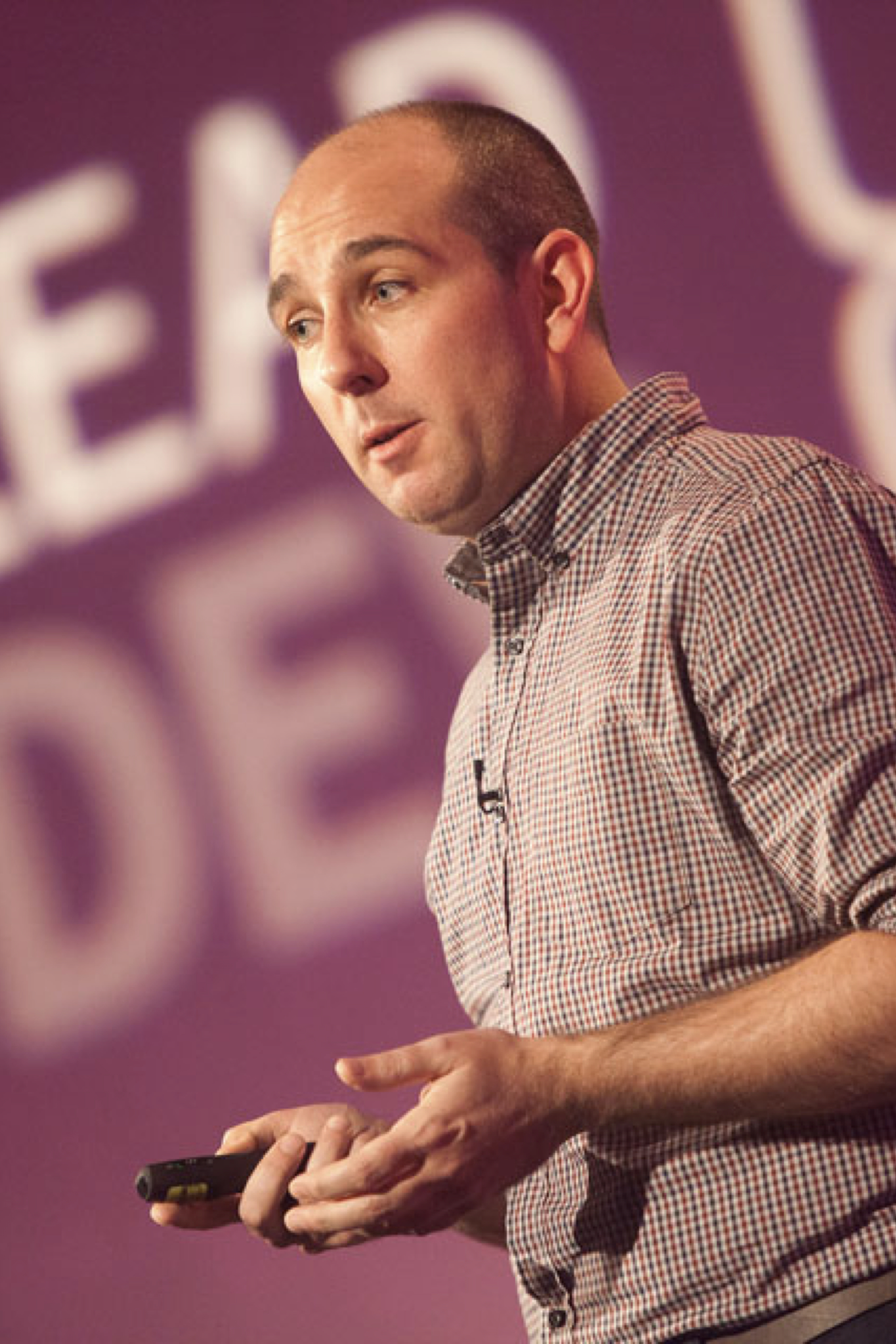
Although a little short for a Stormtrooper, Sam Barnes is currently an Engineering Manager at Marks and Spencer.
After receiving his degree in Digital and Business Computing, Sam spent two years as a front-end developer before moving into digital project management and leading teams at both digital agencies and product companies. Over the following years, Sam delivered digital projects of all sizes for clients including Nokia, Dell, Zebra, BBC and Oracle.
Sam is a Certified Scrum Product Owner, an international keynote speaker, has written for Smashing Magazine, Think Vitamin and has been published several books including the Gower Handbook of People in Project Management. He can also be found posting articles at thesambarnes.com, a blog dedicated to the topic of digital project and team management.
Brett Harned: Hi and welcome back to Time Limit. This
week's episode is all about the project management career path.
There are so many routes a PM can take today, from PMO to operations
director, consultant, and even a podcast host like me. Who knew?
Brett
Harned: So for this topic, I wanted to bring on a guest who
took a less traditional route in their career but really stuck with
management in the end. So I called on my good friend, Sam Barnes,
who's going to share his path from being unsure about where his
career was going, to jumping into digital as a developer and
eventually landing in project management. Sam's currently a
development manager for Marks & Spencer in London and he's
been a key figure in the digital project management community with
fun and relatable blog posts, both contributions, keynotes, and so
much more. I hope you enjoy the conversation as we talk about the
path of the PM, the paths that many take or can take, the qualities
of successful project management, and how those qualities can help
you to find a career path of your own. Check it out.
Brett
Harned: This week I'm happy to welcome Sam Barnes to Time
Limit. Hi Sam, how are you?
Sam Barnes: Hello,
good. Thanks, yourself?
Brett Harned: Good, good.
Sam, I think before we get started, it would probably make sense for
us to mention the fact that we've become friends through our
work in digital project management.
Sam Barnes:
We have, across the Rubicon.
Brett Harned: I mean,
so you've been really invested along with me and the digital PM
community, starting with a really great blog, speaking at some
conferences and on podcasts, among other things. I also know that
you've had a really interesting career path. So you're
really well suited to join Time Limit and talk to us today about
your career path, about project management and kind of where
that's taken you.
Sam Barnes: Sure.
Brett
Harned: So you've been a digital PM in the past but you
now work at Marks and Spencer in London.
Sam Barnes:
Correct.
Brett Harned: Can you tell us a little
bit about your career path and what you're doing now?
Sam
Barnes: Sure, so it's kind ... I mean, from my
experience, it's kind of a strange one, an unusual story. So
initially I was ... and it goes right back to school, so I was at
grammar school and did my GCSEs, is what we do in England at the age
of sort of 15, 16. The next step was, I went to graphic design
college, so all throughout my childhood really, I enjoyed creative
things and it just seemed natural that that was a next logical path
for me to sort of go into that area. I went to graphic design school
and I got in and I was absolutely shocked that I didn't enjoy
it, really didn't like it. It was not kind of what I expected
it to be, so I found out through that, that I was much more into
sort of ... I guess you could call it layout versus drawing, you
know? It was much more graphic design than I thought, as opposed to
the art side of it but I understood why it was important. The upshot
of that was that I didn't know what I wanted to do.
Sam
Barnes: I left college and essentially went into a lot of
manual labor jobs, so I worked in the supermarket full time, I
worked servicing construction equipment. I did quite a lot of those
things, kind of those kind of jobs and they're really hard jobs
but when things really changed for me and I'm talking when I
was probably in my early 20s, at this point, I managed to log onto
the web one day using a homemade modem cable, believe it or not. We
didn't have a modem cable, we had a modem cable with two of the
same ends and a phone cable with two of the same ends and I spliced
them without any instructions and we suddenly got the modem noise
and that was it. That was very much a change for me.
Sam
Barnes: So the minute I got on the web, I don't know if
others have the same experience but I just knew. I didn't know
I wanted to do it as a career but I was fascinated. It was the first
thing that wasn't video games or something like that that I was
fascinated with. I just wanted to know how it all worked. I mean I
kind of stayed in those jobs but eventually, I realized that I
really really wanted to do this, so I did a thing where I quit all
those jobs, I went back to live with my parents, which I was both
very lucky to do but also, in your 20s, that was not an easy thing
to do. I think everyone would agree but I did it. I did my IT degree
at my local college, so not like going away to a campus. It
literally was a 10 minute drive from my house.
Sam
Barnes: So it wasn't the best but it was there, it was
available, and when I did that degree, I absolutely loved it and
what I realized when doing it was that if I'd have done ... so
I was obviously doing it a lot later than most people. Most people
do it straight after school or college, college in the English
sense, and I really ... I absolutely loved it and I learned that, if
I'd have done it at that younger age, actually I don't
think I'd have done very well. If I'm honest, I don't
think I was mature enough, but those three years, I loved it. I
enjoyed the homework. I enjoyed the coding.
Sam Barnes:
So the actual degree was ... It was called, web and e-business
computing, at the time and it essentially mixed up everything from a
bit of Java programming right through to business topics. So I guess
what they were trying to do is give you a decent foundation to go
into a technology field in whatever role you wanted to, which is, to
be fair to them, is what they pitched it as. I think, like most
people, that I thought that going to college meant I'd come out
an expert in something and actually, on day one, I remember them
saying, you won't come out an expert but you will have a
foundation in many areas and then you can maybe specialize. They
were correct about that.
Sam Barnes: But anyway,
so I did that for three years, loved it, did really well, thinking
that I would leave there with my good grade and get a job pretty
much instantly in a cool funky digital agency and that was my career
sorted. It actually sent me 68 job applications before getting my
first job in an agency.
Brett Harned: Wow.
Sam
Barnes: It was a big shock. I mean I had a really good grade
and I thought that would be a differentiator and apparently not. In
fact, the first job I got wasn't even like a permanent job. I
went to interview for a small agency as a, at the time, sort of a
HTML coder and they turned me down initially and then I got a call
later that day saying, would I be interested in doing a small
contract and I went there for three months. I mean I didn't
know what a contract was at that point. I had no clue. So I went
there for three months and then at the end of that, they offered me
a permanent role and that was the beginning of that.
Sam
Barnes: So I sat down at this agency and my job,
essentially, was a website editor. So it was CMS work, it was
content management system work, which utilized a little bit of HTML
to make things look a certain way but really, that was it. It was
content, it was HTML, it was working for Nokia, so we were an agency
that was supplying Nokia, back in the day when they were pretty much
the world's most popular phone company and it was updating
their UK and Ireland websites with the products and stuff. It was
great.
Sam Barnes: I couldn't believe I was
doing it as a job. I felt so lucky and I often tell people, I still
got ... I think on the first day because I didn't know anything
and they needed to get me doing stuff, they asked if I could use
Photoshop and they asked me to create a Call of Duty banner for I
think it was the Nokia N-Gage at the time and I've still got
that banner, that looks awful. It's got all the different bells
on it. It's got everything that you'd imagine but I kept
it because I remember finishing it, sending off, and I just could
not believe I was being paid to do this. This is the kind of thing I
was doing for fun after my day jobs and now I was doing it.
Sam
Barnes: So I was so happy and so grateful and I think that
runs through my entire career but I was at this company for about
three and a half years but I think after about a year and a half, I
think I thought for whatever reason, it was quite a small agency so
I kind of felt like I'd gone ... like I knew the job, the
actual job that I was doing, the CMS with the HTML, it was ... It
stopped becoming challenging. I didn't kind of think that
consciously, this is no longer challenging, but I really wanted to
learn more and I was under the mistake, especially at small
companies, where people think they're going to get trained from
junior to senior, all the way, with tutorials. I think, as most
people find out, a lot of it is down to yourself to elevate yourself
and progress yourself and hope that work supports you in that.
Sam
Barnes: I mean I initially wanted to get into back end
development, when I was at college, that was what I enjoyed but I
really struggled with it. What I found was, when I moved to work on
the front end, it just ticked all the boxes for me. I enjoyed it, I
got it, I seemed to be okay at it. So I essentially taught myself
that. My parents thought I was pretty crazy, I would get home from
work, have some dinner, go straight to the ... many people laugh
now, straight to the computer room, which I'm sure people of a
certain age will remember in the house, and I would just teach
myself front end development. I did that. I got myself into a
position where work kind of would be willing to let me do that and
eventually, I stopped just doing the website and the CMS stuff and
then I was the agency's front end developer and so on and so
on. [crosstalk 00:09:02]
Brett Harned: So it sounds
like you've had a lot of kind of different roles and interests
but all within the digital realm pretty much.
Sam Barnes:
Yeah, I mean the best thing for me, without planning it,
pure luck, was getting into a small digital agency first. I'm
not saying it's the only way but looking back at my career
today, it was working at small agencies that I was just so valuable,
more valuable than I think I could ever imagine and more valuable
than you can sort of pitch to someone when you're telling them
to do it. The reason is because there I was, joining an agency
technically as a complete rookie, complete junior, I've taught
myself a little bit of front end development and I'm able to do
that in my day job now and again, that kept me happy for a couple of
years. Again, I felt so happy to be doing that.
Sam
Barnes: It was just unbelievable but then, this is where my
DPM career kind of started and as me and you have discussed many
times and I think many people of our generation will experience, you
don't decide one day you're going to do it. It's not
something that I decided to do. I remember when we did that first
workshop in London back in 2013, I think it was. We had 100 DPMs in
front of us and we asked them, who here decided to become a project
manager because one person had asked that question. Rather than
answer it, we asked them and I think it was two people out of a
hundred that put their hands up, if you remember, and it was one of
those moments where I realized that this is not an unusual story.
Sam
Barnes: So working at the small agency, the reason it's
so good is because you have to wear so many hats. If you're an
agency that's sort of 10, 20 people, you simply can't have
a specialized person in every role, you just can't. You just
can't do it. It's a commercial decision at the end of the
day. So again, this is what I know now. At the time, I didn't
have a clue. I was just enjoying my job and there were jobs that
needed doing and someone needed to do them. There were only, I
think, 12 of us at the time. So there I am as a front end engineer
but I'm also working on projects and these projects have other
things that need doing, organization, there are also the business
needs to run, so we were obviously trying to win other work.
Sam
Barnes: Essentially, I had the technical foundation
knowledge and at the time, it was as good as another engineer's
to be honest because I was also doing the company's IT
networking and dabbling around with PHP and whatnot, but typically,
a technical person would stay in the technical realm. I don't
know what it was. I don't know when it was but I started to be
used to go into client meetings, as the technical guy, clearly
because I guess I could communicate a little bit better with clients
than say some of the other technical people and I think that the
account managers at the time, the salespeople, had previously been
at those meetings and doing what still goes on today, overselling,
due to lack of knowledge.
Sam Barnes: So they
actually appreciated me coming along and also, I did as well because
I was getting a chance to kind of inject some, what I would call,
realism, into those pictures and make sure we weren't
overstretching too much but ultimately, I was also in the office,
these projects were happening, and I remember specifically because I
was a front engineer, I was being handed, at the time, Photoshop
templates quite a lot. A lot of my job was being [inaudible
00:12:09] these designs that were in Photoshop and essentially being
told to go and create the front end templates for those designs.
Sam
Barnes: More often than not, at the time, there were a lot
of agencies like my one where it had transitioned in the past from a
print to a digital agency but there was still remnants of the print
world, so you had a lot of PSDs, Photoshop files coming to me that
weren't in any state to really be cut up in the way that we
would think of it today. They were pretty pictures, right? They were
pretty pictures that you could have print out to sell something but
they weren't practical, so I suggested to the leadership team
of this agency that with just a little bit of training to the
designers, who were creating these PSDs, I really believed we could
cut a lot of time off these projects and kind of make
everyone's life better, including my own.
Sam
Barnes: They let me do that. I went with it and I think it
was around about then, without realizing it, that I started my DPM
career before I ever managed the projects. What I'd done is I
had spoken up about how we could organize things a bit better and
the company had recognized that and put me in a position to start
doing that. We did it. It worked and I don't know what happened
between now and then, it's all a bit of a blur. That's
about 15 years ago now.
Brett Harned: Yeah, that
totally makes sense.
Sam Barnes: Yeah, I mean I
don't know when I wrote my last line of code. There was a point
when I was project managing projects in it's entirety,
including doing the coding as well but I don't know. Even the
next sort of year or two years at that agency, I essentially moved
from a hands on, full time front end engineer to not coding at all,
purely managing projects, managing clients, being a part of
pictures, you name it. Even being QA, when you're in this
company, you rarely have dedicated QA. I know that today, developers
sort of pride themselves on testing code but back then, that
wasn't the case. I was responsible for these things going out
the door, so I was essentially the QA. People would finish their
work, I would test it. So the point was that I had an awful lot of
experience in an awful lot of different areas. I was talking to
clients from blue chip companies, clients from small companies,
startups, I was trying to help run the agency internally. I was
probably line managing at that point, some engineers. Yeah, doing
all sorts.
Brett Harned: Yeah, I think you're
bringing up some really interesting points because I think
you're saying, there's a wide range of skills that can
help you as a project manager or digital project manager.
You're not bashful, you're able to communicate,
you've taken ... You're willing to take on more in your
role, so doing more than just managing a schedule and a budget.
Sam
Barnes: When I was younger.
Brett Harned:
Yeah, right.
Sam Barnes: [inaudible 00:14:44]
Brett
Harned: So as you've progressed in your career, I'm
curious, what qualities do you see in really successful project
managers? Because I think you've pointed a couple of those
things out already, interestingly, in yourself but I'm sure
you've seen in others.
Sam Barnes: I mean, I
don't put these in sort of any order or priority, I guess,
because I was kind of doing a bit of prep for this podcast and I
made a list, which I'll go through but the truth is, I felt
like I could have kept going, so I'll just read what I've
got.
Brett Harned: Okay.
Sam Barnes:
So I think obviously being organized. In fact, I've written
down here, hyper organized. This isn't ... I've seen
project managers, I've seen account managers, but project
managers specifically, I've seen many, quite honestly, fail
really badly and it was mostly to do with the fact they
couldn't deal with the amount of parallel thins you have to be
doing practically but also thinking about and planning. When I first
moved into managing projects from being an engineer, one of the
first things that went wrong for me was the amount of stuff that I
had to deal with. It was just a nightmare. So being hyper organized.
It helps, it helps a lot.
Sam Barnes: Being
personable as well. There's an awful lot of project managers
out there, who I've seen, who have got so many great skills but
they're kind of cold, whether they mean to be or not, whether
they know about it or not but I find that the more personable you
are ... being a project manager is about being a leader without any
authority. That's kind of what I've always felt it's
like.
Brett Harned: Absolutely.
Sam
Barnes: How do you get the respect and how do you motivate
people and how do you do all the things that a normal person with
authority does, without it? It's really being ... I'm sure
there's many ways to sell that. My personal approach is that
you have to just be able to get on with people, you know?
Brett
Harned: Definitely.
Sam Barnes: And I come
in with that as well is being a good communicator and not just a
good communicator to one audience but to many, to many different
audiences. I've seen people who are good ... say, in a bigger
company, an internal project manager of technical projects and
they're great at it but the minute they have to talk to say,
external clients or CEOs or someone, they're not able to change
the way they communicate, in the tone or the words or whatever it is
they use and they kind of fall down there. So I think being able to
communicate to many audiences is really important.
Sam
Barnes: Relating to being organized of course, being able to
multi level to an extreme level. As you say, I've done many
jobs in my career, including what I'm doing now, which is
engineering management and I'm ... I know that things may
change but to this day, there is no job more intense, that requires
more multitasking, than [inaudible 00:17:23] project management and
I guess to an extent, project owners, in another world today.
Sam
Barnes: Another key thing for me is being resourceful and
staying calm under pressure. So by that, being resourceful, I mean
you have to be willing to find a way to solve a problem, even if it
seems like there aren't many ways where it can't be done.
As the person leading the efforts to provide a solution, there will
always be roadblocks, there will always be problems. You have to be
the one, not necessarily to do it all, but you need to either be
leading it or getting others to learn to be resourceful but you have
to find a way to solve it and staying calm under pressure. I mean,
what comes with the extreme levels of multitasking is an awful lot
of pressure, so anyone that's kind of weak in the area,
it's probably not going to be the career for them, if I'm
being honest.
Brett Harned: Yeah, absolutely. I
think, too, a lot of these things that you're mentioning are
not necessarily things, like qualities that you step right into your
career with, right? Maybe-
Sam Barnes: No,
definitely not.
Brett Harned: -being organized.
Sam
Barnes: You might have some raw talent in those areas, you
know?
Brett Harned: Right, yeah. I tend to think
like you can teach most people how to create a plan and how to
manage a budget, how to create a work load plan, but when it comes
to having difficult conversations, staying calm under pressure,
being a good communicator, I feel like it sometimes takes a little
bit of experience, would you agree with that?
Sam Barnes:
100%. I think it takes experience, I think it takes working
in other areas as well. I think it takes ... I know this is a bit of
a cliché but I do think it takes making mistakes and failing.
Brett
Harned: Absolutely.
Sam Barnes: A lot that
I've learned is not through being smart, it's through
being a bit rubbish at my job. I've kind of messed up a few
times here and there and sometimes you learn the lessons straight
away, sometimes it takes years. Sometimes you sort of ... I think
you look back and you go, oh, I could have handled all those
situations a little bit better. I've often talked about
introverts and extroverts. I won't go on about it here but
that's something that if I go back over my career, I think I
would have very different relationships with some people that I had
challenging relationships with because I just didn't understand
certain things back then.
Sam Barnes: Yeah, no. I
mean not afraid to have difficult conversations is an incredibly
important one. I think it's one of the ones that is often
missed as well. I think that people ... People's idea of
difficult conversation or what that manifests like is not always the
same amongst people, so you probably get ... just to use example
numbers, out of 100 people, you probably get 90 project managers
saying, that's an important thing to be able to do but then how
they would handle those difficult conversations, I think you would
get a lot more of a split and I think people think just by talking
about a difficult thing means that they're ticking that box but
it isn't.
Brett Harned: I totally agree and
it's like how you handle the people too, right?
Sam
Barnes: Everything.
Brett Harned: Exactly,
like how you talk about it, when you talk about it, how you interact
with the people, how you prepare for it. I think we all definitely
do that differently. I think you're talking a lot about kind of
how people can grow into their careers and I'm curious, can you
talk a little bit about how you yourself grew as a PM? Like what
were the things that helped you to carve out your career path into
other areas, thinking about the steps that you took out of project
management, into actually people management?
Sam Barnes:
I think I've kind of alluded to the very first part of
my career, where I felt like it enabled me to progress at a faster
rate in any path and that was to do with the multitasking. So as I
say, when I went from an engineer to a project manager, I think
within ... I mean it was a short time. It must have been within
literally two to three weeks of being a full on project manager, I
almost, I wouldn't say burned out, but I lost control,
completely lost control of emails and my world had changed. I'd
gone from working on 1 or 2 projects at a time to having 13, 14 and
50 people that needed to speak to me and all sorts of
complications.
Sam Barnes: So the first thing
that helped me and I use it to this day and I don't know how
I'd survive without it, is I use a thing called GTD, I think a
lot of people have heard of it. It stands for, getting things done,
and it's a productivity methodology created by someone called
Dave Allen. Essentially, it's a way of processing your inbox
and creating to do lists. I won't go into too much of it here
but it was something that the minute I got on top of that, I
suddenly could think clearly and that has ... I think when you move
into any senior role, you're going to have to deal with a lot
of things. I actually believe that a big part of the higher salaries
that you get is paying for your ability to handle more work than
say, someone who hasn't got the experience. So that was a huge
thing that I've done and that I learned the hard way but that
has enabled me to move in any direction in my career.
Sam
Barnes: As I said earlier, everything I've learned,
it's through mistakes but I think the main thing for me
personally, was the ... It was getting lucky, working for a small
agency, having essentially, that between college experience and the
agency, I picked up the foundational level of knowledge in the
entire life cycle of a digital project, right from sales, right
through to taking off a website and thank you very much, we're
done now. Everything in between, technical, business, the money. So
for me personally, it was really about getting exposure to all of
those areas and at the time, for me personally, the technical
knowledge that I had was quite rare. It was quite rare to have
someone who was in a project manager role who also knew what they
were talking about technically and to a degree, creatively back then
as well, as you'll remember, the web and web projects were an
awful lot simpler back then. We're talking pre responsive
design here, pre smart phone.
Sam Barnes: So it
was really about the exposure to different areas that enabled me to
go in any direction in my career and I should say though, this
isn't a plan. Even now, I don't know what my plan is for
the next five years. I'm just kind of going where it takes me.
The reason I gravitated towards people management, I think it was
just something that I didn't realize was a skill until the last
few years actually. It was something that I didn't realize
other people either detested to do or would like to be good at it
but just couldn't do it, weren't good at it, a bit like me
and backend engineering. I didn't seem to have the right chip
in my brain for that and I just think some people don't quite
have that for people, whereas I actually really enjoy it. So
that's kind of how I've ended up where I am. I guess for
lack of a plan, I think I've ended up in a role that does
leverage a lot of the things that I'm just ... I actually enjoy
doing and I think when you enjoy something, you tend to excel at
it.
Brett Harned: I agree and it's funny
because earlier you said that you're a little bit lucky and I
know that I've told you this before, it's not that
you're lucky, it's that you've basically gotten to a
point in your career where you've recognized what you're
good at, what you're not good at, and where you can excel and
you've found that path and I wonder if maybe you have any
advice for people who are in a PM role, looking to kind of build
that strong career path, whether they're going to move out of
PM or stay into a PM kind of role. What are the things that those
people should be doing or thinking about?
Sam Barnes:
I mean the first thing to say on that, above anything else, is
that I got into project management by accident, as did most people,
but it was a very very fortunate accident for me because what
I've learned since getting out of it is that the skills that I
learned in that particular role are super transferable. I've
had a taste of many many roles in this space and I'm not sure
there's one that is where you have such transferable skills. So
anybody that's listening now, in a project management role and
thinking they have to stay in project management because that's
kind of their call, all I will say is, that's not true. So
that's the first thing to say is that, already, you're
doing things for your future career, whatever that may be. It
doesn't matter. The skills are transferable.
Sam
Barnes: Other tips that I would say for building a strong
career path, I think, in any area is just don't get too
complacent in the role you're doing now and the knowledge you
need to do that role and it's something that's easy to say
and nobody listening is going to disagree with that but it's
surprising how often you see people get complacent without realizing
it. What I mean by that is, you get comfortable. You get comfortable
with the company, with the people there, with the salary that
affords you the life you enjoy, and suddenly, if you don't
focus on continuous learning, you're really going to start to
become ... Well, not as knowledgeable quite quickly and more and
more quickly as time goes on.
Sam Barnes:
I'm not saying you've got to be reading every minute of
every day, but some people get into a job, they like it,
they're at senior level, and they just stop and then they
don't realize they're actually harming their career there.
So be careful of that one. Like I said, you don't have to be
reading all of the time but you do need to be reading and learning,
it's as simple as that. A lot of the time, the difference
between people that have got continually progressing careers is the
fact of what they're willing to do outside of work, which
isn't always possible. It's a big of a luxury really in
some cases but there's people read on the train, people that
progress and really enjoy learning find a way, okay? So I think you
need to really focus on staying up to date.
Sam Barnes:
The reason that the PM role, for me, and I don't think
this is the same for everybody, was such a good basis for a strong
career in the future in any space really was because that ...
because of the small agency in [inaudible 00:27:05], I got exposed
to an awful lot of different areas of a business, of running a
business. Right from the ones that were relevant to my job at the
time, in the technical creation, but also down to things like cash
flow and business things that transcend across all businesses, so I
think it's ... When you're busy, when you're managing
projects, try to get involved in other areas of the project or the
business that you're in, even if you're busy because that
time is going to be valuable and what you're going to be doing
there is you're going to be spending time talking to senior
people who have a completely different world view than you,
different experience, but you get to understand what they're
like, you get to see what it's like to be someone in
finance.
Sam Barnes: It's all very easy to
point fingers at different areas of a business when you're
struggling but you need to be able to understand what ... why the
people are resisting whatever change you're trying to make or
why they're being the way they are. Often, it's a
completely reasonable standpoint, you're just not aware of it
and I think the final thing is, just to ... We talk about empathy in
project management an awful lot and I think that it's such an
important thing. If you build empathy, if you got the ability to
empathize with anybody no matter what, you are set up to be a leader
in any business of any space, in my opinion, because when I was
younger and it's really come with other younger folk, you kind
of become quite tribal in your thinking and your belief.
Sam
Barnes: When I first joined agencies, there was ... believe
me now, there was Flash versus CSS at the time, there was Mac versus
PC and there's always something, Agile versus Waterfall, you
name it. There's always a thing. I find that the most
successful, not only project managers but the people that end up
just being successful in general in whichever way they turn,
it's not because of any particular skills of having that role,
it's more fundamental. It's more foundational. It's
more about how they've grown as a person.
Brett
Harned: Absolutely.
Sam Barnes: And I
think, especially in these modern times with an awful lot of ...
What's the word? Extremes on either side and it's
exacerbated by social media, I think the best place you can be is to
just not be tribal, just try and see everyone's point of view,
try and understand it, and just remain looking ... like someone
looking for solutions rather than a battle. I think-
Brett
Harned: Absolutely.
Sam Barnes: It's
not about being right, it's about getting the solution together
and that sounds very Disney, but people that know me know that
I'm not Disney. That really is how-
Brett Harned:
No, I think you're right. I've said it before, you
have to be Switzerland if you're a PM, right?
Sam
Barnes: Yeah, [inaudible 00:29:41] perfect.
Brett
Harned: You can't have opinions. You're managing
people, you have to be right in the middle and stay in the
middle.
Sam Barnes: Sure.
Brett
Harned: So you said something really interesting in the
beginning of the response to that question, which was that the
skills that you've learned or that you've excelled at have
been transferable. So now that you're a manager and you're
responsible for a large team of developers, what would you say are
the aspects of your PM career that are helping you in that current
role?
Sam Barnes: Well everything, to be
honestly. Absolutely everything. I can't think of a single
thing that I learned as a PM, in terms of a skill or a new value,
that I don't use on a regular basis and it surprises me to this
day. So when I first moved out of project management into this more
line management sort of role, I did assume that a lot of what I
learned wouldn't be used but contrary to that, it's been
completely the opposite. So I can give you ... Ultimately, line
managing people is about coordinating and it's about being able
to understand people. To be a good project manager, those two things
you have to be excellent as well. If you're not, you're
going to struggle.
Sam Barnes: So I'll give
you an example, so at the moment, recently, in my current role, we
had to kind of redesign how we're going to recruit a lot of
engineers, so we didn't really have a solid process. It was a
bit kind of one person did it this way, another person did it that
way. It worked. People came in but it wasn't very efficient and
it wasn't scalable, was the point, it was very reliant on
individuals. So I set about redesigning this process of recruiting
engineers. Now, on paper, you look at me saying that and that's
the job I've got to do and you're not sure how project
management is going to fit into that but when you get down to the
nuts and bolts of what it takes to do that, well, suddenly I need
to, first of all, think about everyone that needs to be involved. I
need to get these people together, form a bit of a team, I need to
understand the requirements, I need to also work into a deadline of
some description because there's other people waiting for
this.
Sam Barnes: This particular thing was so we
could actually then go on a sort of a larger hiring spree. There
were so many parts of it. I had to understand everyone's
different priorities, obviously the HR people are going to have
different priorities to my boss, the head of [inaudible 00:31:51]
engineering, had to understand the engineers, had to understand that
also as part of that, that I needed to perhaps use this as a way to
develop lesser experienced people, engineers on the team, that may
be going on this path or want to have a say in recruitment. Again,
it was multitasking because I'm doing this on top of my day
job. It was basically about leading a piece of work, so that
everyone felt like they had an input and that everyone likes the
solution and more so the point, we can test that solution and see if
it's good.
Brett Harned: Yeah, so what
you're saying is that-
Sam Barnes: That to
me is a project.
Brett Harned: Absolutely and I
think, sorry to interrupt you-
Sam Barnes:
It's okay.
Brett Harned: -but I think what
you're saying is that really good PMs are well rounded because
they have exposure to all parts of a business and you get the
opportunity to not only learn about all of those different parts of
the business but interject and work on those parts of the business
and if you're so inclined, to like be a part of them and long
term maybe grow into roles there.
Sam Barnes:
Definitely. I mean I'm finding ... So I'm at a company now
that's the biggest I've ever been at, so Marks and
Spencer, I think, and I may be wrong here, it's tens of
thousands of employees, at the very least. I think it might be 80.
The previous company, the biggest one I was at was sort of 250
people, so the skills of coordinating them in an environment, an
enterprise environment, is a lot harder than in a 250 person company
because in most cases, they're either sitting next to you or
you know them very well.
Sam Barnes: In a big
corporate company, you are literally taking people from all
different backgrounds, people that have been with the company 30
years, 1 year, all backgrounds, all ... you name it and you have to
somehow bring those people all together, to get them to work on
something with you, put their best efforts in, and solve a problem
and more importantly, I think this is a really key one, project
managers, one thing I've noticed, whenever I come across
project managers doing other roles in say, Marks and Spencer, but
they used to be project managers, the one thing they seem to share
that does often differentiate them against other peers doing the
same job is they have a much more sense of urgency and delivery.
They want to complete a job.
Sam Barnes: So just
the recruitment initiative that I just talked about, it could
feasibly have gone on and still be going now and I'm not even
saying it would be bad work, we'd obviously be putting a lot of
effort in but there was ... I think I see a lot of people who
haven't had that experience, they don't often have a sense
of, this has to be delivered, and that's either because
that's not in their mindset, sometimes because they've
never even been close to the money, so when you're in a big
company, you don't have much commercial exposure, it's
very easy to fall into the feeling that we can just get on with this
and do it the right way in our own time but I don't care how
big your company is, be it 1 person, a 10 person, or an 80 thousand,
someone's money is on the line-
Brett Harned:
It sounds like, put a PM in one of those roles and they're
going to get things done.
Sam Barnes:
They'll get things done, absolutely, and depending on their
other traits, in terms of how well they get on with people, so on
and so on, they'll just be out to deliver things. They
aren't necessarily delivering apps or websites. Delivery.
Delivery is an abstract term in that sense. I delivered a new
recruitment process. What was on paper? Not much. A few notes here
and there and a couple of boards but that was about it but the work
that went into it was, in my belief, a pure project management
job.
Brett Harned: Yeah, so let's talk for a
few minutes about other career paths because there are obviously
people listening to this podcast coming from all different
organizations, walks of life, what have you, so there are a lot,
right? Like project management is everywhere. It's really
pervasive but what do you see as some kind of more obvious career
paths that a project manager might take?
Sam Barnes:
So I think if we stick to the classic project manager path, I
think that that's still relevant and there's still many
many companies that have these. So I'm talking about moving
from a junior PM to a mid level, just a PM, to a senior PM, then
perhaps either a project management director or a projects director.
I mean, the thing is, they have different names. There's a
whole thing about titles, especially in the digital project
management area, that has never really been solved or even something
like a program manager or working for a PMO, that's kind of
your traditional path but actually, I see a lot of people get into
project management and find it's not for them but they liked
certain aspects of it because obviously being a project manager,
you, by default, depending on the project, you do tend to get
exposed to other sides of businesses, be it yours or a
client's.
Sam Barnes: So I see a lot of
people moving to account management because they enjoyed the client
interactions and that kind of thing but didn't so much enjoy
the production side, seen a lot of people do that. I think more
modern thinking, titles, you see a lot of people moving to say,
delivery manager roles. So again, it's a title that has many
different meanings but for instance, if I use the sort of of
government digital service, it's called GDS in the UK, give one
of their kind of themes, it's like ... I'm prepared to get
lots of abuse for this but I kind of think of a delivery manager as
a scrum master plus plus because you're kind of doing all that
team stuff but you're also responsible for things like hiring
and helping.
Brett Harned: I see.
Sam
Barnes: It's not a a scrum master, it's not a
project manager. That's why it's got it's own role
and it's own title, I guess, but it's a bit [inaudible
00:37:24] but a project manager could do that but a project manager
might not have had ... might be able to do all the delivery manager
role but had never done recruiting before, so there's the
chance to get into it.
Brett Harned: Yeah, I think
that that's just proof that also the PM role is different
everywhere, so the career path is going to be different for every
person.
Sam Barnes: Yeah, definitely [crosstalk
00:37:40].
Brett Harned: We're talking about
digital project management and working with account management in an
agency. That career path is far different than an in house corporate
project manager who is working outside of digital or even outside of
marketing. So there are a lot of different places it can go. I think
one place where it seems like PMs seem to be really suited is in an
operations role or like a chief operations officer kind of role.
Sam
Barnes: Yes, 100% and I think I see people that have been
around for many years, I see a lot of them ending up in that kind of
role, head of operations, COO, whatever it might be and I think the
reason for that is it's just logical in the day. So the traits
of a good PM, they seem to really map well to that sort of high
level of strategic thinking, that along with caring about the
people, the organization, and the production and detail side of
stuff. Again, this isn't for everybody, but in my experience,
your COO is much more likely to be very very entrepreneurial and
typically, not always, but typically that means that someone is very
very strategic and I think very creative and actually, it's not
that they don't care about the details, thinking about the
details actually bores them. It makes their day not fun. It's
like some of that.
Sam Barnes: So what clever
companies do, one of the reasons the COO role exists, in my opinion,
is because you need to balance. You need someone who's also
senior, who's also got a ton of experience at a strategic
level, but who's able to balance, let's say the craziness
of an entrepreneur, and I think when you get that balance right,
that's when you get an incredibly good company. Get it wrong,
and it can lead to problems but project managers ending up in that
kind of role, the kind of role where you can talk to senior people,
you care about the details, but at that level, you know how to bring
them up with somebody who doesn't enjoy them. You care about
the money.
Brett Harned: Right.
Sam
Barnes: Traits of a COO, don't worry about it. I got
it. I got the details. You just focus on the next 10 years, you
know?
Brett Harned: Well and if you're in that
role and you've come up through project management, you have a
certain value for project management and you're able to kind of
explain that value to the employees and hopefully create a culture
where project management is respected and needed and people
recognize that. There are places where that doesn't happen but
I think that's also a time where, if you're in that role,
you kind of reevaluate and figure out where you need to be, just
knowing that if you're in a position where PM is not respected,
look for something else. If you really like the role and you
don't feel respected, there are places out there where PM is
valued and there are places where you can grow.
Sam
Barnes: Or, as I think I did this myself, it wasn't the
plan but I think if you are in a place where PM isn't valued,
you could start doing things outside of work, start writing, start
speaking, start doing things that ... What I found, when I did that,
is that the people that perhaps didn't value it as much before,
suddenly started to take note, they started to realize, this was an
entire area that wasn't valued for many years and actually, it
really ... it's no different, it's no different to any
other role. It's hard. It can have it's good days,
it's bad days. It's for some and not others. It really
just depends but yeah, it's incredibly valuable. I think
we're doing okay on that. I think it's getting better but
yeah, still lots of work to do.
Brett Harned: I
agree. All right, so you've given us lots of great information.
I've got one last question for you.
Sam Barnes:
Sure.
Brett Harned: So you know our show is
called Time Limit, kind of nodding to the fact that we all have
limited time to do great work, right? And even time for caring for
ourselves, right, there's an idea of having a really good work
life balance and that's something that TeamGantt really cares
about. So how do you continue to think about and groom your career
when you're a PM and there doesn't seem to be time for
that, right? Like you're always focused on the drama of the
day, team members, projects, deadlines, everything else. How do you
focus on yourself?
Sam Barnes: It's not
easy. It's not easy. If I think back to when I first started
project managing, I didn't. As you say, there wasn't time
but I think as the years go on, I think there's a few tips and
tricks. So one of the things is that within work hours, so I talked
on this podcast about doing stuff out of work hours. In an ideal
world, that wouldn't be needed and I also appreciate that in
some people's world, they can't do that. Not everyone is
in the same situation, I appreciate that. So one of the things that
I would say about how to kind of focus on yourself is, in terms of
your career this is, first of all, is when you're at work and I
try and do this now and it's not always easy and I don't
always win, but I try and do it still. I try to not avoid getting
involved in other areas, regardless of how busy I am. So I've
kind of alluded to that already. So when I've already got a
packed schedule but then my boss or someone else asks if I want to
get involved in something, nothing to do with engineering, it's
to do with a HR thing or a finance thing or whatever, a hardware
thing, I try and get involved.
Sam Barnes: So
that's like a way of ... I'm going to learn stuff,
regardless of whatever. So that's one thing that I can do but I
think that's where I am now. In a small company, it's much
harder to do that because of time but you still do get chances to
get exposure to other areas. So that's what I would say there
but the truth is, getting involved in communities outside of work.
If you have them in work, great, but getting involved in communities
outside of work is just an amazing thing to do. I find that if you
can get involved in a community, and I don't mean necessarily
everyone has to write articles and books and the conferences,
it's not for everybody and not everyone's got the time but
just by getting involved, I just mean joining a Slack community and
just reading and writing ... well, reading. Reading articles as
well. Maybe adding some comments, that will help you focus on your
career.
Sam Barnes: I think it's true that
the more you contribute to a community, the more you're going
to get out of it personally and professionally. I think of that
[inaudible 00:43:43]. There's lots of evidence of that. In my
perspective experience, it is that as well but again, it's not
for everybody, so I think the only way you can really do it is to,
in terms of a bit more broader life plan here, so bit more about
caring for yourself rather than career. I, as you know me very well,
you'll know that I don't believe in particular skills
being important as much as I do values and goals at a fundamental
level. So if we're going to keep it to a project management
theme, about how to look after yourself when you're so busy, I
would say, take some time out. Take some time out whenever you can,
maybe half an hour on a Sunday, whenever you can get that time and
just think about yourself. Think about what you want to achieve but
personally, I would never say what I want to achieve in my career, I
would say what I want to achieve in my life.
Sam Barnes:
What am I going for? What's this all about? Being on
this planet? Make a little list of those things that you think
you'd like to do, whether it's owning a house or it's
a bit more abstract than that, make some things and then you've
got something to aim for and then you can make sure that every
decision you make, be it a big career decision or a small tiny
decision to do with anything, you could always just crosscheck it
against that list. It's a bit of an old school requirements
list, you know? It's a statement of work. Statement of life.
Call it what you like but I find that if you make that list, you
don't make it too detailed because life changes, everything
changes, it gives you a chance to ... You can just make sure
you're heading towards something because I find that if you
lose that focus, you can essentially put your head down, get busy
with work, and you put your head back up and it's a year later,
two years later. In extreme cases, five years later. I think if
you've got that things you're heading for, the things
you're aiming for, you can always just quickly check either a
small, medium, or big decision against that and say, is this going
to get me closer or not?
Brett Harned: I
couldn't agree more. I think you're so right. I think,
with anything in life, just knowing what you want to get out of a
situation is so important and I think as employees, we tend to
forget about that because we always feel like we're serving the
job that we're in.
Sam Barnes: Precisely.
Brett
Harned: But that company is there to serve you as well, so
remembering that you have goals outside of work that maybe your work
goals can help you reach, right?
Sam Barnes:
Absolutely.
Brett Harned: So I think that's a
really good piece of advice there. I'm all about setting goals,
personal and professional as well. Well Sam, this has been really
great. Hopefully some helpful things, tips and tricks for people to
grab as they listen through the podcast. We're going to list
some of your contact information, places to read things that
you've written and recorded, but thank you so much for being on
Time Limit today.
Sam Barnes: Thanks for having
me. It's been a pleasure.
Brett Harned:
Hopefully we'll have you back soon.
Sam Barnes:
Okay.
Brett Harned: Bye. Wow, Sam and I could
have talked about that topic for hours and in fact, we have in the
past, but I hope you got something really good out of what we
discussed and I hope you can find ways to make time to think about
and carve out your own career path. One bit of advice that's
helped me in my career was actually given to me by a peer at a
conference and it was really simply but profound to me, especially
at the time and it was, follow happiness because if you love what
you do and it makes you happy, you'll find success. So thanks
again for listening. We've got some really great interviews
coming up on Time Limit. I'm excited about them, so I hope
you'll come back and listen to the next episode but in the
meantime, if you're looking for more resources on project
management, check out teamgantt.com, where we offer free classes,
templates, and resources, in addition to our popular and really easy
to use project planning and management tool and of course, please
don't forget to subscribe and rate the show on iTunes and check
out our show notes for more information about Sam. Thank you.