Starting your own business is a big step for any entrepreneur. But how do you know you’re ready to grow beyond a one-person operation and lead an actual team?
In this episode of Time Limit, Brett talks with Chris Dreyer, CEO of Rankings.io, about how he started a successful SEO agency and why the Entrepreneurial Operating System (EOS) has been an important tool in his leadership belt.
Listen to this episode to discover:
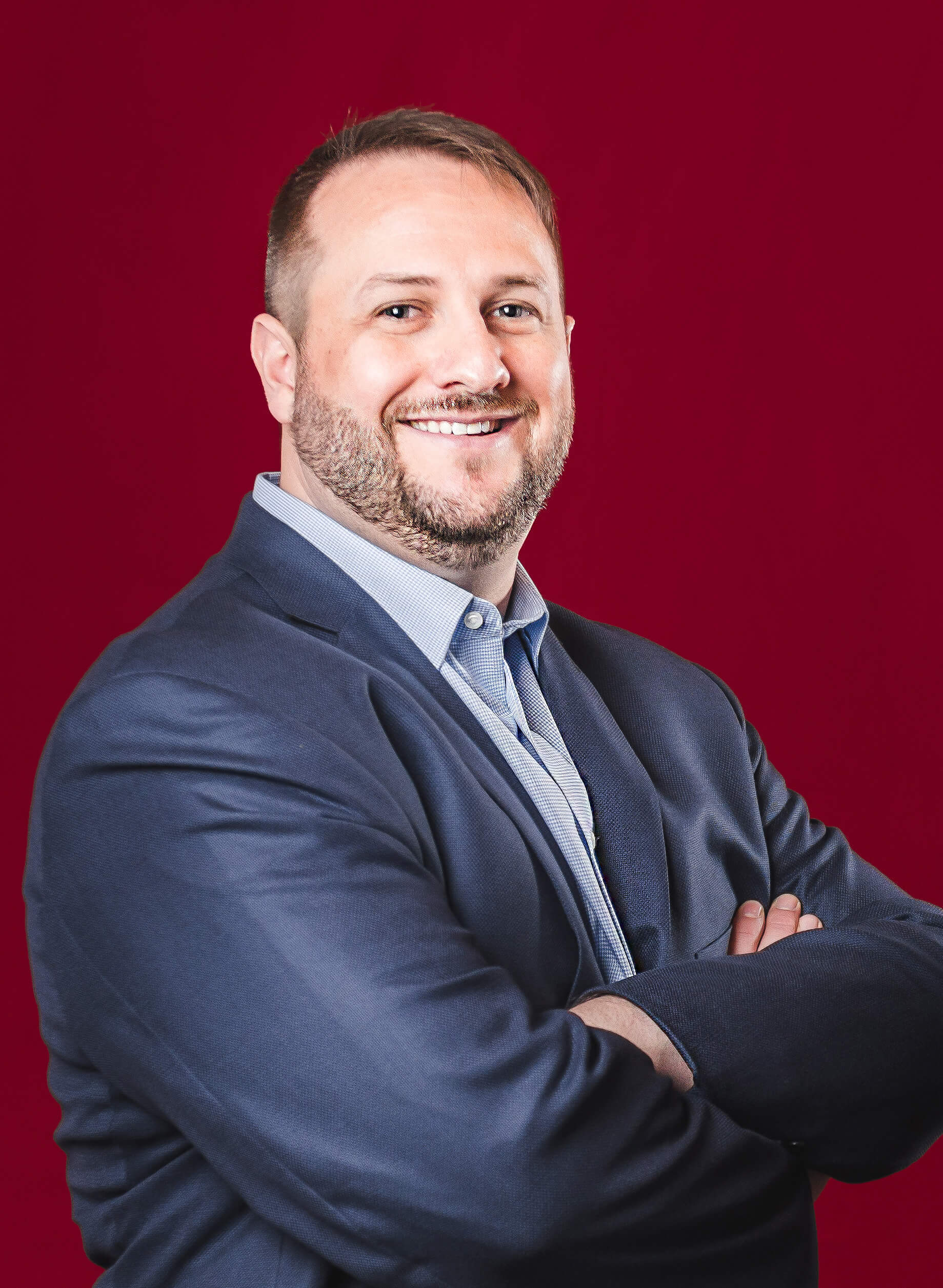
Chris Dreyer is the President and Founder of Rankings.io, an agency that specializes in personal injury lawyer SEO. His agency ranks personal injury firms for the most lucrative keywords in your industry with end-to-end SEO, from content creation to technical optimization.
“Most personal injury attorneys struggle to rank at the top of the search results. That’s why I’m here: I help elite personal injury law firms generate motor vehicle and serious injury cases through Google’s organic search results.”
– Chris Dreyer
Brett Harned: Hey, welcome
to Time Limit, the podcast that gets you an insider's view on
leadership, productivity, and project management practices. I'm
your host, Brett Harned. Thanks so much for listening. So whether
you're leading an entire business or just part of it, I think
today's episode is going to give you some ideas and some
inspiration. My guest is Chris Dreyer, the CEO of Rankings.io, which
is a digital marketing agency, strictly focused on SEO. If you
don't know what that is, it's search engine optimization.
And they do that SEO work specifically for elite personal injury law
firms. So I've known Chris for a while now, and I'm really
impressed with the team at Rankings. So I thought it would be a good
idea to have him on the show to talk about how he got into SEO, how
he started and grew a business and a team, and then implemented EOS,
which is an operating system that aligns teams, instills focus, and
leads to a healthier business. So check it out.
Hey Chris,
thank you so much for joining me on Time Limit today. How are you
doing?
Chris Dreyer:
I'm doing great. Thanks for having me, Brett.
Brett
Harned: Absolutely.
It's good to talk to you, man. So you are a leader in the SEO
field. You're the CEO of Rankings.io, which is a successful and
growing SEO firm, where you're basically focusing in on law
firms. I want to touch on your background in SEO a little bit, and I
do really want to dig in on leadership today, because I think your
story is very unique, but it's also one that I think a lot of
people can relate to, because I know there are a lot of business
owners who started in a place where they were really good at a thing
and they just blew up and grew a business. So I thought maybe we
could start out by maybe you just talking to us a little bit about
how you got into SEO and maybe how you got into kind of wanting to
run your own business.
Chris Dreyer:
Yeah. So I'll have to take it back. And
you can speed me up at any point. I have a history education degree
and I went to college, but I didn't really have a passion. I
really didn't know what I wanted to do. And I used to tell my
parents that I was going to own my own business. I said, yeah,
I'm going to get a degree, but I'm going to own my own
business. And they knew that going in, and I ended up getting a job
as a detention room teacher to high school. And so that's the
alternative classroom where the kids had gotten in trouble, had to
come in before school or stay after. And it was on the same track as
teachers. So lining up for my retirement. If I did this for three
years and my fourth year, I taught I'd have four years teaching
on this track.
So it made
sense as a way to get my foot in the door, but it was such a grind
because I'd have to go there, five, six in the morning to
prepare the detention room before school, then I had to stay after.
So it was substantially worse than a teacher. And not only that, I
was a basketball coach too. So I was starting my day at 5:00 am and
getting home at 9:00 pm every day. And there was this part in the
middle where I was like, I have to do something else. I have to
figure out how to... I always had this hustle in me, but I
didn't know how to apply it to make it earn for me. And I found
Ed Dale's 30 Day Challenge to Make your First $10 Digital
Marketing. And I think I made like 20 bucks through affiliate
marketing, but by the end of my second year of teaching, I was
making more substantially more, with affiliate marketing than I was
teaching. So I decided to pursue it full time.
My first site
was lose a double chin and I ranked number one for double chin for
like three years. I had a stain concrete site that ranked number one
for stained concrete for like five years. And I never stayed in
concrete. I had ghostwriters write it, but towards about 2011, I had
it up to about 15K a month, decent amount, back then. And at first
penguin algorithm hit and it took me from 15K overnight to like
2000. I have to get a job. So I got a job at an agency because I
knew SEO. I knew marketing and I rose to be their top SEO guy. And
after being there for about a year and a half, I just, I didn't
agree. I'm a DI, type A, I didn't agree with their
approach to it a lot of what they're doing is serve the
clients. And I just knew that I was going to start an agency. And
since I say the kind of what not to do, and I got this extra push
from my sister, who owns a plumbing company. She's like, you
need to do it. And I took the leap in 2013.
Brett Harned:
Cool. So it sounds like
that entrepreneurial spirit was kind of always a part of who you are
regardless. Like you knew you wanted to own your own business.
Chris
Dreyer: Oh, yeah. For
sure.
Brett Harned:
And the tipping point was really getting the experience in an
agency on top of that SEO experience that you kind of just gained on
your own.
Chris Dreyer:
Yeah. And if I'm being totally honest, I was into the
party mode, immature in the affiliate days. And I wasn't ready
to have an actual business until about 2013.
Brett
Harned: Yeah. So I got to
know, working in that agency, knowing you wanted to do your own
thing, did you kind of have any hesitation when it came to not just
starting a business, right? Because you could start a business and
do your thing as one person, but having to hire people and then lead
them? Like any hesitation around that?
Chris Dreyer:
That's a great question.
And I'll say no. And the reason is because when I was running
my affiliate marketing business, I was cruising this Keyword Academy
forum. And I was reading about the most successful affiliate
marketers and they all had teams, and they were utilizing Upwork,
and back then, I can't remember what it was called. It was
called something else. And I had a team from my affiliate sites. I
had processized everything myself, you know, do it, document it,
delegate it, type of situation. And I already felt comfortable
working with the team. So when I went in, at first, I didn't
have the revenue to work with a team, but I knew that pretty quickly
I was going to start delegating.
Brett Harned:
That's cool. That is a level of
awareness that I haven't seen in too many people in your kind
of position. You know, I know a lot of agency owners who grew
businesses from being successful as a developer or designer. Right.
And then they find themselves with several employees, in more of a
business role, and they kind of get to this point where they're
like, oh my gosh, I just want to go back to doing that thing that I
love that brought me here.
On the flip
side of that. I think I've also known some owners who just
can't let go of the day to day, right? Like, they're still
working in the business when they arguably should be working on the
business, but I get it. Right? Like, you build this thing
that's kind of core to who you are, to what you do well and you
want it to do even better. Right. So I guess my question out of all
of that is how do you let go? Was there anything that you had to set
yourself up for, think about, be ingrained in who you are, to be
able to trust people that you've hired?
Chris
Dreyer: That's a
really interesting question. I think the first thing is
self-awareness. As an owner, your employees are never, for the most
part are never going to care as much as you do.
Brett
Harned: Right.
Chris
Dreyer: They don't,
they aren't the owner. I think the worst core value that any
company can apply to their core values is ownership mentality. I
think it's a joke. You're the owner. You do have that
mentality. If you're not you're the employee, but you have
to surround yourself with great people. And I think that just
understanding that if something is 70% is good as is what you do,
and maybe you can get them to that 80 or 90%, there's an
opportunity to scale and grow because I only have so much time, so
much capacity to do these things and I'm going to have to bring
other people on to grow.
Brett Harned:
Absolutely. That makes sense. What what was
kind of the tipping point for hiring your first employee?
Chris
Dreyer: The tipping point
was I was getting demand for skills and needs that I didn't
have the expertise in the beginning. It was a lot of web
development, email and hosting migration and design type of a lot of
times, you won't find a web designer that can also code and you
need to break up those roles. But I found kind of the unicorn.
Brett
Harned: Right.
Chris
Dreyer: From an
acquaintance, just kind of luckily the could do both. So that was
actually my first hire. And he's actually my president today.
Steven Willie, has great soft skills, but also a very strong
strategic mindset. Looking, now I have a second agency, Esq
Marketing and my approach has been a little bit different. It is...
My first hire is going to be a project manager to get the president
out of the weeds so that he can focus on selling and business
development. And then a lot of that early investing is going to go
into marketing. Rankings, my first like, 15 hires were all service
oriented individuals before I hired support or business
development.
Brett Harned:
Interesting. Okay. So where is your team now? How large
is your team? And then I'm interested to know, what do you
really like about your team? Like, what do they do really well? How
do you kind of talk about them?
Chris Dreyer:
That a good question? We are at 21
people and our MRR right now is he gets around 520, 520K MRR,
monthly recurring revenue for Rankings, not for Esq. And we could
have a lot more staff because the general rule is 200,000 rows per
employee. You know, it's kind of a general rule of thumb, when
you compare it to Top Line and Also Get Sold. But we structured our
agency in a different way where we're mostly composed of
strategists and project managers and the technician, the doers, are
strategic partners, and the benefit. As you know, there are tons of
digital agencies that are the doers that are specialized in one
thing, link-building, content, local SEO. So that's who we
partner with. It makes it easier to look at margins and deliverables
because we can factor those into our costs. Also helps with capacity
situations for scaling, or we can throttle up or throttle back our
capacity if needed. And it doesn't affect our full-time staff
and having to furlough individuals.
So it's a
very long-winded way of saying, we're structured through
project managers and strategists. And what I like about it is people
own their specific function. And we have a marketing function
that's owned by an individual, that I can be that visionary for
that side of things. And then it's executed. The same for
finance, the same for operations and account management. And I can
kind of have this bird's-eye head up approach, looking down at
where's the holes, what can be improved as opposed to being in
the weeds of my head down. Just always focusing on the work.
Brett
Harned: Yeah. So it sounds
like in that structure, trust is really important. Would you agree
with that?
Chris Dreyer:
Absolutely.
Brett Harned:
Yeah. So in order to kind of continue to be
successful as a business to continue to grow, you've got to
build that trust. I'm curious, what are things that you might
do as a CEO or a founder, or honestly, even someone who's
really invested in the business, as a leader within your business.
Like, what are the things you have to do to, to build trust with the
team?
Chris Dreyer:
I think it starts with communication and candid conversations. We
referred to ourselves a long time as being radically transparent
with the company. Anytime we let go an employee, we explain why,
which is tough to hear sometimes, or you would even share our top
line revenue numbers, how much specific clients were paying us, all
of these types of things, even the ranges for our salaries. They
know what our ranges are for comp bands. So a lot of transparency,
and just great, a very large emphasis of communication. As much as
we can through a remote based company. So we have very specific
tools, Trello we use for workflows, Slack we use for communication,
Zoom for video and when we need to have a deeper conversation. So
things aren't misinterpreted through inflection, and then
we're working on Notion for a knowledge base.
Brett
Harned: Right. Okay. So
kind of related to that, what kind of mindset do you think that a
founder or a CEO needs to take on when they're leading a
company, but also when they're leading a company with goals for
growth?
Chris Dreyer:
I think the most successful CEOs that I've been near or
congregated with, or they have a lot of similarities in that
they're drivers and they're doers. Everyone's heard
wantrepreneur, entrepreneur, ruminator, individuals that ruminate on
decisions. It's, at the end of the day, you have to get as much
information as you can and then make a decision and then act
there's even some quotes, like, get it done and get it right.
Ready, fire, aim, and Michael Masterson, I believe, but it's
just, you have to make a mess. You can read everything in the world
and ruminate and have this education, but at the end of the day, you
have to experience these situations to learn from them.
Brett
Harned: Yeah. We, we kind
of share a similar value at TeamGantt a kind of phrase that's
been thrown around is done is better than perfect. Right? So this
idea of like, just get something out there, see how it does, and
then continue to iterate on it and make it better. It's sounds
like we have similar ways of thinking there. When you're
talking about kind of how you operate in the business and how you
work with different people in the business that made me wonder, are
you the thing or the person that kind of drives productivity or
motivation within the company? Or is there something else that you
think makes your team work well together?
Chris Dreyer:
I think everyone does like
that I'm a visionary and I have these ideas and bring
innovative approaches, but my president really embodies that role of
integrator where he's the glue of the company, amazing soft
skills, amazing team player. And he kind of holds the whole
organization together. And I think that he's of large
component, I think my directors are great managerial leaders. I
don't like the word manager. I prefer leader, coach, or mentor.
And then I think traction and just having our own internal
jumbo-tron, our own scorecards leads to competition, and
self-awareness. It helps with motivation.
Brett Harned:
Absolutely. It's almost
like you knew where I was going with the next question. So, you
mentioned traction, and I know that at Rankings, you've kind of
implemented EOS, which is entrepreneurial operating system.
I've already told you, I don't know too much about it. So
maybe you could just talk a little bit about what EOS is, and maybe
even your decision to kind of implement EOS with your leadership
team or within your team.
Chris Dreyer:
My story with EOS is I was in Vistige, a peer
group, and I noticed one of the individuals in my mastermind was
implementing EOS. And I got to see how it affected his business in
such a positive manner, before I even was aware of it. And basically
what it is, it's the entrepreneurial. I can't pronounce
it.
Brett Harned:
It's the worst word.
Chris Dreyer:
Entrepreneurial operating system. Or
otherwise it's just a simplified business framework. A
comprehensive framework to manage your business through people,
vision process, traction, data, probably missing one, but myself, I
was a technician, an SEO guy. I didn't go to school to business
school. I didn't have a mentor guiding me. I had to kind of
fall on my face a little bit. And this, ELs introduced me to a
simpler way to run a business. And that's what it is. Many
businesses are similar and it just provides you a guiding light in
how to run a business through meetings, through data, through
people, and all those different types of situations.
Brett
Harned: Yeah. It seems like
it's a process that kind of puts in place these like,
checkpoints or milestones to help you right size the way that
you're working. It's almost a process for managing a
business or a team, in some way. I'm curious. How has EOS
changed the way that you and your team work?
Chris
Dreyer: Well, the first
thing is, is we had to have candid conversations with people if
they're in the right seat. Right person, right seat. It's
basically helped us identify where individual strengths lie. And
it's also allowed us to set long-term and short-term goals that
are tied into smaller increments of time, 90 day rocks, and then
weekly level 10 meetings, so that we're always pushing towards
those annual goals. And it's not just kind of a pipe dream that
you never think about. It's had a tremendous impact because
there's now a data component for every department, a top level
work hard that I can look at to see if the business is healthy.
There's
an exercise, and I can't remember which book I read it in, but
if you're the owner, imagine you're on an island and you
don't have any cell service or anything, and a waiter comes up
to you and he brings you a piece of paper. And on that piece of
paper is the numbers that will tell you if your business is healthy
or if it's crashing, what numbers are on that paper. And
that's kind of the top level scorecard that you want. You can
just quickly glance at, see if everything's on track. And then
you have your department scorecards to see if those individual
departments are running properly. What would be on that paper? And
it's really helped us get clarity where our holes are, where we
can improve. And we evaluate our people a little bit differently.
Not only their core values, but also, if they get it, they want it,
and have the capacity to do a particular task.
Brett
Harned: Cool. So it sounds
like the benefits you're seeing are around just having that
kind of more of a bird's eye view, but more of an... It sounds
like an analytical point of view of how things are doing around the
health of the company, but it sounds like employees might be
benefiting as well. Because there's a little bit more structure
around their performance and their growth and how they're
impacting the business. Any other benefits that you're seeing,
or maybe your directors or even, lower level is a horrible word, but
other employees might be experiencing or seeing?
Chris
Dreyer: I think the
transparent, the transparency thing of cross department individual
can go look at a score card at a different department and understand
where they're at and what they're working on. So I think
there's that benefit. And again, the competition side of
things, you have two onsite SEO specialists that have to publish X
amount of content per week. You can see who's actually hitting
their goals and who's missing or who's overachieving. And
it brings clarity even on a production or a production type of,
throughput type of situation.
Brett Harned:
Yeah. That's got to help you make
some pretty critical business decisions around hiring and workloads
and all of that stuff too, which is cool. Are there any challenges
with getting, going with EOS?
Chris Dreyer:
When you get started with EOS really have
two main options. It's if you're going to self implement,
and that's difficult, that's what we did. I watched every
YouTube video I could. I read all six EOS books and you can count
Fireproof as a seventh book, several times and listen to as many
podcasts as I could. And still we had challenges, self implementing.
The other option is to hire an EOS certified implementer to kind of
be a chairman to guide you. For those of who can afford that level
of investment, that is definitely the approach I would take. A non
non-biased chairman to guide the implementation at least for the
first year. And it's definitely a challenge.
So those are
your two options, but really self implementing is very challenging.
Even ourselves, after self-implemented for three years, we actually
hired a chairman for our fourth year to continue with us on our
annual planning and quarterly rocks. Sometimes when we choose these
90 day rocks, a lot of times they're not smart, measurable,
specific, whatever, the smart goals. They're a little bit too
subjective. And at the end of the 90 days, we're like, well,
did we... Did we do the 90 day goal or not? And it be very clear.
Brett
Harned: Right? Well, I
mean, it sounds like any other kind of like formalized process.
There are steps you have to follow, things that you have to do to
make sure that you're maximizing the benefits of that process.
Right. I'm sure that it's easy to stray from those things,
especially if you're self implementing and I'm sure that
there are ways that a lot of folks are cutting or hacking or are
doing things within EOS that work better for them, which I'm on
board with that, when it comes to any process. Right? Like I talk
about that stuff all the time within project management, but
you've got to do what works for you. And if you're seeing
benefits in doing something a certain way, then why wouldn't
you push in that direction? The idea of hiring an implementer is an
interesting one too.
Chris Dreyer:
Yeah. And it's not to me, and the level of
investment's different for everyone, but you do a few day
planning session and then you start doing an annual planning and
then quarterly. So it's not like they're meeting every
week. Yeah. It's not like where it's super high fee
because you're not meeting as frequently. You're meeting
quarterly once you get going.
Brett Harned:
So there's a lot of focus on, on
meetings, right? Kind of like ceremonies and agile, that kind of
thing.
Chris Dreyer:
Yeah. They, they had this level 10 meeting. It's an hour
and a half. It can be shorter. It's got a specific structure to
it. I am not a fan of meetings. So if they're status updates,
I'm not a fan of them. If we're actually accomplishing
something, then I'm all for the meetings. So I think things
like loom or scrum reports, what did you work on? Where are you
stuck? What's coming up. I think those things are great outside
of a meeting, but this level 10 meeting has a specific agenda that
you follow. And it's been perfected through 10s of thousands of
businesses and it's been very powerful for our organization.
Brett
Harned: Cool. Well, we
can't dig too deep into EOS here, but I do want to mention that
we'll drop the names and links to the books that you've
read the seven books, including Fireproof. You mentioned in any
other info about EOS in the show notes. So if people do want to dig
into that, they can. But I'm coming up on my last question for
you, unless there's anything else you want to talk about
related to EOS?
Chris Dreyer:
I'll let you lead the show.
Brett
Harned: All right. So at
the end of every episode of Time Limit, we kind of asked the
question leading back to the title of the show. So, we're all
working under limits, whether it be with time or resources, whatever
it might be. And you could take this question in so many different
directions, but I'm curious. On the days where it feels like
you just don't have enough time, there are so many things for
you to do, so many different places you could focus. What's the
one thing that you do or use to help you prioritize that work? Like
how do you find your focus?
Chris Dreyer:
That is a deep question there. I'm
going to answer it a little bit different. One of the most helpful
things that I've done is I've structured my week into
daily themes. So Monday meetings, Tuesday's my account
management, Wednesday marketing, Thursday podcast, Friday freedom,
you know, anything. So when I... I still do a little bit of account
management for my big clients. So if they want to set consult or I
have to do SEO work, I always set it on Tuesday.
Brett
Harned: Okay.
Chris
Dreyer: If I'm going
to have a meeting with my team, I always set it on Monday. I'm
going to do marketing, it's Wednesday. So I know that it's
predictable of what type of work I'm going to... I can get in
that mindset that I'm going to be doing marketing or podcasting
or doing client work. And just, it allows me to be more efficient.
So that's one of the things I do to help prioritize what's
going to be worked on, on a daily basis.
Brett Harned:
That's awesome. I love
that. I've actually been getting into a similar rhythm with my
work. Just more so dependent on like you said, the type of work that
I need to do based on that. So I'm, I've started to rough
that out in my calendar and I follow along with that and it's
really been helping my productivity in terms of like time spent on
things. Now, of course, there's always days where something
creeps in and you do something else, but at least if you have that
focus time for one thing each day, I found that to be really
helpful. Awesome.
Well, Chris,
thank you so much for joining me on Time Limit. It's always a
pleasure to talk and really interesting to hear your background, how
you kind of started growing Rankings, and I'm really excited to
see where you take it to. So, thanks again.
Chris Dreyer:
Yeah, Brett. Thanks so much
for having me.
Brett Harned:
All right. That's it for this week's episode
of Time Limit, be sure to check out the show notes for links to
those EOS books and to learn more about Chris and Rankings. And do
me a quick favor. If you're enjoying the show, subscribe, and
share it with your colleagues or on social, and if you're
really feeling it, write us a review. And I'll see you right
back here for our next episode. Thanks so much.