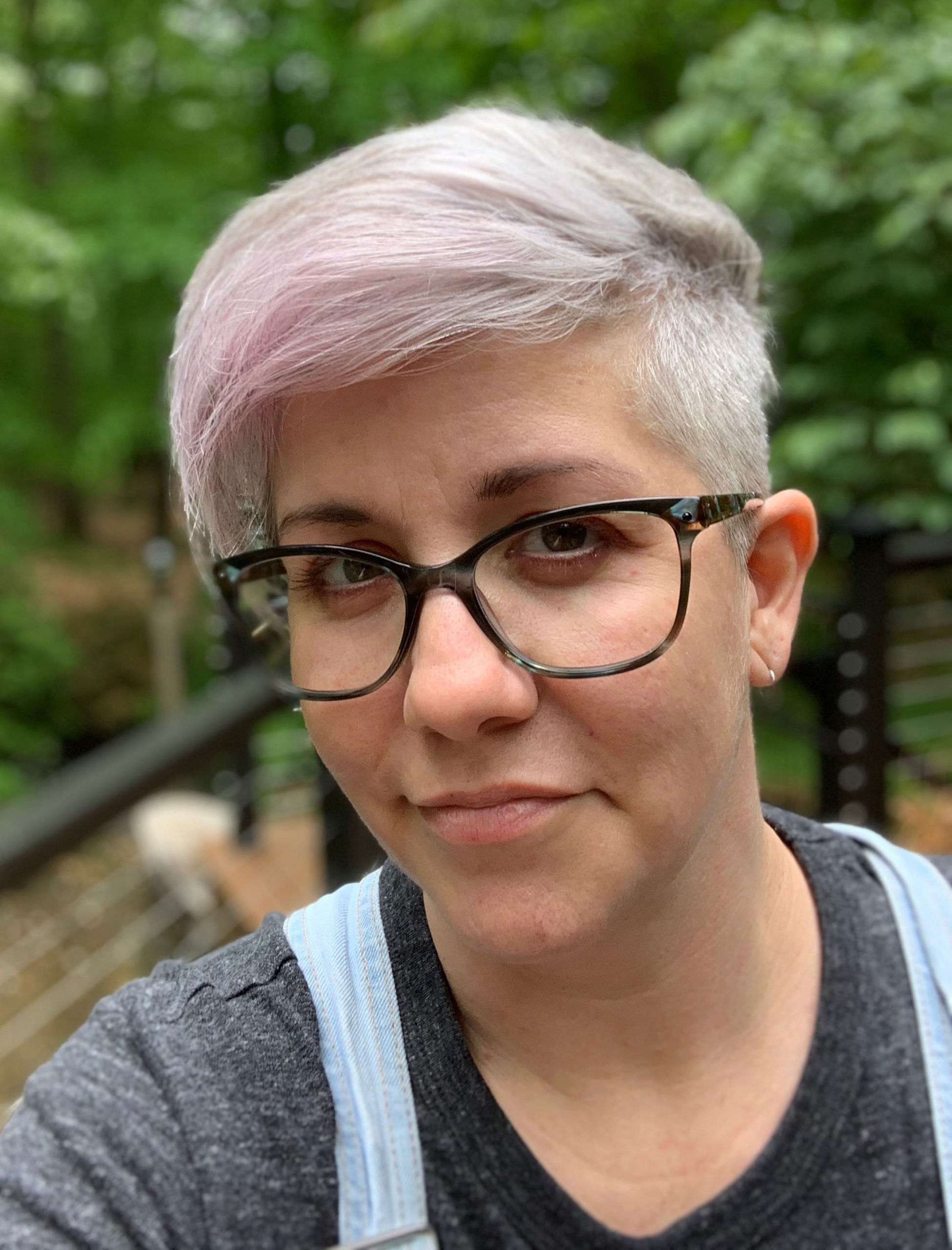
Ever wonder what it would be like to go out on your own? Imagine that: the free wheelin’ life of a freelance project manager. In this episode of Time Limit, you’ll get an insider’s take on what it’s like to run your own freelance project management business. This week’s guest, Patrice Embry, shares her path into her successful freelance career, as well as several other topics, including:
Patrice Embry is a freelance digital project manager based out of Philadelphia's glorious suburbs. She manages a wide variety of projects, from websites to CMS setups to mobile apps and support. She also helps companies understand process and how project management can improve the overall health of an agency's project portfolio.
Patrice has been in the business of digital project management for 20 years, and has seen a lot of projects and processes come and go. A Certified ScrumMaster (CSM), she knows what stands the test of time and what needs to be fluid to help in the moment.
Get in touch with Patrice via her website, LinkedIn, or Twitter.
Brett Harned: Hey, welcome back to Time Limit. I hope
you're enjoying the podcast so far. If you are, do us a favor
and rate the show on your favorite podcasting network. Or, if
you've comments or suggestions, reach out to me directly at
brett@teamgantt.com. Enough of the self-promotion. That's now
out of the way, and I'm excited for you to hear about this
conversation about freelance product management with my friend,
Patrice Embry.
Brett Harned: This is a topic that
seems to be getting a lot of traction, and I'm not sure if
it's because self-employment and flexibility is something that
appeals to project managers, or if it's because more
organizations are just looking for freelance project managers. I
personally had the privilege to do some freelance and consulting
work a couple of years back, and I have to say it's fun and
flexible, but it definitely comes with plenty of challenges.
Brett
Harned: In this conversation, Patrice shares her point of view
on how to set up your own business and sell your role, how to handle
challenges that come with the territory, and most of all, how to do
a great job as a freelance project manager. Check it out.
Brett
Harned: All right, so I'm so excited to get our
conversation started today. Welcome to Patrice Embry. Patrice, how
are you doing today?
Patrice Embry: I'm good,
I'm good. How are you?
Brett Harned: Doing
really great. Thanks so much, and thank you for joining me today to
talk about a topic that I think a lot of people are going to be
interested in hearing more about from you, and that's freelance
project management. I'm kind of looking forward to this
conversation because, as you know, Patrice, I've had my own
kind of little stint as an independent consultant and did some
freelance PM as well. So, should we kick it off?
Patrice
Embry: Sure.
Brett Harned: Well, why
don't you tell us a little bit to get started just about what
led to your decision to go out on your own and become a freelance
PM?
Patrice Embry: The biggest thing for me was that
I was working for some agencies where I didn't feel like the
project management team was being treated as well as they should be.
Mostly, overloaded with work, having too many things to do, too many
things equals something doesn't get done as well as it could
be, and I know from myself that I had a limit to the amount of work
that I felt like I could handle. Inevitably in agencies, they wind
up sort of dumping a little bit more onto you until they add someone
else to the team, so I figured a good way for me to be able to
handle my own workload and to be the master of the amount of work
that I do was to become a freelancer.
Brett Harned:
That makes sense. I think for me, I was kind of in a sort of similar
situation. I think the agency setting can be tough. You definitely
get dumped a lot of work at times and then not a lot of work at
other times, but for me, I made a decision to do it and I gave three
months notice and used that time to kind of get myself set up and
figure out what I was going to do and how I was going to make that
transition. I'm wondering, how did you do that? Do you have any
advice for anyone who's thinking about making that transition
into freelance?
Patrice Embry: I wouldn't
recommend the way that I did it because I got fired from a job, and
that's [inaudible] "You know what? I'm going to start
looking at my own stuff." It was like a mutual parting of ways,
but it really was a wake-up call for me to realize that I needed to
take care of myself and that the person who was going to be looking
out for me was me. I was looking for more full-time jobs, but at the
same time, I was trying to figure out if I could make a go of
freelancing. It happened to be that I found freelancing gigs before
I found a full-time gig, and that's sort of how I started. I
wouldn't recommend that to other people.
Patrice
Embry: The other thing that I have going for me is that I have
a partner, a husband who is also bringing in money, so I'm
lucky in the sense that I wasn't the sole breadwinner. I was
able to have the luxury of building up a client base. I know a lot
of people sort of try to get that while they're working a
full-time job, try to get some side jobs until they feel like they
can make the switch, but for me it was kind of sink or swim.
Brett
Harned: That totally makes sense, and I think a lot of people
end up in that situation. It's always interestingly easier to
find some freelance work when you're in that situation than it
is to go through several rounds of interviews. I think the
interesting thing that I heard when I was kind of thinking about it,
and I was interviewing around as well, but I heard people say like,
"You've got to have three months of your salary saved up
before you make a transition to go on your own just to have a safety
net." You have to be really aware of taxes, that kind of stuff.
I definitely ended up researching. I did not have three months of
salary saved up. I just kind of winged it. Did save up a little bit
of money, but it's not an easy transition to make.
Brett
Harned: I think the other thing that I was thinking about was,
"Well, what are the kinds of things that I actually want to do
in that role?" I'm curious about in your role. What kinds
of services to you offer?
Patrice Embry: I do
project management consulting where I'm talking to people about
how to structure their project management teams and how resourcing
works and best practices, but I'm also actually doing project
work, too, where I'll be managing a project or two for a client
or sometimes some support services. I'm helping people to
understand how project management works and how to implement it in
their own companies at the same time as I'm doing project work,
which is good because I want to make sure that I'm constantly
still doing project work so that the knowledge I give on the
consulting side is still relevant.
Brett Harned: I
think that's a really good point, like actually being involved
in projects helps you to continue to learn and be a good PM.
I'm curious. I know that you work from home. Do you ever go on
site to clients? Are your clients all over the place? What is that
situation with your clients?
Patrice Embry: I'm
almost never on site, although I do have a client right now
that's in Washington, D.C., and I'm outside of
Philadelphia, so it wasn't hard to make a trip down there to
spend a couple of days doing some workshops. Generally, I'm
usually joining everything from my home office, and that's fine
because a lot of the places that are open to freelance project
managers are open to freelance anything and that usually means that
they're willing to have either all remote or a good portion of
remote folks because they realize that in order to get the best
work... people to do the work that you want to do, that you
can't just look in your backyard. Sometimes you need to broaden
your search.
Patrice Embry: Right now, I think
I'm doing mostly domestic United States work with everyone from
all different time zones but within the United States, but I've
worked globally where I've had to make sure that I was on the
right call to Belgium, and Singapore, and France and all kinds of
places. So right now, I kind of have it called down to just the
United States.
Brett Harned: That's nice. I
imagine that as a remote PM, it is really important to get to know
people and how those people work, the people on your teams. Which I
think can be tough, even as a full-time employee in-house. So how do
you typically get on-boarded to a new project with a new team and
make sure that you feel confident as the PM supporting those people
and supporting the direction of the project?
Patrice
Embry: So I think those are two separate things. Getting
on-boarded to a project, which is something that I can't do
myself. It's not something that is not completely under my own
jurisdiction.
Brett Harned: Right.
Patrice
Embry: I have to rely on someone else to do that. But then
getting to know everyone on the team is something that is completely
in my control, which is really helpful for me because people do,
sometimes, a pretty terrible job of on-boarding people. Especially
freelancers, when they don't feel like the want to invest much
time and effort into someone who is not a full-time employee.
Patrice
Embry: But getting to know the rest of the team, I am a pretty
outgoing introvert. So I do really well on chats. So I am good on
slack, I can ask lots of good questions, I like to make jokes, and I
like to find out about the people I am working with and remember
what they say so that later on I can say like, "Hey, I loved
that thing that you did, two weeks ago. How did that work out?"
I'm pretty good at that part of it. I think way better than if
I were in person. It actually works out very well for me.
Patrice
Embry: But the on-boarding to the project is a whole separate
thing. But I feel like I have the getting to know the team part
pretty well down because I have worked with so many people on so
many projects and so many agencies at this point.
Brett
Harned: That's awesome and I think it is really
interesting that you look at it in two ways, because I actually
really agree with you. The on-boarding, like you said, you have no
control over. But you do have control over building relationships
and getting to know people.
Brett Harned: I am
curious about a connected question here. How do you adapt to a team
or a company's way of working when it is on a project by
project basis and you're coming in as a freelancer?
Patrice
Embry: That is probably the biggest part about trying to figure
out if you can do freelancing, beyond making sure you have money set
aside and understanding tax rules and that part of it. I think that
is the single hardest thing to do because people aren't sure
about how to handle you. They know that you are fairly temporary, or
at least not 100 percent part of the team. So they are not always
sure about what to share with you. So there is peers, or people on a
team, that you have to explain "This is how you work with me,
this is what I expect, this is what I am going to do, this is what I
need you to do in order for me to do that." There is that part
of it, and then there's the manager, whoever you are reporting
in to or upper management or tech [inaudible 00:10:47], and they
need to understand how to work with you too. I think a lot of times
the person that has made the decision to bring someone in as a
freelancer, is not always the day to day person that works with the
project manager.
Brett Harned: Right.
Patrice
Embry: And for me, I have experienced that, and that just means
that there is some gap that I have to bridge between the rational
for the person that brought me on and working with the person I am
working with day to day. That can be tricky.
Brett
Harned: Right. Aside from the fact that there is a project,
and probably some bare bones at least level of process that people
are used to running on any project regardless of who the PM is, I
think that what is interesting there is that in my experience, and I
have hired a bunch of Pms, it takes a project manager a good six to
nine months to feel totally confident and hitting their stride in a
new role. When you put yourself into that situation as a freelancer,
it's like you are putting the pedal to the metal. You are just
doing everything that you can to establish yourself, establish your
position and your role, to get to know people, to get to understand
the project and the clients or stakeholders. How long do you feel
like that usually takes you when you are a freelance PM?
Patrice
Embry: The expectation for a freelance PM, is that they are
going to do it almost immediately.
Brett Harned:
Right.
Patrice Embry: I think that is one of the
things that people think is going to happen that doesn't
actually happen. If we were able to a public service announcement to
anyone who was thinking about hiring a freelancer, we might say to
them, "Remember that just because you are hiring a freelancer
doesn't mean that they are going to know exactly what to do as
soon as you bring them on-board." There is a ramp up time. It
has to be shorter. Six months, nine months a year until someone
really hits their stride in a regular employee-employer
relationship, and there is this. You don't have the luxury of
doing that. So yes, pedal to the metal for sure.
Patrice
Embry: What I do is, I try to remind myself that two things,
one- that I am still trying to figure it out and if the person who
brought me on doesn't understand that then its not that I am
not right for them, its freelancing is not right for them. So
don't take it personally. And the other part is, if it
doesn't work out, I can always end the contract. It is so much
easier than quitting a job.
Patrice Embry: Part of
the reason that I got into freelancing, just to know that I am in
control of that and I can end it if it's not working well for
me, is enough for me to usually be able to handle the rough parts. I
just keep those things in mind and keep going. And you do, you have
to do it as quickly as possible. I am always saying, "I am
trying to get up to speed on this" or "I have a few more
questions about this". I just have to continually ask people to
give me information and say, "I think it is supposed to work
like this, can you tell me if that is right". There is a lot of
putting yourself out there and knowing that people might raise
eyebrows, that you don't have the answers yet. But you just
have to be confident with yourself that it is okay.
Brett
Harned: I love the PSA. You are hiring a PM not a wizard. We
can do a lot. When we are really good and really experienced, we can
do a lot with what we've got, but you have got to give people
time to figure things out and do a good job. Part of that, is again,
and I am building on that first question, but I have to imagine that
you end up using a number of project management tools.
Patrice
Embry: Yes.
Brett Harned: Between planning and
communications and resourcing and estimating, how do you manage
that? Do you have a sense for how it is that you are using day to
day?
Patrice Embry: It is pretty crazy. Almost
everyone that I work with is using some form of google something. So
usually, Gmail, and I have multiple chrome instances and identities
for google. Then there is slack. And I do basically work within any
tool that someone tells me that they are using. So at one point I
was working with Jira and Trello and Asana. Now I am working with
more Asana and ZenHub. There are a million different things. The
nice thing is that I get exposed to lots of different project
management software, so if I were to go back to the world of being a
full-time employee, I could probably either pick up or consult on
the best things to use, so I know a lot of the pros and cons. So
that is helpful.
Patrice Embry: One thing that I do,
is I have complete and separate chrome instances for every client
that I have. So I might have five or six different chrome windows
open that have links out to that companies information and tools.
Each of them has a different profile picture for every single one of
them. I use a different color scheme for every single one of them,
so that I can look right away and realize that I am in one place and
not the other. So it is a lot of organization on my part and making
sure that I am not crossing streams anywhere. That would be
terrible.
Brett Harned: Yeah that would probably be
the worst thing that you could probably do. But the multiple chrome
instances makes sense. I want to get back to the team a little bit.
A big thing that I hear from PMs from basically every industry is
that motivating team members and keeping people accountable to a
project is a big challenge. I have to imagine that is a challenge
that you face as a freelance PM. I am curious first, if you do and
if you actually do manage that kind of challenge, what do you
actually do to overcome it or help people out?
Patrice
Embry: I actually think this is one place where a freelancer
has the upper hand, because of course I want to motivate people and
I want to make sure that they are doing their best work, But if
there is a few sticklers that just aren't going to, I
don't usually have to deal with them for a short period of
time. So it is not like I need to work on them, and work on them,
and get them to be part of the team, and to recognize what is going
on and get on board with everything. I can say, "Well,
that's not going to happen with this person" and move
on.
Patrice Embry: Where, when I was a full-time
employee I would be really worried about that and stressing over it.
Like, "How do I get this person to join the team, really?"
Now I don't always have to do that. So, I do my best to get
everyone to do what they are supposed to do, but I am only really
worried about the bare minimum of work that they have to do get
something done correctly. So, it is a little less pressure for me
than it would be for a full-time employee.
Brett Harned:
Would you say that you would lean on management a little bit
more in that instance too? I imagine in the "in person"
scenario, you would be trying to talk to that person, you would
probably be reaching out to them via IM or slack, and then you would
probably try to stop by their desk, and you would try to do
everything to understand what is going on. But in a remote scenario,
where you really don't know the team that well, it is easier to
just reach out to someone's boss and just say, "Hey, this
person is not responding. Can you check in on it for me because I am
not hearing anything." And it ends that problem.
Patrice
Embry: Absolutely especially since you know that even if there
are repro cautions, and that person gets annoyed at you for having
gone over their head, you're not going to be there forever.
Brett
Harned: Right
Patrice Embry: You know, the
stakes are a lot lower to do that. Where you would have to really
tread lightly if you were a full-time employee. Yeah, I can say,
"Listen, there is a couple red flags that I see with this
project. There is this, there is this, and so-and-so isn't
communicating, or doing the amount of work that they said they are
going to do. And everything that I have tried to do is not making
that happen. So here is the red flags. Here is what I plan to do
about them, and I need your help with these three things." So
that is a lot easier.
Brett Harned: I love that. So
are there any other challenges that you face that you would want to
tell people that are hiring freelance PMs or even people who are
looking into becoming freelance project managers?
Patrice
Embry: I would say that for people looking to hire freelance
project managers, you really do need to pay attention to
on-boarding. You are not going to do the same amount of on-boarding
as if you were bringing on a full-time employee, but that
doesn't mean that you do no on-boarding and that doesn't
mean that you don't try to introduce your new person to the
rest of the team even if you aren't going to be working with
everybody.
Patrice Embry: Then the flip side to that
is someone who is looking into becoming a freelancer, insisting on
on-boarding. Insisting on that, and setting the expectation when you
start in the proposal phase with someone, or they reach out to you
and say that they need your help, or are you looking for work, that
you start right away in talking about what it is that you need and
on-boarding should be part of it. On-boarding, knowing the minimum
amount of information that you need to feel comfortable to ask the
next right question, is what you have to figure out for yourself as
a freelancer because odds are that the people that are hiring you
won't be doing that. You really need to advocate for
yourself.
Brett Harned: That is so empowering. I
feel like the way you are talking about freelance PM is, if I liken
it to a full-time role, often we will defer to other people whether
those be team members or managers, executives, clients, whoever, we
end up being the person who is serving the project and deferring to
other people. But the way that you are describing freelance PM is
you kind of have to step it up a little bit. You have to set and
manage expectations pretty firmly and you have to stick to those to
get what you need and what you want to actually do your job well.
Patrice
Embry: Absolutely. I am a small business owner.
Brett
Harned: Yup.
Patrice Embry: And my product is
me. So I have to make sure that I am doing that. Which is so crazy,
because it is completely against my nature. When I was a full-time
employee, I really didn't advocate for myself as is evidenced
by the fact that I got fired. I shouldn't have let myself get
to the point where that was something that was even on the table. I
didn't advocate for myself enough in that situation. It does go
against my nature, but I need to bring the money in, you know?
Patrice
Embry: It is very different when the answers you give, and the
work that you do, and the things that you take on literally
determine whether or not you are going to be able to go on vacation
or pay the electric bill, or any number of things, like how your
family is going to be able to live their lives, is dependent on how
you take care of this business of yours. I feel like that is
something that is a big motivator, even for someone like me who was
a little bit on the meek side in the past. I kind of have to take
the bull by the horns.
Brett Harned: I love that.
Tell me what do you really love about your job and running your
business?
Patrice Embry: One thing, is that I can
pick up my daughter from school, at three o'clock, if I need to
Without having to ask anyone or tell anyone, I just need to let
people know that I am not at my desk, and I need to just not
schedule myself into something. That kind of flexibility is
fantastic. Not having to worry about the amount of time that I have
for paid time off, is huge. It is one of the things that would stop
me from becoming a full-time employee somewhere else is the fact
that... It is not like I take a ton of time off, and even when I do
a lot of times I am kind of like, "I need to book some
hours", so I am trying to get a little bit of work done. But
just the idea that there is not some number that I start with that
counts down as the year goes on, is really something that I love
about doing freelance.
Patrice Embry: And again,
being able to say who I am working with and deciding on my terms
whether or not I don't want to work with someone again, or I
want to cut something short based on my own integrity and what I
need, those are great.
Patrice Embry: Also being
able to sort of pick and choose the types of projects that I want to
do. If their is a project that comes along where I am like,
"This is a little, not quite what I stand for." You know,
I can pack it up. I am actually working with a lot of non-profits
right now, that align with my values. That part is really really
fulfilling for me as a freelancer.
Brett Harned:
That's awesome. If you are okay with personal line of
questioning, I have a couple more.
Patrice Embry:
Sure.
Brett Harned: The first is, how are you
keeping up with what is happening with in project management,
whether that be digital project management or traditional, and
technology and other areas. I am curious to know if you do any
personal continuing ed?
Patrice Embry: Oh,
absolutely. I do extensive writing for different project management
focused websites. I keep myself really involved in the network of
project managers that I have found in different slack channels. I
keep up with other freelancers and peers to kind of know what
they're doing. There is a local meet up in Philadelphia that
you help fund, right? And that is also instrumental for me to even
see exactly right in my backyard what people are doing. So that is a
big part of it. But again, I am a business and I look at that as a
cost of doing business is part of how I structure the work that I am
going to do and how much work I can do. I factor that into it. I
need to do writing, I need someone to be constantly asking me
questions so that I am up on what I think and what I do and what I
know and who I am talking to. It is a big big part of what I do.
Brett
Harned: Do you think that that helps you to find new projects
or new opportunities as well?
Patrice Embry: Oh
totally. I keep myself at the top of mind as possible to the people
who have asked my questions, and honestly even when people just,
"I am new to project management" and you know, no one
answers that persons question, I will be the one who will
immediately like swoop in. You just never know where your next lead
is going to come from. I have gotten gigs from people who are super
junior and just started in a place but they knew my name and they
said something to someone else who was like, "oh I can vouch
for this person." And round about ways I have gotten work from
those people. So it is really important for me to not think of like,
"this person can't help me in any way". It is more
like, "the more people I help, the more people known my name,
and the more people that know my name can pass it along to the
people who could actually help me make money." So I am
definitely into the networking.
Brett Harned: Being
a kind human works.
Patrice Embry: Yes. As I was
saying it, I kind of felt bad. I was like, "Oh my God, it
sounds like I am only being nice to people because they might get me
something."
Brett Harned: Nah..
Patrice
Embry: It is not entirely that way.
Brett Harned:
No, its not that way. But what are the other ways that you
market yourself or get your name out there?
Patrice
Embry: I try as much as pos.... I am super branded. Like I try
really hard to make sure that everything that I do is on brand. As
someone else who is totally branded, I am sure that you can
relate.
Brett Harned: Sure.
Patrice
Embry: But I try to make sure that my message is consistent
across anywhere where I do end up talking to people. I have business
cards. I have my invoices, everything... my proposals, everything
that I do is a brand. And so when I think about how I am going to
answer questions or who I am going to talk to I really stick to the
brand guidelines I have given to myself. And I think that helps me
to make sure that my message is consistent. So whenever I can have a
chance to get that message out there, I never have to worry about
whether or not people are going to understand what it is that I do
because I am so well versed in what I do I can kind of just walk in
somewhere and say, "this is what I could provide you, and here
is everything that I do, and here is what I stand for." I think
that that has really helped me out a lot.
Brett Harned:
That is super smart. I think that it is very important just to
know, like you said, know what you do and what you can provide. I
think that for me, early on that was a little bit of a challenge
because I didn't know what I wanted to do. But I think that if
you have the confidence to say, "These are the things that I
can do for you" and if it is x, y, and z instead of a-z that is
probably even better because you can position yourself in a very
specific way. Might not work for every contract but like you eluded
to earlier you get to turn things down that you don't want to
do. So I think that is really important. Thanks for sharing that.
Patrice
Embry: Yes.
Brett Harned: All right. So last
question. As you know the podcast is called Time Limit, so kind of
giving a nod to the fact that we are all strapped for time. And I am
sure that as a freelance PM or a business owner you are also
strapped for time. Do you have any tips for how you run your own
business and manage your own client work at the same time? What are
the things that you do to keep yourself organized?
Patrice
Embry: That is a really good question because I think it's
something that I still struggle with even though I feel like I am
doing moderately well at the job that I am doing. I really have to
stick to my schedule and I have a master calendar that I keep
everything on. I put everything on there. I have to be able to see
something in order for me to be able to keep it on my radar and do
what I am supposed to be doing in the time that I need to be doing
it. So for me it is visually being able to see everything that I am
supposed to do. So my biggest tip would be, make sure that you have
everything out on the table so that you can make really good
decisions about how you are supposed to be using your time. And you
can kind of see what's taking up time that you would rather be
doing for something else. Laying it all out on the table, I think is
the best first step for that.
Brett Harned:
Awesome. Well Patrice, thank you so much for joining me today. I am
sure that I will see you at DPM Philly soon or at the Digital PM
summit and I can't wait. But thank you so much for being here.
Really appreciate it.
Patrice Embry: Sure, no
problem. It was a pleasure.
Brett Harned: Have a
good one.
Patrice Embry: Thanks.
Brett
Harned: All right. That is all we have for this episode of
Time Limit. Thanks again for listening. I hope this episode was
helpful either if you are looking to get into freelance PM or you
want to hire a freelance PM. I can confidently recommend Patrice if
you are and if you are looking for more resources on just project
management check out teamgantt.com where we offer free classes,
templates, and resources in addition to our popular and really easy
to use project planning and management tool. And of course
don't forget to subscribe and rate the show on iTunes. And
check out our show notes for more information about Patrice. Thank
you.