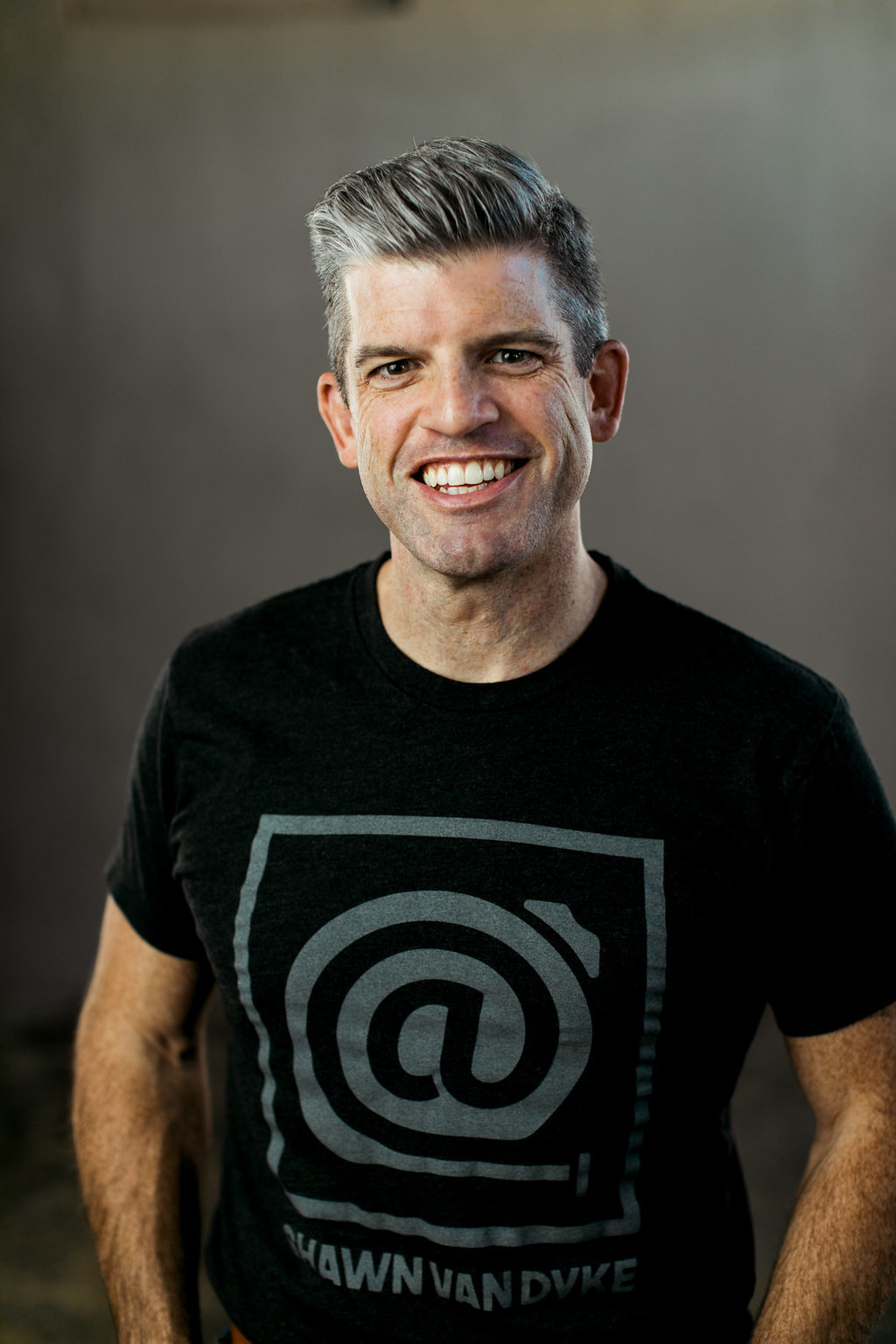
If you think running projects can be difficult, you should try running a business! On this episode of Time Limit, Shawn Van Dyke digs in to the many highs and lows of running a construction business. It’s a wide-ranging conversation that touches on a lot of points that will resonate for you, no matter your industry or whether you’re a business owner or a project leader. Topics discussed include:
Shawn Van Dyke is a construction business coach and the author
of two books: Profit First for Contractors and The Paperwork
Punch List - 28 Days to Streamline Your Construction Business.
Most contractors are not profitable which makes them feel
uncertain about what they need to do to grow their construction
businesses. Shawn believes construction business owners should
be as good at business as they are at their craft. That's
why, after twenty plus years of owning and operating multiple
construction businesses, Shawn became a construction business
coach. He now works with construction business owners,
executives, and managers all over the world and shows them how
to stop losing profits and wasting time. Shawn helps
contractors get their lives back. He is also a keynote speaker
and Fine Homebuilding Brand Ambassador. You can find him all
over social media sharing his knowledge and experience. He
doesn't mince words and gives practical advice to
contractors so that he can accomplish his mission: to change the
way the world view the trades. He believes the best way to
accomplish this mission is to help contractors run world-class
businesses so that they are seen for what they truly are -
business professionals who provide an extraordinary service
through their devotion to their craft, their customers, and
their communities.
- Get your copy of the #1 Amazon
New Release in Finance - Profit First for Contractors - at
www.ProfitFirstContractor.com
or the audio version here (Audible
and
iTunes)
- Sign up to receive a FREE copy of his book
The Paperwork Punch List: 28 Days to Streamline Your
Construction Business
Brett Harned: Hey there, welcome back to Time Limit. This
week, I'm happy to welcome Shawn Van Dyke to the show. If
you've checked out TeamGantt's live classes, and you
should if you haven't already, you might recognize the name,
because Shawn has done two classes with us so far.
Brett
Harned: He's a construction business coach and the author
of two books. There's a ton of ground that I can cover with
Shawn in this conversation because he's really knowledgeable
when it comes to running construction projects and building
construction businesses. He works with construction business owners,
executives, and managers all over the world and shows them how to
stop losing profits and wasting time.
Brett Harned:
In this conversation, we talk all about everything from how to get
construction businesses in order, to how to achieve work-life
integration. Yep, you heard me right. It's work-life
integration, not work-life balance. Keep listening to hear a little
bit more on that.
Brett Harned: All right. Shawn
Van Dyke, thank you so much for joining us on Time Limit today. How
are you doing?
Shawn Van Dyke: Hey, I'm doing
great, Brett. Thank you so much for having me on.
Brett
Harned: Absolutely. It's great to have you here.
You're a good friend of TeamGantt, and we really appreciate
that. You've done live classes for us about planning and
budgeting construction projects, so I figured we could talk a little
bit about the construction business and how you encounter project
management on construction projects, and even with some of your
clients. Does that sound good to you?
Shawn Van Dyke:
Yeah, that sounds great.
Brett Harned: Awesome! So
let's kind of start at the top. Your business focus is on
helping construction business owners to set goals and get organized
and run more profitable businesses. What's the most common
challenge those clients bring to you?
Shawn Van Dyke:
I deal specifically with the construction industry, and even within
that niche there, most of my clients are residential construction
business owners. That could be either remodelers or custom home
builders, or I even have several clients that are trade contractors
that maybe work for other contractors or other professionals,
whether it's maybe developers or someone else in the
construction industry.
Shawn Van Dyke: And so, the
residential and the commercial and certain aspects are completely
different animals. And certain aspects of the business, not when it
comes to the financials, or especially the project management, but
just some of the interactions and some of the systems that need to
be put in place. But so, most of my clients are, if not 100%,
they're a majority in the residential space.
Shawn
Van Dyke: So that gets into a little bit different management of
expectations when it comes to the earlier systems, like sales,
marketing, and those kind of things. But once a project is underway,
construction's construction. It's all about setting proper
expectations, the systems that allow you to operate and deliver what
it is that you're selling, and then the structures around that
delivery process.
Shawn Van Dyke: But I would say the
most common challenge that my clients face really kind of ... It
comes in two different aspects. One, what I call the tactical
aspect, that my clients face, is just understanding the financial
side of their business. Because a lot of construction business
owners, especially in the residential, and this applies for
commercial, too, but a lot of them start their businesses because
they're really, really good at their craft.
Shawn
Van Dyke: And so they go out and start doing work for other
people, because they're known to be a very good practitioner of
their trade, or their craft, or whatever it is, and then when
you're good at something, then your reputation spreads, and
they get busier, and they get more work, and they get more clients.
And then they look up a couple years down the road, or they look
back and they say, "Wow, I've never really had to go out
and get any work. It's always come in. I've always been
really busy, but here I am three years, five years into my business,
and I don't have any money. It's not getting any
better."
Shawn Van Dyke: And so once they kind
of have that realization, they contact me. They kind of have this
moment where they're finally admitting out loud to someone else
other than themselves that they really don't understand where
the money is, or how the money is made. Or they have a feeling of
how the money is made, but they don't know how to keep any of
it.
Shawn Van Dyke: And so, at a very tactical level,
my clients are reaching out because they don't understand. And
they think that they have done something wrong, because, as
you'd know from owning your own business and being in the
operations and helping run other businesses, is that we often feel
very alone. Because we feel like we're the only ones with this
problem.
Shawn Van Dyke: But when they talk to me, or
they talk to other mentors, or their business coaches, they'll
find out no, what you're experiencing is very, very common.
People just don't admit it, or they don't say it out loud
a whole lot, because they feel embarrassed, or they feel lonely.
And, in my job, that's why I say I have one of the greatest
jobs in the world, because their problems are very solvable, they
just need some new information.
Shawn Van Dyke: And
when you provide them with that information and a plan of how to
execute that, then a lot of those fears and frustrations that
they've been dealing with for years start to get solved, and
they go away, and they see this massive amount of growth in a very
short time. Because they've got all the tools in place, and
they certainly know how to perform the work, and so filling in,
understanding those financials, finally comes into play, and they
finally start pricing their work right. They understand what their
profit loss statement means, and they know how to charge for the
value of their work, meaning they know what to charge that's
going to make a profit.
Shawn Van Dyke: A lot of them
are charging enough to make a living, but that's not enough to
cover all of the aspects of running a business. So that's kind
of the first tactical sort of challenge that we deal with. And I
say, understanding the financials is just math. And once you
understand the math of your business, and specifically the math of a
construction business, then the great thing about math is you only
have to learn it once. Math never changes, it's always the
same. You just have to keep applying it, and you can really make
some headway in your business.
Shawn Van Dyke: Now,
everything else in your business is going to change. Market
conditions, trends, products, and building signs, all these things
are constantly evolving. And if you have employees, oh, man,
employees will change your business. But the math of the business is
never going to change, so you just have to keep applying it. So that
would be the first thing that I think is the biggest challenge for a
lot of construction business owners to overcome, is just
understanding how the numbers work.
Shawn Van Dyke:
But in order to get there, in order to carve out some time to
understand that and to apply that, that gets into the bigger
problem, or the bigger challenge, that a lot of my clients have, and
I call this more the strategic problem, is the time management.
It's saying, "Okay, now we know how the math works. We
know that we have to apply the markup in this certain way. We know
that we need to spend some time calculating the cost for any
particular project. That's great. Well, because we're
busy, when do we find the time to do that?"
Shawn
Van Dyke: And so the time management part, that's why I say
it's kind of a more strategic sort of thing, where you have to
step back and plan for the time and create that time and that space
in your, really, in your weekly calendar, to focus on certain
aspects of your business, and that, ultimately, is the bigger
problem.
Shawn Van Dyke: So we can solve some
financial problems, and understanding the financial aspects.
That's just putting in the work and learning those
applications. But the bigger issue is, okay, when we're done
with this coaching call, or next week comes around, the phone's
going to start ringing, those little fires are going to pop up, and
so we've got to be able to somehow organize what seems so
chaotic, and that really comes down to organizing and planning our
time before the universe turns everything into chaos. And
that's the harder problem, is standing back and understanding
how to manage your time.
Brett Harned: Yeah.
I'm not surprised by any of this. So, me coming from the
digital industry, I have faced and experienced the same issues with
business owners. So you start out as a freelance designer, or
developer. You start to gain a reputation, you start a business, you
start getting great clients, things start to grow and expand, and
then you have an oh no moment where it's like, "Okay, this
thing can keep growing, but I need to wrap my arms around it and
figure out exactly how to grow this thing properly, and how to
manage it properly so employees are happy, clients, most of all, are
happy, and that you're happy."
Brett Harned:
But I think this is an interesting segue to ... So, you've
written a couple of books. One of them is The Paperwork Punch List,
which is really, to me, it's kind of like a 28-day guide to
getting your business in order, which I think is really cool. Are
those challenges kind of what led you to writing The Paperwork Punch
List?
Shawn Van Dyke: Yeah. So, The Paperwork Punch
List is really the result of, I guess, an epiphany that I had one
day when I thought about starting this, specifically, this coaching
and consulting business that I'm doing now. It's kind of
funny how it came about. I had this idea. I thought, "Well,
maybe I can become a consultant, and I can teach people what I have
done for my own businesses, and other businesses that I've
helped run and operate."
Shawn Van Dyke: And I
really struggled for a while, thinking, "Well, what could I
teach somebody?" And I always skipped over the stuff that I was
doing every day, meaning the systematic stuff. The meetings, the
invoicing, the estimating, the contract structure, the sales
process. Because I automatically thought, "Well, if I'm
going to really help businesses grow and do these sorts of things,
it's got to be the big things, the big stuff."
Shawn
Van Dyke: Then I had an epiphany one day, and I can't
exactly remember where I heard it, but I realized that the key to
success for anybody that's offering advice, or consulting, or
some coaching, is what is common knowledge to me, someone
that's been in the business and running construction businesses
or owning construction businesses for over 20 years, that the stuff
that's common to me is expert knowledge to somebody else.
Shawn
Van Dyke: And so when I realized I don't need to come up
with this big, elaborate plan to help construction business owners
make these huge leaps, what they really need is the basic stuff.
Brett
Harned: Yeah, absolutely.
Shawn Van Dyke: Like
the sales, the scheduling, the estimating, the hiring process. All
of these sorts of things that had become like second nature to me,
just because I'd been in it for so long, and not because I was
smart enough and had all this stuff figured out from day one. No, I
say any success that I had came because I was too stupid to give up,
and I just kept going, and I wanted to figure it out.
Shawn
Van Dyke: And so, I had that moment, I said, "Wait a
minute. I just need to focus on the basic stuff, because what's
basic to me is exactly what other contractors or other construction
business owners need to move their businesses forward." So I
kind of took a step back and said, "Okay, if I was starting
over again, what are the questions that I get most often from my
network?"
Shawn Van Dyke: My network of other
contractors, and other construction company owners, and just really
people that would call me up and say, "Hey, Shawn, what do you
do for your contracts? How do you structure this contract?" Or,
"I had this client say this thing, as we were trying to sell
this project, and they had this question. I didn't know how to
respond." I say, "Oh, well, here's what I would
say."
Shawn Van Dyke: And so I just realized
that there's a whole bunch of information around the basic
stuff. That's what people really, really want. You get them
pulled into the basic stuff and executing really well on that, then
you get the privilege to work on much bigger problems. Because once
you solve the basic stuff, the problems just get bigger. But you get
your time back, because the bigger problems take more strategic
planning. They take more thinking and a lot of times, construction
business owners are caught up with the basic stuff that helps move
their companies forward.
Shawn Van Dyke: And so, for
me, it was just like, "Just focus on the basic. Help people
with the basic stuff, and then you'll earn the privilege to get
to work on bigger problems."
Brett Harned:
Yeah. And I think The Paperwork Punch List is really good at that.
It basically walks you through the process of getting everything in
order, and one of the things that really stood out to me was, you
start with a statement in the beginning that says, "Change the
way you act, work, and think." And then you basically outline
three statements that are in all caps. Be happy, be persistent, be
creative.
Brett Harned: So, to me, that caught my
eye right away. I think it's really motivational, and in some
ways, kind of unexpected, for me. I don't know that I would
necessarily think to talk to a construction business owner in that
way. But it feels like a really great way to prepare someone for the
action plan that you lay out. So I was wondering if maybe you could
share a little bit about your thoughts behind those statements, and
maybe if there's been any impact, if you've seen any
impact with those statements on business owners?
Shawn
Van Dyke: Yeah. So, for me, that ... And you're right.
It's like, "Oh, I wouldn't expect that from somebody
that's in the construction industry." And really, that was
more of a personal statement for me to remind myself to get out of
my own way, and I don't know exactly where all of that came
from, but each part of that, the be happy, be persistent, be
creative, has a little bit different of a story to it, of how it got
to be there.
Shawn Van Dyke: So I'll quickly run
you through that. I was working as the COO for a trim and millwork
company, and when I came on board there, we were doing high end
finish carpentry in very high end homes, and I was brought in to
help grow the company, because the owner, typical construction
business owner, excellent at his craft, but had no idea how to
manage or run this business that was about to run him over, because
his work was so good. He had about eight carpenters out in the
field, and in the first 18 months that I was there, we went from
eight guys out in the field to about 20.
Shawn Van Dyke:
So that's an extremely quick growth for a small trim and
millwork company, and so I was putting in a lot of hours. Probably
60, 70 hours a week trying to figure out how to sustain this level
of growth, and for me, the be happy part just came out because, 60,
70 hours a week for a year and a half, I was a miserable person. I
was just physically tired, mentally tired, and I had a lot of
pressure on me. And I realized that, for me, I was pouring
everything into work, thinking once I got the business to this
certain point, then I could take a deep breath and that would make
me more happy, that accomplishment.
Shawn Van Dyke:
Well, that never happened. Because, like I said, there were always
bigger problems. We went from eight guys to 12 guys, then we went
from 12 to 15, and then we had to work on management. And we got
some guys in there to manage and lead the crews, but then those guys
needed to be led. We were developing leaders. So it's like,
"I've never done that before. I got to learn something
more about leadership."
Shawn Van Dyke: And so
it was always this ongoing thing, and I just realized it's not
about putting in more time, and getting to a certain event, although
we did achieve a lot, and that felt good. There was always something
more, and I realized if I wait on the happiness, then it's
never going to come. And so that first part of being happy, I just
realized, happiness is a choice. I'm going to choose to be
happy first, and if I can approach any situation, good or bad, and
just be happy about that situation, then it didn't really
matter what the outcome was. The outcome was either good or bad, but
it wasn't going to affect my happiness.
Shawn Van
Dyke: And so that's why I just kind of came up with be
happy, and happiness is a choice. It's not an emotion,
it's not a feeling, it's a choice. I wake up every day, so
for me, what that meant was, is I decided that instead of working 60
hours a week, 60, 70 hours a week, I wasn't going to work any
more than 45 hours a week.
Shawn Van Dyke: I was just
going to turn it off, because working 60 hours a week wasn't
making things great at home, because I was working all the time. So
I said, "You know what? I'm going to dedicate myself first
to my home life, and in order to do that, I need to work less.
I'll make that choice." And so I limited the time that I
was going to give to work. And when I did that, something that, I
don't know, magical happened, was that my home life improved,
because I wasn't working so much, but it also forced me to do
the same amount of work that I was doing in 60 hours a week in
45.
Shawn Van Dyke: And so it's the whole
Parkinson's law sort of thing that says that work expands to
fill the time that it's given. So I just limited the amount of
time, and the way that I limited that was by choosing to be happy
and put some barriers in place to say, "I'm not going to
work a whole lot." And it completely transformed everything.
Shawn
Van Dyke: The owner of the company came in, I didn't
advertise this, this was just something personally I was kind of
going through. After a few weeks of doing this, the owner came in,
we were having a meeting in the office one day, and he even said, he
goes, "Shawn, what's wrong with you?" Or he said,
"What's changed?" He was like, "You're
completely different than you were a few weeks ago," and what
he meant by that was like, "People like to interact with you,
you seem happier, you're more joyful around the office. Things
are kind of just rolling off your shoulders, it's no big
deal."
Shawn Van Dyke: And I said, "Well,
do you really want to know?" He said, "Yeah." I said,
"I stopped working for you as much." I said, "I only
work about 45 hours a week." And I thought he was going to be
like, "Well, we need to talk about that." But he had
exactly the opposite. He was like, "Well, that's great.
I'm excited for you. Keep doing that." So that's kind
of where that be happy came from.
Shawn Van Dyke: The
be persistent just comes from like, things are going to suck,
especially when you're growing a business, or you're
managing a business. But it's persistence over a long period of
time that's eventually going to pay off. And so that's
where kind of just reminding myself to be persistent, and
that's kind of my personality, anyway. A little bit about that
is just to remind myself that it's not going to be easy, and
you keep going, you get there one step at a time.
Shawn
Van Dyke: And the last part of that little slogan, be creative,
really came out of this time when I was thinking about walking away
from this job. So I was at the trim and millwork company for about
four years, and then when I decided to walk away, I had come across
Ed Catmull's book, Creativity, Inc.
Shawn Van Dyke:
And for those of you who don't know, Ed Catmull was one of
the founders of Pixar, he worked with Steve Jobs. This was before
... Everybody knows Pixar for Toy Story and all the great animated
movies that they make, but before, they were a software company, and
reading that book really opened my eyes up to how to systematize,
for lack of a better term, creativity.
Shawn Van Dyke:
They have a creative process there. We often think of people being
creative, are just these free thinkers, and they have these
epiphanies. But it's really not like that. That, be creative,
was just a reminder to say you can systematize creativity if you get
the right people in place and put the right structures in place.
Shawn
Van Dyke: And so he describes in that book, and one of the big
things for me was, he had described going on, I think he called it
like a five day personal retreat. Or silent retreat, that's
what he called it. And that, to me, I was like, "That
doesn't even make sense. How can you go somewhere and not talk,
and you're just alone with your thoughts?"
Shawn
Van Dyke: But he described this thing, and by that time, I had
learned that most of the time, when I thought something was stupid,
I thought, "Well, that's a stupid idea," I just said,
"Okay, every time I have that thought, I'm going to try
it. Because I'm probably not as smart as I like to think that I
am."
Shawn Van Dyke: And for me, that's
what really made the change, is when I got quiet with myself, and I
started doing even things that I thought was weird. Like meditating,
and just being quiet. I realized how the voices in our head and all
of the stuff, all the busyness, all the chaos from day to day just
kind of builds up in there, and sometimes, we just need to stop,
turn that stuff off, and when we can, then the creative part of our
brain kicks into high gear, and it really helps produce things both
personally and professionally.
Shawn Van Dyke: And
from practicing that, kind of getting out of my own way, and
allowing this creative side, then The Paperwork Punch List came out
very quickly after that. I was able to sit down and start writing
that, putting together ideas for this coaching business, and now,
here we are three years later, and I've got a book, published a
book, and it just all comes out of that three part kind of system
of, this is how we're going to act, this is how we're
going to work, and this is how we need to think.
Brett
Harned: Yeah. So I have to ask, how are you kind of managing
to keep up with being creative? Do you set time aside to keep
thinking about that stuff, or do you have recommendations for
that?
Shawn Van Dyke: Yeah, so for me, it's
turned into the really weird thing, which I like talking about,
because people are like, "You really do that?" Yeah, so,
what I did when I wrote The Paperwork Punch List, because I was also
working a full time job, is I had to get up earlier. And so I just
treated building this other business as my second part time job, and
I also have five kids, so there is zero time in the day, and the
only time in the day that I had was between about 4:00 o'clock
in the morning and 6:30 before I had to get ready to go to my other
job.
Shawn Van Dyke: I said, "Okay. This is the
time that I work on my other job." And so I put in the time to
write The Paperwork Punch List and start building some of the other
things for the construction business, or my consulting business, and
then when I left the trim and millwork company, went out on my own,
I already had these two, two and a half hours every single day,
every day, seven days a week, and I used that time for my creative
time. Because, around here, with five kids, it's not really
very quiet ever.
Brett Harned: I can believe
that.
Shawn Van Dyke: Yeah, but that time in the
morning really became sacred. And again, I use that to journal, I
use it to meditate and pray, and I use it just as a time to get my
thoughts down on paper, and I still, to this day, that's still
my same routine. I'm up at 4:30. Now, it's not every day.
I am a human being and I get tired, so I'll miss a day. But in
general, I've just trained myself now.
Shawn Van
Dyke: I get up and I go through my morning routine, and
it's about two hours long, between getting in the right state
of mind, and just quiet, and meditation, and writing some things
down, and I'll go back to these notebooks or these journals
that I have, when I say, "Hey, what's the next thing I
need to work on? What's something I think that'll have an
impact for my audience or for my own business?"
Shawn
Van Dyke: And it's usually there, in my journal, written
down. It could be weeks or months old, but it's all there. And
so, for me, it's an extremely valuable time. And, just back to
the time management stuff, sometimes planning our days or planning
our weeks, which even gets into planning projects, I plan projects
now, they're just not construction projects, they're
projects as it relates to growing my business. But same thing, is
creating that time, that focus time for planning or being creative
or developing systems.
Shawn Van Dyke: You can get so
much more done when I'm just focusing on that one or two type
of tasks. And so, for me, it's just like, people will say,
"Well, how has that been productive?" And I say, "I
don't know, other than it just is." I'd never written
a book before, and I spent two hours in the morning going through my
morning routine, and now I've published a book. It works.
Brett
Harned: Right. You're using that time to its fullest,
yeah.
Shawn Van Dyke: Yeah, exactly.
Brett
Harned: So I want to mention that you put out a really great
newsletter, and I receive it. And I received one of the recent ones
where you actually quoting Tony Robbins as saying,
"There's no such thing as work-life balance. It's
work-life integration." And in the newsletter, you basically
agreed and said that you published The Paperwork Punch List to help
people integrate work and life, and I'd imagine this is kind of
along the lines of what we're talking about.
Brett
Harned: But for most business owners, their business is their
life, and kind of what you're talking about, you're waking
up at 4:00 a.m. because your business is your life, and you're
finding your time to squeeze that work in and to be creative. But
finding the opportunity for some people to relax can be tough. I
know that I'm one of those people that's always working,
always thinking about work, if I'm sitting at a softball game
watching my kid, or sitting in front of the TV, work's always
on my mind.
Brett Harned: But what kind of advice
do you have for people who are trying to integrate and trying to be
more comfortable, I guess, with the balance, even if the balance is
kind of a little bit of a bad word in this instance?
Shawn
Van Dyke: Yeah, I don't like the word balance because it
gives the impression that it's somehow got to be 50/50. And
there's just way too much pressure, especially if ... It's
a big difference if you've got 50 or 100 people on your team,
you have very defined roles, and you have a structure in place that
produces a profit for whatever it is that you're doing. But for
most small business owners, we're wearing 17 different hats.
Shawn
Van Dyke: And so to think that, "Oh, I need to be more
balanced in my life," it can be very devastating, because I
think you just have to step back and say, "No, I'm
probably never going to be balanced, because I chose to be a small
business owner." And so I think it's just too much
pressure. But the way that I look at it, for example, is ... And I
was just teaching this last week, at a trade show, when I was
talking about teaching effective time management, we were talking
about planning kind of your ideal week and doing the same thing week
to week, at least having these blocks of time for certain things.
Shawn
Van Dyke: And I asked one of the attendees there, saying,
"What would be most convenient for you if you were in control
of your schedule 100% of the time? When would you do sales
calls?" And so we kind of mapped out, saying, for whatever
reason, this person, "Okay, from Tuesdays, on Tuesday mornings
from 11:00 a.m. to 1:00 p.m., that would be a convenient time for
me, as a construction business owner, to have sales calls. And then
another time would be maybe Thursday afternoon from three to
five."
Shawn Van Dyke: And I said, "Okay.
So, that's when you should try to schedule most of your sales
calls. Now, we're working with homeowners, and sometimes we
have to be in their homes when they're home. So what would be
another convenient time for you to do a sales call?" And this
guy said, "Okay, Wednesday evenings from 4:00 to 6:00
p.m." I said, "Okay, great. So," and then he kind of
interrupted me, and he said, he goes, "Yeah, so if I could plan
that, then I could get a full day of work in and then go out on a
sales call."
Shawn Van Dyke: And I was like,
"Yeah, and that's the problem. We could just cram more
work in. We could just make more sales calls in the evening so that
we could work ten or twelve hours during the day, and then go do our
sales calls." And I said, "This is part of where the
work-life integration comes in, saying if you're in control of
you're schedule, and you've got certain times that
you're planning to go out on the site to meet with clients and
do sales calls, and you end up working late one evening, let's
say past 4:00 o'clock, 4:00 to 6:00 o'clock, then the way
that you integrate work-life balance when those Wednesdays happen,
and you're going to be working until 6:00 or 7:00 p.m., then as
the business owner, anyway, plan on coming in later Wednesday
morning. Don't come in at 7:00. Come in at 9:00.
Shawn
Van Dyke: "Take the kids to school. Have coffee with your
spouse. Whatever that thing is, just don't work. We can always
do more work, but when you force yourself not to work, then you also
force yourself to get focused on the time you do have to work, and
you'll just get more done." And that's why I see a
lot of business owners, we work Saturdays and Sundays, but I'm
always very careful and look at it to say, "Okay, if I have to
put a full day in on Saturday, is the work that I'm doing going
to drive my business further?"
Shawn Van Dyke:
If so, then yeah, we suck it up and we integrate that, which means,
for example, I'm telling my wife, "Hey, honey, I'm
going to take the ten-year-old to soccer. You take the other two to
karate today, then I'll meet you at the dojo, drop them off,
and then I've got to go do some work, because I've got
this thing coming up. I've got a podcast with Brett on Monday
that I really want to prepare for." That's going to help
propel the business.
Shawn Van Dyke: And so you
integrate those things into it as opposed to just defaulting,
saying, "Well, I've got work to do, I guess I'm going
to work all day Saturday," and asking yourself, "Does this
work, propel my business forward? Does continually working Saturday,
Sundays, weekends, evenings, whatever, is any of this ... Am I
better off now for having done this?" And if the answer is no,
then just stop doing it.
Shawn Van Dyke: And it will
force all of the things that are not important, that are just
urgent, it forces them out, and you just find that they were
probably stuff that you didn't need to do in the first place,
or you're being very inefficient with that time.
Brett
Harned: Or maybe you're finding places where you can
potentially offload work eventually. [crosstalk] hire another
person. That's where those opportunities start to creep in, or
you start to recognize that you're spending your time in better
ways, and you can focus your energy in better places to propel your
business forward.
Brett Harned: All right, last
question for you. So, this is all kind of on theme with our show.
It's called Time Limit, giving a nod to the fact that
everyone's trying to get a lot of work done with limited time.
No matter what you're doing, you're in construction,
you're in digital, you're in retail, whatever it is.
Brett
Harned: So, I'm curious, specifically within
construction, what are your top tips for business owners who feel
like they've got limited time to focus on the administrative
side of their business? What are ways that you would advise someone
to keep on top of things, like estimates and budgeting and finances
and invoices? All of the things that you probably don't want to
do, because you do want to focus more on the creative stuff, or the
tactical stuff and helping someone, or helping a client.
Shawn
Van Dyke: Yeah, so, I often tell my clients this, and it's
kind of back to what I mentioned before about designing your week.
We just kind of default into this, "Well, Monday through Friday
is when everybody else works, so I guess I have to work Monday
through Friday on producing work, and then I'll spend whatever
else time managing the business." And I just kind of say,
"Just throw all that out. You're in control. Set proper
expectations." But pick a day. Pick a day that is your ...
I'm thinking of small construction business owners. Pick a day
and make that your office day, and manage around that.
Shawn
Van Dyke: Now, some people, they're already in the thick of
things, and they're like, "That's crazy, I
couldn't do that next week." Okay, if you can't do it
next week, then just start with two hours. Just two hours of focus
time in the office, wherever your office is, and pick the most
important things. And if you can not have to be on site for two
hours, you'll realize that the wheels aren't going to fall
off, your customers aren't going to hate you.
Shawn
Van Dyke: Now, you need to set some expectations, saying,
"Hey, I'm not going to be out on the job site at Friday
until 10:00 o'clock, and the reason is is I'm going to be
in the office, doing invoicing for your project," or,
"I'm going to be doing some research on selections,"
or, "I'm going to be talking to sub-contractors and
setting them up for the next week."
Shawn Van Dyke:
Everybody else has got crazy schedules, too, so they'll
understand, but sometimes we just have to set the proper
expectations, and our clients, if they love us, which they should,
if they're giving us money to do something, then they'll
understand if you give them enough time. That's why I say you
need to start with two hours. Because if you could do two hours,
then you can get it up to four. If you can get to four hours, then
you can do a whole day. If you can do a whole day, then you can do
two days, and if you can do two days, then you can get it up to
three days.
Shawn Van Dyke: Now, what that's
going to require you to do is to say, "With one day in the
office, I don't have as much time to be out in the field
producing, so I might need to hire somebody else to do that. But if
I could do that, and find somebody else to produce for me, then I
can focus on the things that drive the income to the business. The
sales, the marketing, the business development, the estimating
system. Everything else in the business."
Shawn Van
Dyke: And so that's why, I think, the thing that small
construction business, really any business owner or manager can do,
is pick a day and call it your office day, your admin day, and then
just train everybody around you, "This is the day that I do X,
Y, and Z. So I'm not going to be available to do those other
things." And what that does, automatically, starts training
your team.
Shawn Van Dyke: And what I mean by that
is, if I'm going into the office on Fridays, Fridays are my
estimating day, say, my invoicing day, I'm cranking through a
bunch of numbers, and I've got a team of people out in the
field that I'm normally managing that I'm just going to
tell them, "I'm not going to be available on
Fridays." So what that automatically trains them, and you have
to tell them to do this, saying, "Whatever you need on Friday,
and I'm not available, then you're going to have to get
that information on Thursday."
Brett Harned:
Right. Yeah, so it sounds like it's really about controlling
and managing your own schedule, making the time to do that stuff far
in advance, and then communicating about it so that everyone around
you is super clear on what's going to happen. Because I think
the thing about the administrative work is that a lot of people
don't want to do it, and it falls by the wayside, and then when
that happens, you get backed up and you have to work even more.
Shawn
Van Dyke: Well, here's the funny thing about the
administrative stuff, too, and especially for construction business
owners, and this is what's so odd for us to think about, is, we
can't imagine sitting in an office and punching numbers into a
spreadsheet, reconciling the books, or spell checking contracts, or
sending out emails to other people to get them to buy stuff from us.
That's just foreign to us, because who wants to do that?
Shawn
Van Dyke: But the thing is, is there are people called executive
assistants, and account managers, and office managers, and
accountants, and software developers, and they love to do that
stuff. They can't imagine being out in the heat or the cold or
the dust or the dirt. So it's just a mental shift. It's a
mindset sort of thing, where we say, "Well, I hate doing the
bookwork." Great, you probably suck at it anyway, so there is
somebody out there that loves to do bookwork, and they're
looking for an opportunity to do exactly the work that you have.
Shawn
Van Dyke: And you're not doing the bookwork good,
you're not doing it well anyway, so get somebody that's a
ninja at it, and you'll find that your business will grow so
much faster if you can do it. But it's a mindset thing. So
I'll talk to a lot of construction business owners, and they
say, "Shawn, I just don't know if I can afford to hire
somebody to do that." And I'll say, "You're
looking at it the wrong way. It's not that you can't
afford to hire them, it's that you can't not afford to
hire them."
Shawn Van Dyke: For example, you
could pay a bookkeeper, and again, I'm just making up a number,
50 bucks an hour to come in, work part time, even, even remotely
these days. Your bookkeeper does not have to be next door, or in
your same time. But that person you might hire for 50 bucks an hour
enables you to go out and stand in front of a homeowner for two
hours and sell a project that's going to net $10,000 to the
company.
Shawn Van Dyke: So the thing is, is
you're spending time at what you could pay somebody 50 bucks an
hour to do at the cost of ... If it takes two hours to net $10,000,
that's an average of $5,000 an hour. You can't afford not
to bring somebody in. But when you look at it like that, and
that's what it takes, is to say, "Okay," and
that's what I help my clients with, is say, "Okay, get
that. Now, but I don't have any money right now." They
say, "Okay, now we're thinking. Let's go do some
things that generate income now, provide cash now, and so that we
can hire that person, so that you can continue to do the things that
are providing that cash, or that income, and that's where the
systems come in."
Brett Harned: Yeah,
interesting. I'm sitting here thinking his advice all ties back
to those statements. Be happy. You're not going to be happy if
you're doing the admin work and you're just not good at
it. So find someone else to do it. Be persistent, find other ways to
make that work. Find another person. Find more time. Do what you can
to make your business do well. Be creative, find different ways to
go about the problem. Is it finding another person? Is it finding
more time? What are the ways that you're going to make that
happen?
Brett Harned: So I thought that was really
interesting and also really good advice. And I think we're just
about out of time. I'm wondering if you've got any final
advice or things that you want to mention to our listeners.
Shawn
Van Dyke: Yeah, so, back to the first thing that we had talked
about, was the understanding the financials. That's a really,
very tactical sort of thing, and that's where a lot of
construction business owners need to start out. And so, I've
got a book for you. It's called Profit First for Contractors:
How To Transform Your Construction Business from a Cash-Eating
Monster to A Money-Making Machine, and I've been blown away by
the response to the book.
Shawn Van Dyke: If you are
a construction business owner and you're struggling with
anything on the financial side, I do not have an MBA, I'm not a
CPA, there are no letters at the end of my name. But this book is
for you, it's written by somebody that was too dumb to know the
difference, like I said, to give up, and figured out how to manage
the cash in a construction business. And I received so much feedback
from the book that people saying, "I thought you were writing
this book for me."
Shawn Van Dyke: So I'm
not saying that to brag, I'm saying it is the key for
construction business owners to understand one of their biggest
problems in their business is the financial side of it. And
it's not just a book of financial. You're going to hear
stories about contractors just like yourself that walked through
this cash management system and it completely transformed their
business.
Shawn Van Dyke: But if you don't do
anything else with the book, the main point of the book is when you
get money into your business, some of that money has got to be set
aside for your profits. That's the reason that you're in
business. Don't let anybody tell you anything otherwise. If you
don't have profits, then you can't serve your family, your
employees, and your community.
Shawn Van Dyke: So
when you bring some of that money in, you're going to take some
of that, and you're going to set it aside in a bank account,
and you're not going to touch it. And when you don't touch
it, that money will still be there at the end of the year, or at the
end of the quarter, or the end of the month, or whatever. And people
say, "Managing your cash can't be that simple. It's
very complicated. My CPA says so." Your CPA's wrong. It
really is that simple.
Shawn Van Dyke: And so when
you take some of that money, you set it aside, and you don't
have enough money to pay your bills, it's not because of your
profits. Your profits aren't the problem. It's the way
you're operating your business. And so it forces you to do
things different in your business without sacrificing the most
important thing in your business, which is profit.
Shawn
Van Dyke: So that would be my biggest advice. I know it sounds
kind of self-serving, but buy my book, Profit First for Contractors,
and within three months, you will completely change the way that you
look at the money in your business.
Brett Harned:
That's awesome. So, Profit First for Contractors. There's
a link to that on our website at Teamgantt.com under podcasts, as
well as your bio and some other ways for people to get in touch with
you. I would love to have you back on the show to talk more about
estimating and planning construction projects. So hopefully I can
get you back. I know you're a super busy guy, but hopefully I
can get you back some time soon. Thank you so much for being here,
Shawn. Really appreciate it.
Shawn Van Dyke: Hey,
Brett, thank you so much, and any time, anywhere, you just let me
know. I'd be happy to keep putting out good information for
construction business owners. Thank you so much.
Brett
Harned: Excellent. Thanks. Wow, that conversation was jam
packed with inspiration, ideas, and even tactics. Shawn has a wealth
of information about running construction projects and businesses.
Honestly, we didn't get to everything I wanted to discuss, so
you can expect to see him back on Time Limit in the future.
Brett
Harned: In the meantime, check out the show notes for more
information on Shawn Van Dyke and all of the great work that
he's doing. And please don't forget to share, rate, and
like our podcast on your podcast listening service of choice. And
come back for the next episode, which is going to be all about
dealing with social politics. Thanks.