Does project management ever feel confusing or annoying to you? Whether you’re a project manager or not, your answer is probably YES for a number of reasons.
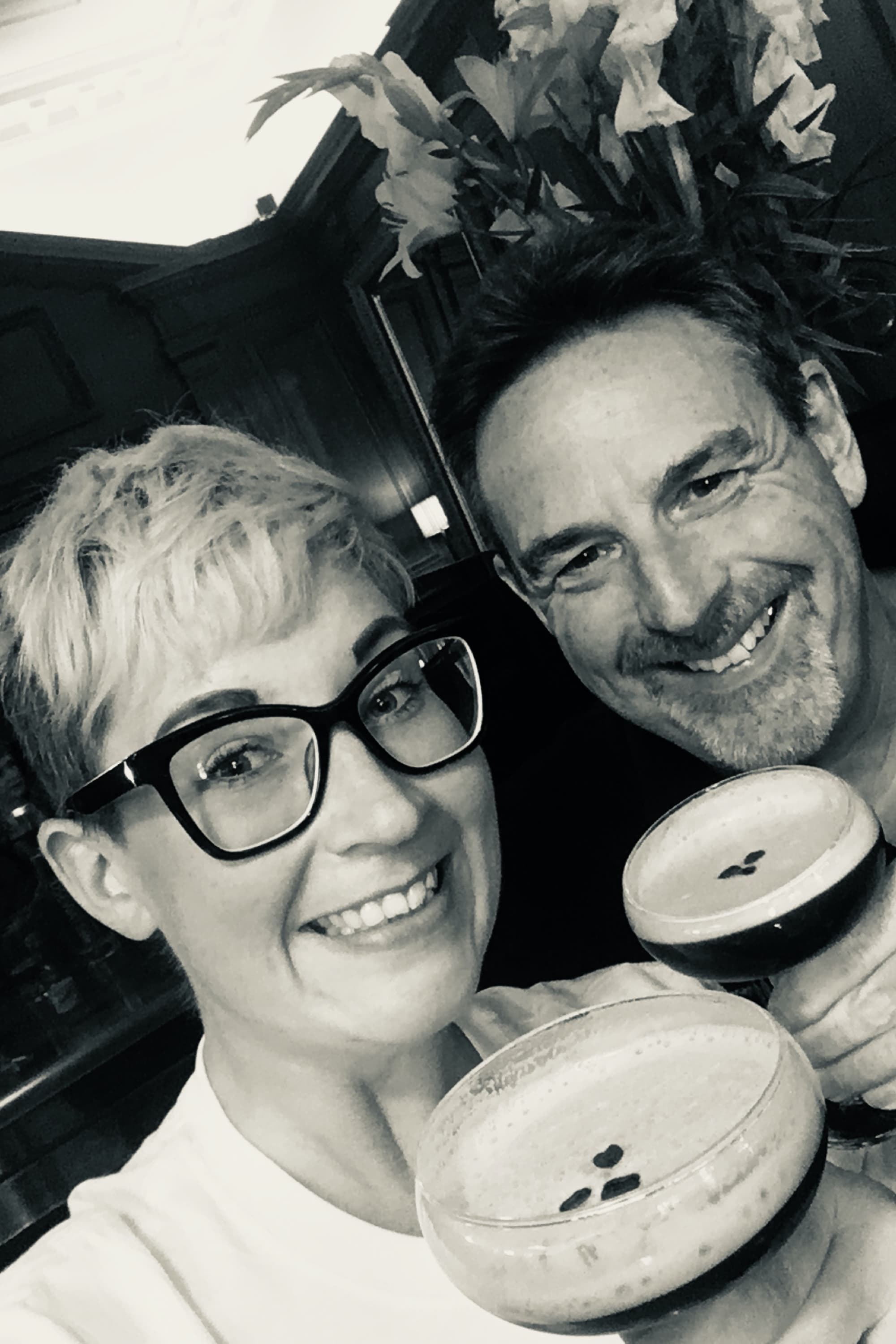
In their new book, award-winning project professional Susie Palmer-Trew and best-selling author Peter Taylor (The Lazy Project Manager) cut through all the cruft and get to the core of what project management is really about. Project Management: It’s All Bollocks! is a quick, irreverent read that’s full of to-the-point guidance on everything from aligning yourself to your role and managing stakeholders to handling change and so much more.
In this episode of Time Limit, Peter and Susie discuss
their new book and dig in on:
Resources mentioned in this episode:
Susie Palmer-Trew is an award winning project professional and Director, Change and Improvement at The Open University, enabling others to get shit done in a world tied up in red tape. She is the co-creator of Open to Change, avid risk taker and professional trouble maker.
Brett Harned: Hey, welcome
back to Time Limit. I'm sorry there's been a little bit of
a gap in our programming. With the pandemic, which basically has
everyone working from home, it's been a little bit more
difficult to get folks scheduled because remote project management
isn't easy. And getting used to working from home can be a
challenge as well. So I hope that you're doing okay. We work
remotely at TeamGantt, so my setup is pretty much the same. I just
have to make sure my kids and my dog stay quiet while I record. That
said, sometimes getting a clean recording can be tough, even in
normal times, especially when there are three people on the
interview. So on this interview, you might hear some background
noise, but I think the content of the interview itself will make you
ignore those random sounds of paper moving and doors closing.
Brett
Harned: So in this episode,
I was really excited to welcome Susie Palmer-Trew and Peter Taylor
to the show. Susie is an award winning project professional and the
Director of Change and Improvement at The Open University. You may
recognize Peter's name, he's the author of the Amazon
number one bestselling project management book, The Lazy Project
Manager. He's also a professional speaker and has given 350
lectures around the world in 25 countries. I've had the
pleasure of meeting, and introducing Peter as the opening keynote
speaker at the Digital PM Summit 2019. In that talk, he got a room
full of Digital PMs to sing along to Let It Go. It was poignant
considering there were 325 project managers in a room at Disney
Springs, kind of funny. Anyway, Susie and Peter joined me to talk
about their new book, Project Management: It's All Bollocks! I
think you'll like a lot of what they've got to say in the
interview about the wide world of project management and how PMs can
truly own the future of the role. I hope you enjoy it.
Brett
Harned: Susie and Peter,
thank you so much for joining me for this episode of Time Limit. And
thanks so much for sending me a copy of your book, which is called
Project Management: It's All Bollocks! The Complete Exposure of
the World Of, and the Value Of, Project Management. That's a
mouthful. It's a super short book, but I really enjoyed it. So
thanks for being here with me and thanks for joining.
Susie
Palmer: Our pleasure,
thanks for having us.
Peter Taylor:
Our pleasure.
Brett Harned:
So I'm really excited to talk
about the book that you coauthored. Like I mentioned, it's a
short read. It's also a really irreverent read. It's very
funny and it's actually really helpful. So I was thinking
before we dig into the content of the book itself and talk about
project management, I just have to know how you two got connected
because in the book description, it says you vaguely know each other
and you barely like each other. So is it true? How did you kind of
get together? And how did you come up with the idea for the book?
Peter
Taylor: Oh, it was a
holiday romance actually. That's how it all started. Susie
would disagree at this point, strongly. No, do you mind if I take
this one, Suze?
Susie Palmer:
No, go for it.
Peter Taylor:
I love this story. So I was in, we were
both actually at a conference in Athens, in Greece. And we met, I
was opening keynote. I did my thing. And at some point later on,
Suze made some comment about some aspects of project management and
she came up with the phrase, "Well, it's all bollocks,
isn't it?" I loved it. She was so irreverent and so
challenging that after we departed this epic meeting in Athens, when
these two great minds came together, I thought, "I'll play
with this one." And I reached out to her with a suggestion of a
very humorous ... It is pretty much in the back of the book is a
description of how we came to meet up, et cetera.
Peter
Taylor: And how we engage
with each other, and challenge each other and take the Mickey out of
each other as well. And I was delighted that Suze came back and
said, "Yeah, okay, let's do it." And so from that, we
connected at that conference, and the book came from that
conference. And then the rest is now history, and publishing of it
in a very attractive pink cover that we want everybody to read.
Brett
Harned: Love it. It's
great. So I want to dig into project management. And in the book,
you say the world of PM is annoying and confusing. Can one of you
expand on that a little bit? Because I don't disagree with you
at all. I think as someone who is in project management in a small
niche of digital project management, I've found it, the wide
world of PM, to be annoying and confusing because there's no
one way of doing things. There are lots of different camps, so to
speak. And I'm just, where are you coming from with that kind
of description?
Susie Palmer:
Should I take this one?
Brett Harned:
Absolutely.
Susie
Palmer: I sort of think
[inaudible] you started to answer the question yourself because
there is no one way of doing something. There is no ultimate leader.
There is no single group. When we look to do our jobs, there's
no single lighthouse saying, "Everybody this way." And
what you come across is conflict in ideas, and conflicts in
ambition, and conflicts in groups that ultimately go to war. And I
use war loosely because obviously nobody's harmed in project
management, but it's not helpful. And it's not helpful to
those that are new to it, the business, to the profession is not new
to those who are choosing to work with project managers. It does
nothing for our reputation. And we end up in this spiral of just
getting annoyed, frustrated, and confused with each other, with our
profession, and then with the people that we're working
with.
Susie Palmer:
So a big part of it was around creating some space to calm that
annoyance and confusion, and just to try and show some different
ways to pinpoint some directions, to give a bit of clarity for
people to be curious again about a profession that both Peter and I
love.
Brett Harned:
So would you attribute all of that to part of the reason why
it's so difficult for some folks to be a PM?
Peter
Taylor: Yeah, I think I
would. I think people just find it confusing and still project
management surprises people. Suddenly people will become a leader of
some sort of project, or change and it surprises them because they
never anticipated doing this. And there's just no clarity, as
Susie said, there's no single points of reference says,
"Oh, I'm going to do this. I'm going to be in charge
of some sort of project to this point in time. So here I go,
here's my ABC guide to be a project manager." It just
doesn't exist. And one of the things that I talk about is this
that we are in this world where there are multilayers inside
organizations and there are projects as projects. Now this is where
these are big, hairy, scary changes that are led by a full time
project manager, but there's ever increasing middle point
there.
Peter Taylor:
And something as a group we wanted to reach out to you with
this book, which is, these are people who are delivering change as
part of their day to day job. And this phrase that I use which is
projects as usual because all of that sits on top of business as
usual because that's what your organization does. But these
kind of strata exist. And therefore even to start a conversation
about, "Well, as a project manager, what am I? What am I
supposed to be doing? Am I supposed to be dedicated project manager,
am I supposed to be leading change as part of my day to day job,
what does that actually mean? How do I work with everybody, and what
is my process? What is my method?" All of those things make it
a very complex world. Even in one organization, you can find a
number of different ways of doing something, of doing this project
delivery process.
Peter Taylor:
And so I think it is just generally challenging. And
we wanted to in this book, but at least provide some sort of simple
reference point for anybody who is involved in projects is that,
let's cut all the crap out. And this is the heart of what
we're talking about here. And now take that, understand it,
apply it, and then wrap what else you need around it to be
successful in growing an organization.
Susie Palmer:
And chill out a bit.
Brett
Harned: Chill out a bit.
Absolutely. I agree with you. It doesn't have to be so
difficult. I think sometimes we make it really difficult on
ourselves. I also really like the personal approach that you take in
the book around the role of the PM. So in the quick guide at the end
of the book, you basically say that understanding yourself and the
role that you play in delivery is really important. And I personally
have found that's a really big issue for project managers
because they're often in a job where they feel isolated and
sometimes even devalued. And that's based on the organization
that they're in, or the team that they're working with.
And to me, that's, bollocks. But how do you guide someone to
get to an understanding where they believe that they play an
important role in delivery? And they have a firm understanding of
the role that they're in when things are just always an uphill
battle.
Susie Palmer:
I think for me, it's very much about knowing yourself and
knowing yourself early on, and this is in part who we wrote the book
for. So especially for me, I wrote the book for me when I was 20,
not me when I was 35. To help me find that path to understand who I
am. Because if you know what your values are, and if you know what
believe in, you know what gets you out of bed, and you know what
pisses yourself off. Your ability to position yourself into a role
whether that be a pure project role, or one that spans out into
change, or projects as usual territory. You'll be able to find
that groove and have that impact, and deliver value in a way that
goes with you. So you won't always be fighting against the
grain. You will be doing something that sings in the way that you do
it.
Susie Palmer:
And I think that's a really hard thing to establish, but the
earlier you understand what you are, and what you identify as the
easier it will be. Many people that we work with don't
necessarily identify first as a project manager. That's not the
first thing on my list. We're parents, we're partners,
we're women, we're friends, we're advocates,
we're adventurers. And if you can find that part of you, and
then let the project management section follow. You'll project
manage within your identity, and in harmony with your identity. And
naturally our position is that therefore this stuff should be a lot
easier and a lot more fun.
Brett Harned:
I agree with you. I love that. I think the
worst PMs are the ones who are trying so hard to follow what a book
says. And not just be themselves and just connect with a team,
understand the challenge that they're in, and reach out to
those people for the help that they need. The good PM's are the
ones who are good at all those things, and can just be comfortable
in their own skin, and in their own role. And relax a little bit,
like you said, Susie. So one of the questions while we're
talking about what PM should be. One of the questions I get fairly
often from project managers is whether certification is worth it.
I'm sure both of you get that question too. And I'm just
curious, how do you address that question, or how do you guide
people into certification?
Peter Taylor:
Well, I think in my view on certification
is if you want to then fine, go ahead and do it. The number of PMOs
who will be always supported are project managers who are becoming
certified wherever suitable for them. Different parts of the world
require different certification to be recognized by clients, et
cetera. But the point I always made to them is it's not about
you becoming certified that is really important to me anyway.
It's about you applying your time to become certified because
whilst we might say, "Well, we pay for your membership for that
organization. We pay for your exam at this organization to become
certified." But at the end of the day, it's your time you
need to put in to actually demonstrate you can actually achieve the
certification. And that is a much greater mark I think of attitude
of project managers.
Peter Taylor:
That's the way I always looked at it. As far
as people concerned, I've worked with great project managers
who aren't certified, I've worked with some good project
managers that are certified. And I've worked with some crap
project managers, both ways around. In itself it is not necessarily
a proof point, I don't believe. Some people can find it quite
simple to adapt to the process, to achieve certification.
You'll see there are quite a few people out there on LinkedIn,
et cetera, with an unbelievable number of certifications above their
name. But does that make them brilliant at what they do,
questionable. So if it works for you, that's fine, but I
don't think it's what makes a good project manager.
Brett
Harned: I agree. And I
think combined with what Susie said earlier, having that foundation
of a certification, or at least some level of education is by all
means helpful. But actually being comfortable in the role, and doing
is as good as you can do in the role is probably more important.
Because you always adapt to your surroundings, or at least I feel
like as a PM, I do.
Susie Palmer:
Definitely. Part of the book's, I'll give
away an entire paragraph now. So I, when I started out in project
management, my interest start's from an academic perspective.
So I actually began with a master's in project management,
which is arguably a bit of an unnecessary academic decision. But
then I couldn't get a job because nobody understood what that
meant, and no one could see how I could apply it. So then in a
moment of desperation, I basically bought PRINCE2. All the
certifications are available, crept out an exam and expected to
instantly become a project manager. And I didn't, and to a
certain extent, I probably got worse because I got more attitude and
more confidence. But absolutely, all the gear, no idea was the
position I ended in. And it's only scroll forward five, 10
years. And that's when you start to see the value of those
accreditations when I can bring them in and use them now as part of
a broad skillset, rather than just being completely reliant on
single certificates. I think you have to choose wisely.
Brett
Harned: Absolutely. I want
to tie this into the seven cracking ideas in the book. So I really
liked in the book, how you say that project life is not painting by
numbers. And sometimes I feel like there are some project managers
out there who want that. And I alluded to that earlier to me
that's really problematic because I do think project management
is a lot of common sense. And you say that too, in the beginning of
the chapter. And I think that the seven cracking ideas to make
project management better are really, to me, those were the real
meat of the book. And I don't want to give those all away, but
I'm curious about how the two of you came up with an agreed on
those seven ideas, because I think that was a lot of information to
distill in a short amount of space.
Brett Harned:
And I think you did a really great
job with it. So can you just talk a little bit about the inspiration
for those ideas and then maybe what your process was to work through
them? Because I know it's not easy to come up with that kind of
thing.
Peter Taylor:
Sue do we have to pretend that we did a lot of the hard work,
and put it into this book for months and months of discussion.
Susie
Palmer: Yeah. You tell that
side of the story.
Peter Taylor:
Okay, fine. Yeah. Absolutely. Actually, we came up
with them very quickly if I remember rightly. After Athens, et
cetera, we pretty much worked remotely. And we had sessions where we
just talked to each other about a topic recorded it, transcribed it,
et cetera, which is always it was good fun. Particularly, with Susie
having a young baby in the background, occasionally, which made some
of the transcriptions very entertaining. But if I remember right, I
think we pretty much went straight in with the seven idea... We
wrote about seven, or eight, or nine, or something like that. And
they distilled down into one logical ones from that from our point
of view.
Peter Taylor:
I don't remember a huge discussion around that. We seem
to just agree, and then explored what that those agreements were and
what sat below it. And a lot of the writing was done on a shared
basis and then bring in, each person would bring what they'd
done to the other person for interaction, discussion challenge, et
cetera. But I have to say this wasn't an onerous writing
experience, despite all the teasing, I might do with Susie. It was a
fairly straightforward thing at least that's my memory, but
I'm quite old and Suze might remember it differently.
Susie
Palmer: No, I think
it's true. Ultimately the cracking ideas stemmed from all of
our conversations where we'd hit something like, "Yes,
that's a good one." We enjoyed talking about something, or
it's sparked into a discussion, or it went down an avenue...
And it was like we have something here. So we basically made a list
of all of the, "Ooh, That's a good thing." And then
started to bring them together. And I think by the time we got to
the end, I can't remember how many we had, but we did that view
of is there anything missing from our list? And I think the only
thing that we added on that almost not didn't come naturally,
but was an add on to the final is probably our last one, which is
not necessarily an advisory point.
Susie Palmer:
It's an invitation, it's
a requirement in an accident and expectation on the profession to go
and be a part of its future. And I think that's probably the
only one where we choreographed it to help land our message rather
than in a natural part of a lot of chatter.
Peter Taylor:
You're right. It is
the heart of the book. The front end of the book is just us getting
some things off my chest. Because we were really quite grumpy, and
it's called, The bloody annoying world of project management.
And there were many that many things that annoyed. So once we got
out of the way, we felt a whole lot better, and allowed us to move
on to, Second cracking ideas. And then we extended that a little bit
about how to get some stuff done, and stay cool, and like that. But
it's the seven cracking ideas it's definitely the heart of
the book. And the stuff that we think all project managers should
understand, and contemplate on. Because I think our view is that it
will make them a better project manager, a result of understanding
that. And we tried to be quite practical as well. Not just talk
about concepts, but offer up some advice as well.
Brett
Harned: Absolutely.
That's why I liked the book and the reason why I thought it
would be difficult to pull those things together. Is that anytime I
think about project management, and what people should know, or do
kind of what you outlined. I end up supersizing every item. Every
item is connected to another. And I think you did such a great job
of distilling what's needed in each one. Any chance I could ask
both of you, which is maybe your favorite, or maybe is most
impactful to you or has been most impactful to you as a PM?
Peter
Taylor: Ladies first.
Susie
Palmer: I knew you were
going to do that. Promises this is not a cop out. I really love all
of the cracking ideas. So to say, one of them is my favorite is
unfair on what would be the remaining six. There are a couple that
really, really resonate me in terms of some of the stories I got to
tell as part of it. So I think for me, my favorite inspiration,
which is a response to a cracking idea where we bring them to life.
Is referred to as the one at the interview where I tell a very
personal story about something going horrendously wrong, but being
one of the best lessons I've probably learned in my career
today.
Susie Palmer:
And then a cracking idea in its totality will probably, I would
stick with number seven, which is shape the future. Which is a call
to action to all of our peers, colleagues, friends, PMs to stand up,
be counted and to directly contribute towards the profession that
we're all trying to grow and love.
Peter Taylor:
From my point of view it keeps
changing because this is a question we've been asked a few
times. And it is one of those things. It goes back to what Sue said,
which is actually, they're all great. We love them all because
every time I'm asked a question, it's right, I changed my
mind. But today I'm being drawn towards the one, which is
failure is an option. It's really accepting that perfection is
pointless and achievable. So just accept you will make some
failures, and you can recover from those, and you can learn from
those. But I don't think seven, there's not that many. I
think people just love them all absolutely.
Brett Harned:
I think they should too.
They should practice them all, or learn from them all at least. I
think for me, the one that resonated the most for me was, Engage the
willing, work with the able and deal with the rest later. The idea
of talking about how people ruin projects. That is really what it
comes down to is that people ruin everything really. But when
you're in a project setting and things go wrong, it can be a
domino effect starting with one person. So I really appreciated
that. Susie, I want to come back to what you've mentioned a
couple of times about the future of PM, because I really appreciated
that too. And, and really how you're telling project managers
to own project management. So I'm curious to hear from both of
you, where do you see the world of project management heading in the
next five, 10, 15 years?
Susie Palmer:
Oh, you can go first Peter.
Peter
Taylor: Thank you for that.
You're so kind. Where do I see it heading, I think it's
going to be an interesting mix. I think it's going to be a lot
more of the same, as we move forward, stagger forward, blunder
forward, whatever. I do see a growth as I described already in this
growth in the middle point of projects, as usual stuff, people doing
changes as part of their day to day job. How do we help them? I also
see huge opportunity come in from the world of AI, supporting
project managers, getting rid of some of the tedious, boring stuff
that they don't really like doing. And they don't do it
very well as a result. But putting them back in a position where
they can use or those people's skills they're supposed to
have, which is we talked about projects being about people.
Peter
Taylor: So I think
empowering projects managers to spend more time on the people,
because really, if I cast my mind back to me the decades ago, when I
started in pushing management, that's all I really had. I had
no idea what being a project manager was all about. I merely,
reached or used what little skills I had as far as working with
people, and communicate to them. And somehow survived in that period
of time of that central project management. So I just see that as a
potential future, a lot more people involved in change, most of them
will not be core project managers. I don't believe in the
future there still will be project managers do feel that this AI
empowerment is going to be a huge benefit to project managers in the
future.
Brett Harned:
Agreed.
Susie Palmer:
I think for me, ultimately, it's not dissimilar. We
spent a lot of time talking about this stuff. I think in the main, I
would really like to see is the gap between project management and
change management, closing, narrowing, being more of partners with
each other. Because there's a massive power in the scope of
what change management can do when it's put together with
project management. So less differentiation, more partnership and
more confidence in that partnership. I expect a [inaudible] from an
experience point of view, that project management, the skill will
become more generalist. And more people will be able to access it,
and more people will understand it, and acknowledge it. And it will
become almost less of a thing, or more of an expectation, which will
then create space for people to become really fiery experts around
certain aspects of project management.
Susie Palmer:
So you can bring in the big
guns to help really resolve some complexity, or some something
that's beyond a natural capability. So I think that combination
of expert and generalist capability growth will be a brilliant thing
to see. And if our actual delivery can be informed by pieces of
setbacks of AI territory, what data analytics, and evidence to
really ground our delivering something that's really solid and
confident. I think that would be a phenomenal thing to see.
Brett
Harned: Yeah. I agree with
you. I think there are things that you both said that are really
interesting. I love the idea of the generalist PM. I think at the
heart and this is just what I feel personally, and I've put out
there is that as humans, we all have skills to be project managers.
There are things that we do in our day to day lives that are project
management. So I like the idea of more people recognizing that. And
then also I think what if PM's were to become more strategic,
and fill in more roles within a company that aren't just about
keeping a schedule, and a budget together. I really like where
you're going with that. And I think one of the things that is
going to help to move us forward is growth and community. And Peter,
I know you recently launched a new community called The PM tribe.
Can you tell our listeners a little bit about that?
Peter
Taylor: Yeah, of course.
We're thinking it's fairly time with everything
that's going on is a virtual community. It's led by myself
and five others. People like Rick Morris, John Stenbeck, Alana Hill,
Elizabeth Harrin, Colin D. Ellis so some fairly well known names
from around the world. And the principle is it's an open
community, so it's not about training, or certification, or
anything like that. It's a join once, pay once, you're
here for lifetime access type approach. And what we think is
different is that each of the faculty leads, we run a weekly call
within specialists groups. So my group is around working smarter,
not harder, the productivity, the essence behind a lady project
manager. And we have an open conversation.
Peter Taylor:
People can dial in, and
join in, and comment and challenge and discuss weekly, or we also
record of course. But we see as a very dynamic community that is
very much in the moment, and it's not replacing anything else
that's out there. It's just supplementing something. And
the strength really it is as of now it is in the moment. It's
what you want to talk about next week will be actually what's
happening right now. And it's that fast pace moving. It's
The PM tribe, the thepmtribe.com is the place to go to find it.
Brett
Harned: Yeah. And
we'll put a link to that in our show notes. Thanks for touching
on that. Thanks for allowing me and the community. So we end every
podcast episode with a question that is really in keeping with the
theme of this show title, which is Time Limit. So I'm wondering
if each of you might offer a tip or two for project managers who are
always feeling stretched for time and resources. What are the types
of things that you recommend folks do that basically they need to do
in order to do a great job, but that might also save them a little
bit of time to maybe free up time to focus on the people, or
whatever is more important in the moment.
Susie Palmer:
Should I go me go, you go.
Brett
Harned: Go, go, go, go.
Susie
Palmer: So I think for me,
one of them is probably a bit of a mindset. So at the start of a
project, or a role, however you want to do your work. Understand
early on what good enough looks like because your version of good
enough is never going to be the same as somebody else's. So if
you understand what it is you're shooting for your ability to
hit it the first time round, or at least the second time round is
exponentially increased. If you go in there shooting in the dark,
you will always be a bit on the back foot. You'll never quite
nail it. And therefore you'll burn time, and you'll burn
effort, and you'll burn energy and enthusiasm. So understand
what good enough is and only deliver good enough, nobody needs
protection. It's not a pair of jeans.
Susie Palmer:
And then I think the second
one for me, and I've probably said it a few times already just
chill out a bit. If we all come down and take a step back on a big,
deep breath before we opened our mouths. What we said will be more
helpful. What we said will be calmer, and what would said we will be
taking a bit further. So no worries you're trying to do, and
calm down about it because you're going to be okay.
Peter
Taylor: Yeah. I think from
my point of view, it's around the areas of if you think about
the demand on your time then prioritize and prioritize properly. I
talk about the 80/20 rule where at least 20% of what you do delivers
80% return on your personal investment. So start to prioritize
things properly, and don't get overwhelmed by everything
because not absolutely everything needs to be done. What needs to be
done is what's those things that are in that 20% that are
important and impactful. And they're the ones you need to throw
your efforts at and get working on. And if you do that you actually
feel a lot better about yourself moving forward. And you feel a bit
more energized to think to crack on with the rest of the things you
think you have to do. But again, don't aim for everything,
don't aim for perfection, don't aim for a 100% or beyond.
Achieve what can be achieved in a realistic manner, and consider
what is really important to the project as you start to plan your
time, and the rest of your projects team time as well.
Brett
Harned: Excellent. Thank
you both so much. And thank you so much for joining me, and also
thanks for bringing such a fresh irreverent voice to project
management. Peter, I know that you've been doing this for a
while, but I really do appreciate it. And I think it's sorely
needed. And Susie you've said it so many times, just chill out,
have fun with the job, do a good job, work hard. But also know that
it doesn't always have to be so serious. So I really do
appreciate that. And I thank you both for that in the book and for
the book as well, but also just for joining me and talking to today.
Thanks so much.
Susie Palmer:
Thank you for having us.
Peter Taylor:
Yeah. Likewise.
Brett
Harned: Have a great rest
of your day. All right, folks, that's the end of the episode. I
definitely recommend you check out the book, and The PM tribe
community links to those are in our show notes on the website. Also,
if you have a few minutes and are so inclined, we'd love a
positive review on the podcast, wherever you listen. Doing that will
help us to get more listeners and to attract more guests. And if
you're interested in joining us to talk about your own work,
reach out. We'll be back soon with another episode, and an
interview with an author of another new book that I think
you're really going to like. But I'm going to leave it at
that. Thanks so much for joining me, and have a great rest of your
day.