Project management roles are pretty similar across industries, in that PMs are mostly responsible for facilitating projects and teams to a successful delivery while keeping a keen eye budgets and deadlines. That’s certainly the case for agency project management, but for some reason it’s just a little more different. Is it the fast pace? The clients? The huge network you have in a global agency? The creative culture? Or maybe the way a PM is viewed and utilized in an agency?
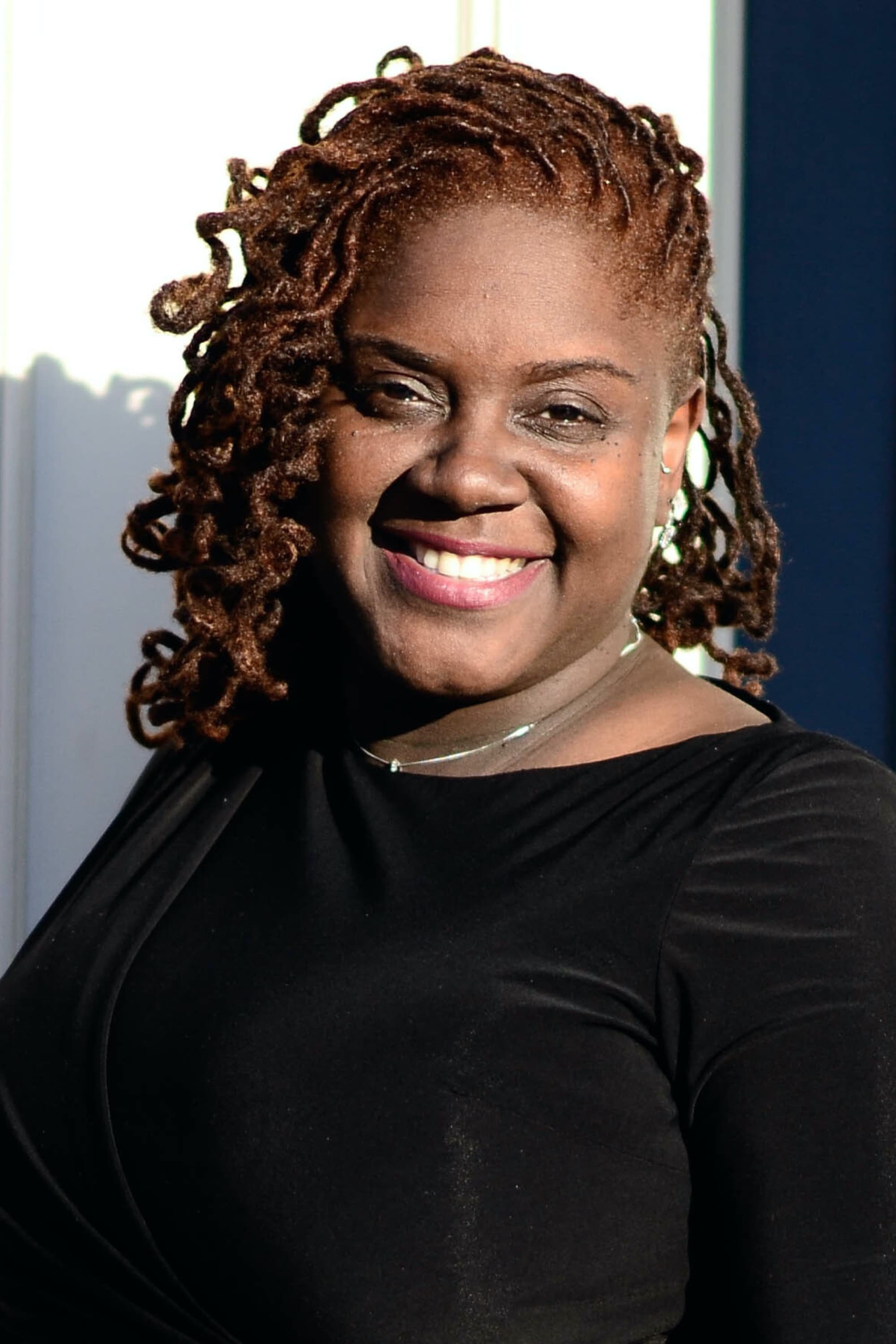
In this episode of Time Limit, we talk to Donna Sargeant, who is a program manager at Wunderman Thompson, a global creative agency that helps its clients meet their business goals through the strategy and execution of digital and print projects. In the interview, Donna provides a glimpse into agency life as a project manager, and we touch on:
Ordonna Saregant has a passion for organizing teams; Donna started her career in Leadership Consultation working with many Fortune 500 clients: Credit Suisse, Viacom, Bloomberg organizing large transitions. As a Program Manager, she has led software infrastructure projects and network projects ranging from SharePoint upgrades, disaster recovery, migration initiatives, and data governance for both the public and private sectors. 2020 has been an equally exciting year as she led a digital transformation of a leading automotive company with an agile team.
Brett Harned: Hello, and
welcome to Time limit. Brett Harned here. Thanks so much for
checking out the podcast. This episode is all about specialization
in the project management field that operates just a little
differently than a lot of other fields, and that's agency
project management. I had the pleasure of connecting with Donna
Sargeant, who's a program manager for Wunderman Thompson, which
is a global digital agency headquartered in New York, but with 200
offices in 90 markets. This conversation was a lot of fun for me,
because I worked for a long time in the agency world, and I know and
have spoken a lot about the challenges of those roles. It was fun to
dig out on everything from how to get an agency PM job, all the way
through to how you work out process with clients, and everything in
between. I think you'll enjoy this interview with Donna. Check
it out.
Donna
Sergeant, thank you so much for joining me today on time limit. How
are you doing?
Donna Sargeant:
I'm great. Thanks for inviting me.
Brett
Harned: Absolutely.
I'm so excited to talk to you today about agency project
management. It's something that you and I have in common, so
I'm sure we're going to share some of the challenges
we've faced in that realm, as well as some of the things that
make the job fun, because I do think it's a fun project
management job, right?
Donna Sargeant:
It is. It is. It's my favorite
actually.
Brett Harned:
Cool. Me too.
Donna Sargeant:
Yeah.
Brett Harned:
It's just like a different kind of
environment. I think we'll dig into that a little bit. I was
wondering if maybe you could start just by telling us a little bit
about the types of projects that you work on, and maybe we should
establish what I mean by an agency too, if you can talk about maybe
that level of your work setting, that might be cool.
Donna
Sargeant: Okay. So, I
currently work with Wunderman Thompson, and I love it. My specific
agency has very much a startup feel, even though it's a larger
agency. My specific role in project right now is a digital project
where we are helping our client with rebranding an entire website.
So, it is exciting that I'm working with so many different
types of roles. I work with content strategists, I work with
strategists in general, work with the creative team. I work with a
development team offshore. I work with the account supervisors as
well as multiple other PMs, project managers specifically that roll
up into me as I'm the program manager over a large project, but
I love the autonomy that I have to run that project. But also I have
a network of people across the agency that I can tap into and ask
questions as we're getting rolling on such a very large
project. I love that that very quick and fast pace of an agency and
this project. Have you had that same experience where agency work is
fast-paced, but it's always really fun and involved?
What's been your experience?
Brett Harned:
Oh, yes, for sure. So, in my career,
also in digital project management, I've worked in large
agencies. So I worked for Razorfish, and I worked for a smaller
agency called Happy Cog, that was my last project management job,
all in digital, mostly in website design or redesign, highly
creative, working with the same types of people as you. And I think
the creative aspect is part of what makes it fun, because
there's a lot of research and discovery that you get to take
part in and shaping project goals, shaping scopes, contributing to
creative at times when you're on the smaller team. Those are
all the things that I really like about it. I'm curious, you
mentioned website branding. What other types of projects do you work
on in the digital realm?
Donna Sargeant:
Well, in the digital realm, specifically for
the program that I'm currently on, my development team is very
much on... I haven't very much in the weeds with the
development team, because there's so much to do, where
we're not only rebranding, where we're moving a website
onto a new platform. So there's quite a bit of AM, like working
with Adobe and working with a CRM and a CMS, so just to make sure
that we're managing all the content, and working with a very
agile development team to make sure that my creative team is
churning and my content strategists are creating content decks and
comps and things of that nature, and making sure that the sprint
boards are full and the backlogs full for the team. That's
doing all the development. So there's a lot of that to balance
as well.
Brett Harned:
I love it. So, one of the things that you're talking
about is this like balance, that a digital PM has to take on because
you're managing teams of specialists who are all working toward
the same goals, of course, but they have very different specialties,
like you mentioned content strategy, I'm sure there's UX
development. Those are not just different tasks, but also very
different that you're managing in those teams, which can be a
lot of fun, but it also can be a really huge challenge. I love that
you're laughing through this cause you totally relate to it. I
personally, in this realm, have always considered myself more of
like the creative design and UX and content project manager, just
because that's my background. And it sounds like you're
really embedded in technical. Do you have a specialty on either
side? And do you think it's important for someone in digital to
specialize in an area within a digital project management?
Donna
Sargeant: I think that it
helps. I really do. I think that it helps when you have some sort of
background in it. It could be on the UX side where you know a little
more about wire frames and you know a little bit more about content
structure and making sure that the flow and the taxonomy of the page
makes sense and things of that nature. I think it definitely helps
when you're having those kinds of conversations with your
subject matter expert, that you can understand what they're
trying to convey to you. My background has been more so on the
software development side, and I've worked also before this
role at a very small startup where I had to work side by side with
my designers and doing mind mapping and things of that nature.
So, I had a
little bit of both worlds before I came into this role, and I think
that really helped, because I knew how to ask certain questions of
my tech team and finding out whether or not they needed more time on
certain sprints and stories and how we were going to break things
up, versus working with my team and making sure that we're
fleshing out the design and the ideas that may come to light for the
client. So, I think it helped to have a little bit of both, and my
background, I think, leaned a little bit more towards the technical
side.
Brett Harned:
Got it. Yeah. I agree with you. I always tell people that I know
enough to make me dangerous, you don't want me in your design
files or in your code ever. And that's fair, because I
shouldn't be, that's not my job, right?
Donna
Sargeant: Exactly, right.
Brett
Harned: You mentioned
you're a program director at Wunderman Thompson.
Donna
Sargeant: Program manager.
Brett
Harned: Program manager.
I'm sorry. What does that mean? Can you explain what the
structure is and the level of PM within Wunderman Thompson?
Donna
Sargeant: Sure. Currently,
there are projects... Well, right now they're associate project
managers, that's just breaking into project management. And
then there are project managers, senior project managers, and then
program managers, and then of course, a program director. And then
we have a group director.
Brett Harned:
Okay. That's huge. Wunderman Thompson is
a huge global agency, right?
Donna Sargeant:
It's huge. It really is. I
understand, and it's awesome because it's obvious that you
can grow. That's how I see it. I see it that it's awesome
that I know that there's somewhere there's a trajectory. I
can grow here and I can learn so many different things, and because
they have so many different projects, I can pivot if needed be. They
had a need, they always have a need. That's something I also
love about Wunderman Thompson, there's always a need for a PM
or someone to come in and tap in and help.
The process,
on my current account, I have a technical project manager
that's over the technical team abroad, and then I have a
project manager who works with me on a very large project, on this
very large project, because there's so many different levels to
it. So, a project manager may be in the day-to-day, making sure that
the naming structure and the nomenclature that we're following
for our filing system, because there's so many content decks,
because there's so many pages are being managed, and we have a
clean hand-off process. So, if someone's outside of that
process, we tap them on the shoulder and say, "Hey, let's
make sure that we're operating within this, because
there's so many different things to track, that we need it to
be a smooth thing."
I handle
things somewhat at a little higher of level with regard to resource
management, scope management, making sure that the expectation with
the client is set, and I'm working side by side with my account
supervisor to make sure that she understands exactly what's
happening on the project side, on the actual development side and
creative side. So there's a lot of coordination of
collaboration to make sure that we're smoothly moving towards
the goal when you have different people at different levels to help
make sure ensure that happens.
Brett Harned:
I really like that. One of the things
that project managers or people who are trying to get into project
management will reach out to me and ask, is, "What can I do?
How can I get my first job?" And there are so many
organizations, and agencies specifically, that are small
boutique-sized agencies that are flat, that require more senior
level project management because they don't have as much of a
growth path. So I think to me, pointing those people in the
direction of larger agencies is a great way to not only break into
project management, but also to get a crash course on how to be a
good agency PM. I'm curious, how did you get into it?
Donna
Sargeant: I did a lot of
applying at one point. After being at a startup, I learned quite a
bit, because at a startup you have to wear many hats. And I was
looking for a role in which I could grow, you could see that growth
and you can understand that there are different levels and learn
more, because this is my first agency role. And like I mentioned
before, I had the background in both technology and I could very
much speak to a product owner and a UX person and things like that,
just to talk through the experience. I think that that is what won
them over. I could have that vernacular back and forth with my
technical team, but also know how to work with the creative team,
because working with, like you mentioned, creative teams are very
different than that of your technology team and backend engineers or
full stack engineers, it's completely different, and to be able
to pivot, to talk to either and be able to talk to a client with
something they were looking for.
So,
that's how they reached out to me, and I got involved. I
actually saw the role and reached out to someone on LinkedIn, one of
the HR, and they reached right back to me.
Brett Harned:
That's great. Having
that network is awesome when you're looking for something new,
but it's also... I do want to say just for folks out there who
are looking for ways to break into project management, I think
digital is a great area, because obviously it's not going
anywhere, it can be done remotely really well and easily, and
it's a good way to just break into an industry that is fun and
creative, where you get the opportunity to make mistakes and recover
from those mistakes without destroying your career, in most cases,
right?
Donna Sargeant:
Exactly, because I mean, mistakes are going to happen. I feel
like PMs don't love that, but it's true, you're going
to make mistakes, scope creep is going to happen and you have to be
able to manage that and have that conversation, or even have that
relationship with your account [supe] and the client to make sure
that you can communicate what's going on and how that's a
little bit outside of the scope and things of that nature. You learn
so much at an agency, it's a wealth of knowledge, and it really
is awesome place to start.
Brett Harned:
You mentioned account management, and I
want to dig in on that a little bit, because in my experience in a
large agency I was basically working for one client, it was a
pharmaceutical company, probably like 20-plus projects happening at
one time between web development, SEO, banner ads, all of that
stuff. And that was a lot to coordinate for one person. And there
was an account team that had five people. To me, this was the
biggest challenge that I experienced as a project manager in an
agency. It was the imbalance of account management and project
management and how account management would commit the team to
things that project management would never commit to, because
account management wasn't necessarily educated enough on
process or estimating and scopes and would commit to things and it
would drive me crazy. I don't know if you've had that
experience, I'm sensing possibly, but could you maybe share a
little bit about how it works in your agency when it comes to
account management and project management, how you collaborate and
what the overlap might be?
Donna Sargeant:
Yes. I'm glad you mentioned it. At an
agency, it's very different from a strictly software
development or just any other role I've ever had. I've
always been both. I've always been the account management,
where I'm the one talking to the client, and the project
manager at the same time with the team. But in agencies, the
strategist and the account managers are the ones who are organizing
the scope of what you're going to deliver. And there is just,
like you mentioned, sometimes a disconnect. I'm a very happy to
say, I love my manager, and she's driven and assertive, so
she's already made sure that project management, specifically
at her level, is inside of those meetings. So, because we need to
understand from a resourcing standpoint, that's how we've
driven ourselves into the process. But from a resource point of
view, we need to understand what's being delivered so that we
can make sure we have the resources to support it.
That's
how we've made sure that we're in the room and part of
that process so that the disconnect won't be so large. So, we
have those experiences and we've learned from them. So, those
lessons learned have led to us being a part of that process so that
we don't have those situations anymore, so that we're not
promising things we cannot deliver. So I completely understand what
you mean.
Brett Harned:
That's awesome to hear. I think it's a learning
process, and any time you join a new team in a role like this, it
will always be a learning process and you have to be open to
changing and adapting to meet the needs of the project, the team
that you're working with, the scope, your stakeholders,
there's so much you have to think about.
Another thing
I want to mention is, when you're working in a smaller agency,
more of a boutique-sized agency, you often tend to have to take on
those account management and project management responsibilities,
which can be difficult. I personally really enjoyed that, because I
think it's important for a PM to have a seat at the table when
there's any conversation regarding any project or program
details. And sometimes when the team is bigger and there are more
roles, there are less seats at the table and the PM gets kicked to
the back. I just wanted to mention that, because I think there is a
difference in the way that you can PM at an agency, just depending
on the company you're working for.
Donna Sargeant:
Absolutely.
Brett
Harned: There are lots of
challenges that digital project managers, agency project managers
face. I'm wondering, what other challenges do you tend to face
in your day-to-day?
Donna Sargeant:
I think one of them is the management of
expectation. I am very adamant about making sure that the
expectation is clear. So, my expectations of my team, whether it be
through hot sheets or... I have multiple biweekly meetings with the
entire team to make sure that we are tracking and that everyone
understands at the top of the week what my expectations are, and
they can communicate to me, is this too much? Can you not quite
handle this? Are you being pulled in another direction because of
another project? Talk to me and making sure that we're all
under the same understanding of what we're going to deliver for
even just the suite or the sprint.
And
that's across teams, that's for creative. That's for
my tech team. I would like people to just make sure they're
communicating with me. And then of course with my account supe, I
make sure that in meetings with the client, if they're saying
something that doesn't quite sound like the expectation that
we've originally set, being the challenge I've found is
making sure that they are aware of the scope and when something
grows outside of that scope, without being annoying about it.
You want to
make sure you have a great relationship with your client, I like
having a great relationship with the client, or comfortable one so
that you can talk to them about, "Okay, well, we're
tracking..." Because I like to bring up like what we talked
about in a kickoff around like, "This is what we're
delivering. And when things go wrong outside of that, how we make
sure they understand that this is more than the scope," or,
"We want to now talk about a extension, or how would you like
to manage this extra piece of scope? How would you like to add this
to the current scope?" Have something shift, those kinds of
things I find to be challenging. To make sure that everyone is under
the same understanding and impression at the same time, it's
something that's challenging, I think.
Brett Harned:
Absolutely. It's
challenging to build relationships when there's a little bit of
a barrier between you and the client, if that ever exists, but I
think the point that you're making is so clear. It's just
that when you do make the time to build those relationships and
focus on the people, sometimes delivering the bad news is just a
little bit easier, because you've got a rapport and you've
got a mutual understanding and the expectations are just set. It
just makes things easier. I'm curious, how do you kick off
projects?
Donna Sargeant:
In an agency, it's quite different because you get a
brief. So, you will receive a brief from the client and they will
explain to you what they're wanting to deliver or convey. The
strategy team will then take that, grow upon it, and then present
that brief back to the client to make sure that they understand and
that they are signing off on the new creative direction. That brief
will then be given to the entire team, the creative team
specifically, and I will then take that information and make sure
that everyone has it. As a program manager, I'll do a quick
kickoff meeting where I'm talking about like, "this is the
scope, this is what we're working toward." The strategy
team will do a complete share out of what the client is looking for,
and then I'll also make sure that everyone on the team
understands, "Here are key players. Here are the stakeholders,
the decision makers on the project. This is how you're going to
be putting in your time, across our time management system. Here are
our cadences, we're going to have meetings on the state so that
we're tracking towards it."
Then I also
make sure that when I create a project plan, we're going to
walk through the project plan together. "Let me know if this is
too aggressive. This is how I see us hitting the date. Let me know
whether or not we need to shift things. And I'll bring those
things up as we move along the project. That's how I kick off a
project once an agency first starts with the client, and then the
strategy team. [inaudible] for you?
Brett Harned:
Yeah. I talk about kickoffs in
multiple ways at agencies, because I think what you're talking
about is like an internal kickoff where you need to make sure that
everyone involved in the project internally is aligned on the scope,
the goals, the timeline, and all those constraints that come along
with it, and also doing a little bit of team building and making
everyone comfortable with the team atmosphere.
Then I think
I've done client kickoffs in a couple of different ways, but
the most effective, and my most favorite way to kick off meetings is
after doing some research and discovery work, if that's called
foreigner project, gathering the entire team, as well as the entire
stakeholder team for like a day or a half day of session to dig in
further on things like goals, talking about differences that
might've come up in stakeholder interviews, and really zeroing
in on what the thing is that we're building is most important,
because I think that's the most confusing thing about digital
projects, is, your team might be assigned to a project, they come
into it, there's already an established scope and estimates and
probably an understanding of how you'll get there, but you all
are a little uneasy about it because what you're building is
reliant on this flexible creative process and whatever the designer
makes, then has to be built, and what they make needs to stay within
a scope so that the project can be profitable. So, it's this
tricky game of cat and mouse, it can be really tough.
That's
how I've handled projects, but I would love to talk a little
bit about process, like getting into actually how you're
delivering projects. And I know that you mentioned agile, so
I'm curious if you could talk to me a little bit about what
agile methods you're using and how that's working and
delivery.
Donna Sargeant:
Okay. We are definitely using agile, and we, as a team, both
internally and externally with our clients, do PI planning where we
come together as a team to talk about the different things that each
group will be managing, because there's quite a few projects.
My specific project... Because there are three program managers on
this one client.
Brett Harned:
That's big.
Donna Sargeant:
Yeah, large. I's very large. CRM
is managed by one program manager, and updates and maintenance
things are handled by one program manager, and I handle the
rebranding and the revamp and migration. So, there's so many
different individuals who have different needs, and this entire
group, this entire team, as a whole, manages this one client. So
there's a lot of resource balancing. So, when we have a PI
planning, we all come together to talk about the interdependencies
and the timelines together so that we can plan a few months at a
time. So, we'll plan a quarter at a time and the different
objectives that we want to deliver. So, we'll have a release
train manager, who'll just be managing that. That's the
goal that we're all working towards to make the entire team
we're agile right now.t.
The creative
team isn't as agile as, obviously, our development team, but
we're moving toward making sure that everyone is aligned so
that even our clients have more visibility into the
interdependencies, because they see it as they have one flowing
need, they have one journey that they need completed, but they
don't have insight into if they ask for something very quickly
at a moment's notice what that affects. So, making sure that
they have insight into that, and there's transparency, open
transparency about all the different projects and all the different
moving pieces gives them more of an opportunity to make informed
decisions, because otherwise it's just us telling them,
"Well, this is going to change this." But if you add a PI
meeting where we're talking about the different things that we
need to deliver, they have visibility into the moving pieces.
So, a lot of
the ceremonies, we have a daily standup with the client. We have
retrospectives and lessons learned at the end of the full project.
Those are some of the things that we absolutely would do grooming.
We do backlog grooming as well, but sprint planning, we do quite a
few of the ceremonies on the technical side specifically and
we'll make sure that we're pulling in our UX and creative
team to be a part of those meetings so that they have visibility
when it goes through a QA, it needs to make sure it goes through
both the technical, functional QA, as well as the creative review
QA, for just the client and UAT. So, there's a lot of things to
manage, with this agile team are less.
Brett Harned:
It's a lot of process. It
sounds like you're basically managing like a hybrid process,
and I imagine that it's because design is so open to feedback
and rounds of revisions with clients that almost has to stay that
way, like it's hard to work in sprints with design, I think,
with a paying client, but it makes sense that your sprints and more
agile work would happen in development. That's how I've
worked as well. I typically call that like a hybrid process.
That's
cool. Then it sounds like you're also managing a level of
support and maintenance and working that into resourcing while
you're trying to achieve all those goals on projects. So, it
sounds about in agencies, it's always fast-paced,
everyone's always way too busy and a little bit stressed out,
but somehow it's done.
Let's
talk about like the individual level as a PM. How do you connect
with other PMs within your agency? One of the things I remember was,
I was on this big team of project managers, but I still felt like an
island, because I was the one PM on the account and I wanted more
insight into how other people were managing that and working. How
are you doing that?
Donna Sargeant:
They very recently heard that exact same feedback
from the PMs. They're working on it currently. What we have as
a group member, I mentioned above my director, over all the PMs and
the program managers on my specific account, there's a group
director. That group director is over all of the PMs, and they
report to all the PMs and the Wunderman Thompson agency. And
they've asked for a meeting. So we have a weekly meeting where
we get to talk about some of the things that we are working on, some
of the challenges, et cetera, or if we have a need and we need a new
creative person and we have a resource meeting for that, but just to
talk amongst PMs, because our concerns and needs are a bit specific
to our industry. So, we have a moment for that.
Then those
meetings, while we can be on an island by ourselves, it's a
little difficult to relate to exactly what that person's going
through. So, they do have a share out where we share exactly what we
are going through, but also they'll invite a guest to that
meeting, and they'll talk about [MURAL 00:00:31:51]. I'm
not sure if you've used that.
Brett Harned:
Yeah.
Donna Sargeant:
Awesome. So, to show how
different teams are using a specific tool, or they'll talk
through, "If something went wrong, this is how we should use a
war room technique," just to also bring back actual usable
techniques.
Brett Harned:
Sharing practices [inaudible] guidance. That makes
sense.
Donna Sargeant:
It was helpful. So, we're working on a perfect recipe for
it, but it's awesome to be able to get with every other PM and
hear what everyone's going through, as well as learn some new
tricks along the way. I think they're still perfecting that,
but I love the fact that we definitely heard the exact same
feedback. It's like, "What's happening with the other
PMs. I don't even see them. I don't know what they
do." So we all get together and talk.
Brett Harned:
I think those meetings give
you an opportunity to learn and grow, not just as individuals, but
as a team and as an organization too. So it's good to hear that
you're doing that. We've been talking for a while already.
I already want to schedule a follow-up to this, we'll talk
about that later. But on the podcast, my last question is always
keeping in theme with the title of the show, which as you know is
Time Limit. So, we've already mentioned it. I'm sure
you're always busy and probably even overwhelmed at times.
I'm wondering if there are any things that you have to do on a
daily or weekly basis no matter what, and how you make time for
those things?
Donna Sargeant:
Specifically, I do quite a bit at work, and then I also
have home life and quite a few things that I do on the side. So,
what I tend to have to do no matter what every single day is to make
my to-do list. I look at my to do list, I start it in the very
morning, top of the day, and I write down all the things that I need
to do, but I also prioritize it. If you don't make the priority
around what are the things that have to get done, because your day
will start and there'll be new priorities within an hour. So
you need to know what things you absolutely have to focus on at the
top of your day, if possible, or in the gaps within your day, they
have to be managed. And at the end of the day, I make sure that I
look at this list, check off what's been completed and adjust,
finish some quick things. Do I have some quick wins before the end
of the night?
That's
how I manage all of the things that are going on, because it's
just the best way for me. That's one of my productivity
[crosstalk 00:34:46].
Brett Harned:
That's awesome. The to-do list is needed.
Donna, thank you so much for joining me on Time Limit. Really
appreciate having you here, and I hope we get to do this again
soon.
Donna Sargeant:
Absolutely. Thank you so much for having me. This has been
awesome.
Brett Harned:
Thanks. Okay, I have to admit, we cut that interview a little
short. Donna's last point about to-do lists was totally on
point, and I know we could have kept going for a long time. What do
you think? Would you listen to more? If there's a topic you
want me to cover on Time Limit, or if you want to suggest or even be
a guest, please reach out. These conversations are so much fun for
me, and hopefully helpful and entertaining for you. At least,
that's the point. Thanks, again, for listening. And we'll
see you on the next episode.