The PMP certification exam often requires training and
preparation even for the most experienced project managers.
PMP certification is a popular credential many project managers
add to their professional name.
If you’re a project manager looking to grow your career, you’ve
probably heard these three letters thrown around in every
conversation you’ve had about certification. But maybe you’ve
never known what PMP stands for or whether the certification is
even worth it.
Let’s dive into the details so you know what PMP certification
is, who should apply, and how to get certified.
What does PMP stand for?
PMP stands for Project Management Professional. Offered by the
Project Management Institute (PMI), this credential is recognized across the globe as a
professional standard in the project management industry.
As the leading project management organization in the industry,
the PMI provides project management training, tools, and
networking opportunities to over 600,000 members worldwide.
Why get PMP-certified?
One big question looms large in a lot of project manager minds:
Is PMP certification worth it? Let’s start by breaking down the
benefits of PMP certification.
PMP certification benefits
Builds core project management skills
Provides a structured framework for how to manage projects
Gives you professional clout in the project management
industry
Opens the door to career opportunities
Increases your potential for a raise and/or promotion
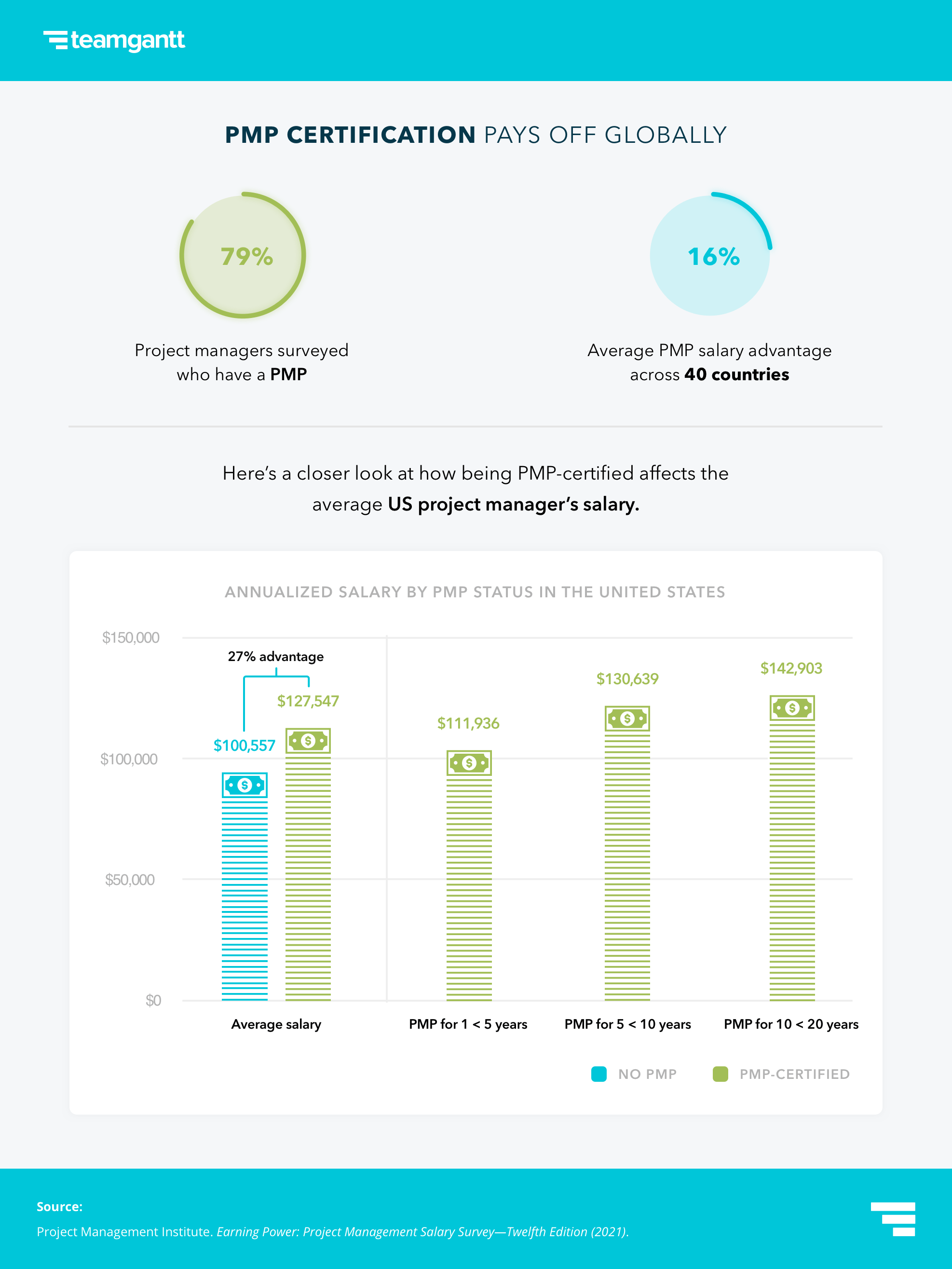
79% of project managers surveyed have a PMP certification.
Globally, PMP-certified survey respondents earn 16% higher
median salaries on average than those without PMP
certification.
Median salary steadily grows the longer you hold a PMP
certification.
PMP certification considerations
There’s no doubt being PMP-certified comes with some pretty
sweet professional advantages. But it’s important to take the
whole picture into consideration before deciding if PMP
certification is right for you.
Here are a few things to keep in mind:
Getting PMP-certified is a big investment. Be
prepared to spend a good chunk of time and money on PMP
training, studying, and the exam itself. For example, you need
35 hours of formal project management education/training or
CAPM Certification to even apply for PMP certification. And
you may decide to pay for a PMP training course or other study
materials to prepare for the PMP exam.
PMP certification deals more in theory and process than
strategic thinking and creative problem-solving.
You can outline steps for risk management and conflict
resolution all day long—but people and projects don’t always
fit into a neat process box. You’ll still need to find ways to
connect with folks and come up with solutions that take your
project’s unique goals and personalities into account. And
let’s be real: Nothing beats practical experience for learning
how to think on your feet when a project throws you the
inevitable curveball.
Being PMP-certified can serve you well in any industry, but
it’s especially beneficial if your organization follows a
strict process.
For instance, PMP certification might make perfect sense for a
construction or manufacturing project manager. A
digital project manager
who oversees projects that move fast and change constantly, on
the other hand, could probably get by without it.
The bottom line: Is PMP certification worth it?
Only you can determine if PMP certification is right for you. It
really depends on the organization you work for and the value
and structure they place on project management.
Here’s how we look at it: If you have the means to make PMP
certification happen, go for it! Learning is learning, and it
can only help you grow in your professional career. Just make
sure you keep an open mind and stay flexible enough to adapt to
the project situation at hand.
How to get PMP-certified
The process for getting PMP-certified is pretty straightforward.
Simply follow these steps to get your PMP certification:
Confirm you’re eligible. If you have a 4-year
degree , you’ll need 36 months of experience leading projects,
plus 35 hours of project management training, to sit for the
PMP exam. If you have a high school diploma or associate’s
degree, you’ll need 60 months of experience leading projects,
plus 35 hours of project management training.
Apply online to take the PMP certification exam.
Be prepared to show you’re a real-life project manager who has
on-the-job project management experience leading and directing
a cross-functional team. You’ll also need to prove you’ve met
the requirements for formal project management education.
Review the handbook. PMI’s Certification Handbook
will walk you through the certification process for the
various PMI certifications available, including the PMP.
Schedule your PMP exam. Once your application
is approved, PMI will send you instructions for scheduling
your test. You will have 1 year to sit for the exam with the
option to take the test online or in person.
Take (and pass) the PMP exam. Now it’s time
to put your hard work to the test! If you don’t pass the first
time, don’t worry. You can take the PMP exam up to 3 times
within a single year to earn your certification.
Continue learning to maintain your PMP
certification.
Getting your PMP certification isn’t a set-it-and-forget-it
process. You’ll need to earn 60 PDUs every 3 years to keep
your PMP certification in good standing.
PMP eligibility
If you’re just starting out as a project manager, you’re not
quite ready to get PMP-certified. You’ll need project management
experience under your belt to meet
PMP certification eligibility requirements.
So who can take the PMP exam? Any experienced project manager
who meets these 3 criteria is eligible to take the PMP exam:
Oversees every project aspect from start to finish
Leads and directs a cross-functional team to deliver projects
on time and budget
Knows how to apply the right methodology to the project
Put project management into practice with TeamGantt
Want to get some hands-on project management experience under
your belt? Take TeamGantt for a spin. Trying it is totally
free—no strings attached!
Finish projects on time and budget without breaking a sweat. Or
track all your important PMP certification tasks so nothing
falls through the cracks. Any way you slice it, TeamGantt makes
managing projects a breeze.
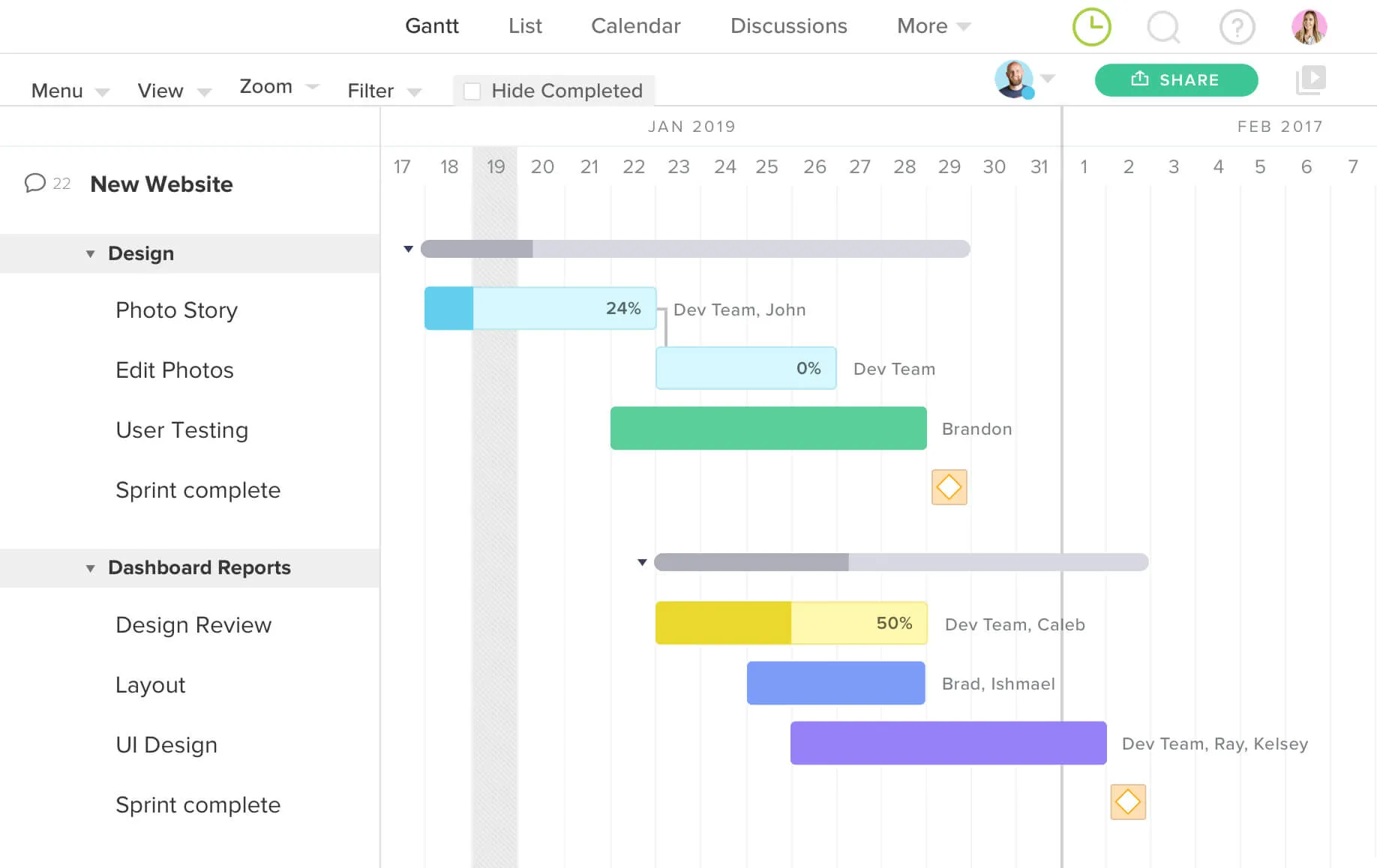
Easy drag and drop features with templates for faster
scheduling. Plan a project in minutes, collaborate easily as a
team, and switch to calendar and list views in a single click.